Canine Elbow Dysplasia
Description, Diagnosis, Causes
Research, Resources & Education
This website is based on research and is NOT created to diagnose your pet.
Each animal is an individual and may exhibit symptoms in a different way.
It is advised that you ALWAYS CHECK WITH YOUR VETERINARIAN for a proper diagnosis and treatment plan.
Table of Contents
Canine Elbow Dysplasia
Elbow dysplasia is a generalized incongruency of the elbow joint in young, large, rapidly growing dogs that is related to abnormal bone growth, joint stresses, or cartilage development.
One or more of the following lesions may be present in the joint: An ununited anconeal process of the ulna, fragmentation of the medial coronoid process of the ulna or osteochondrosis of the medial aspect of the humeral condyle.
(Merck Veterinary Manual)
This section includes Elbow Dysplasia Research in dogs, Description, Symptoms, Causes, Risks, Treatment, Surgeries, Prevention & Breeds at Risk
What Dogs are at Risk?
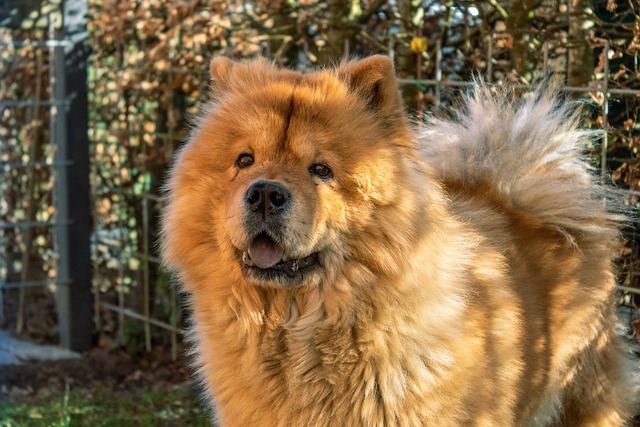
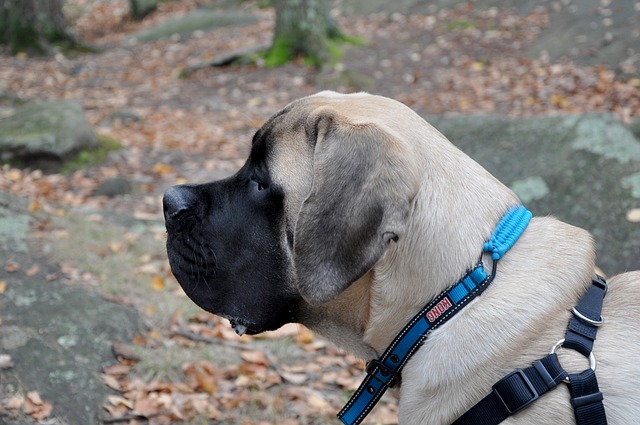
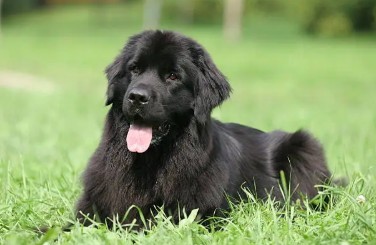
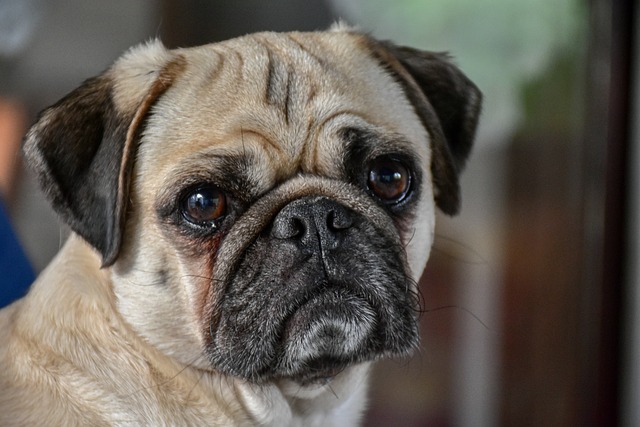
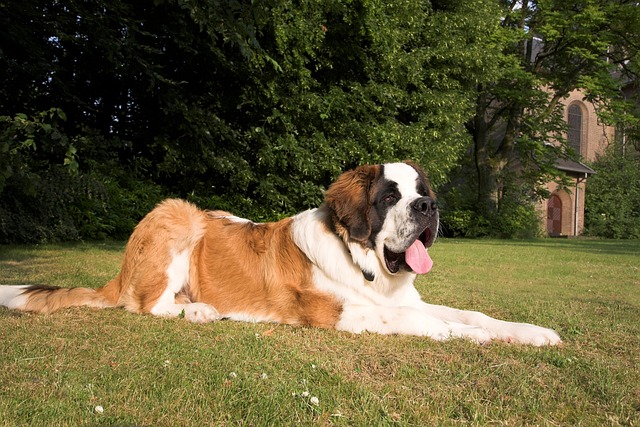
Some Dogs that are at Risk due to Genetic Predisposition
EXAMPLES of BREEDS at RISK
Breed Prevalence (College of Veterinary Medicine)
Breed Prevalence – College of Veterinary Medicine
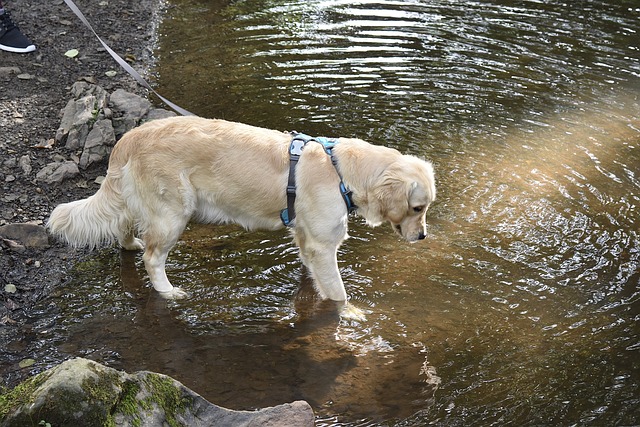
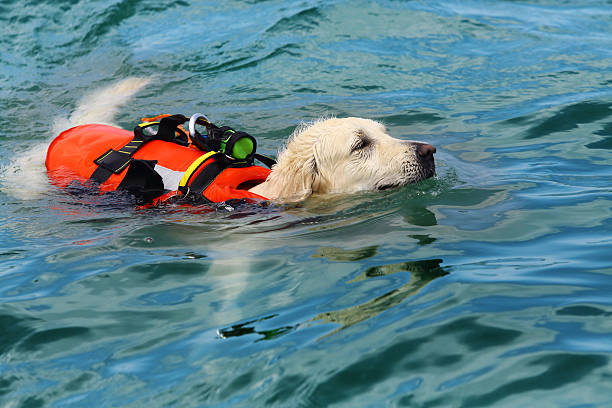
Rottweilers, Labrador Retrievers, German Shepherd Dogs, Golden Retrievers and Chow Chows head the list of breeds with a high prevalence of this orthopedic problem, but any dog can suffer from elbow dysplasia.
Large dogs are most likely to develop it, but Pugs are second on the prevalence list produced by the Orthopedic Foundation for Animals. Elbow dysplasia is a genetic ailment, so breeders are encouraged not to use affected dogs in their breeding programs.
Some Breeds of Dogs have a Higher Risk of Getting Elbow Dysplasia (WebMD)
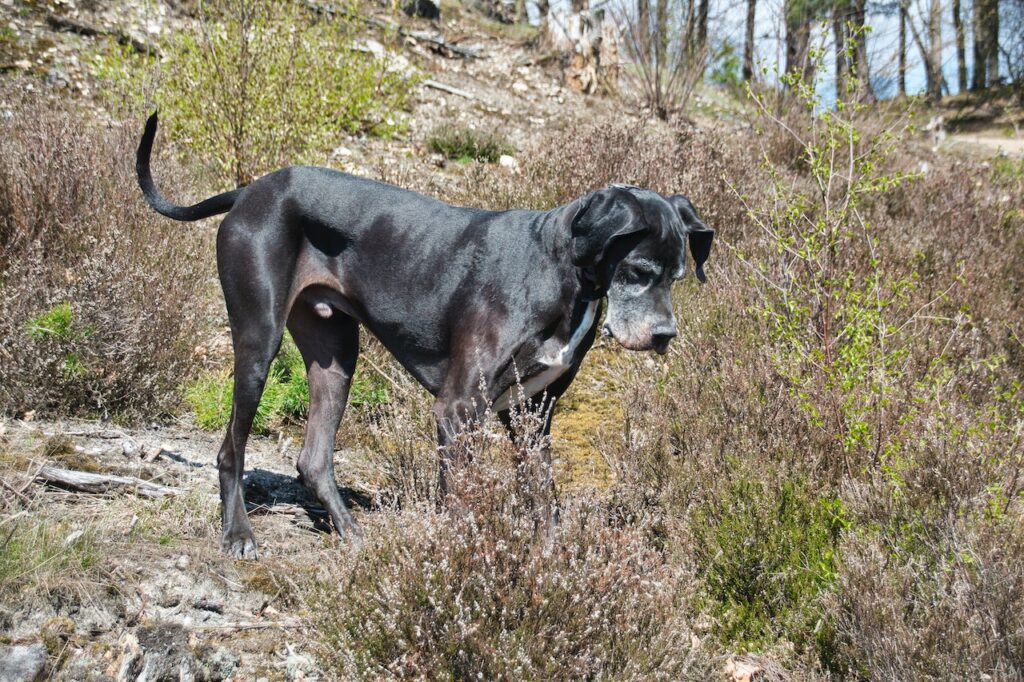
Some breeds of dogs have a higher risk of getting elbow dysplasia. WebMD
These include:
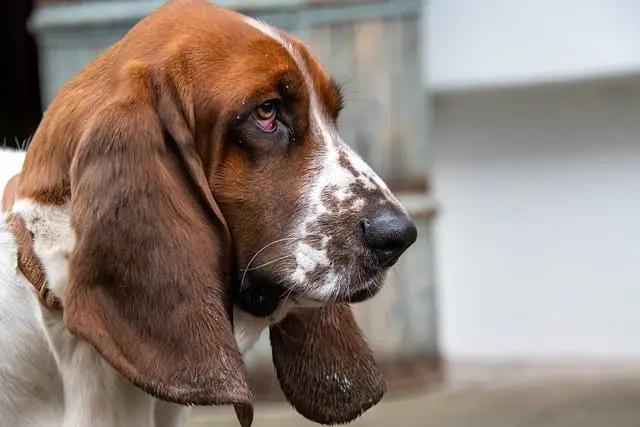
- Basset Hound
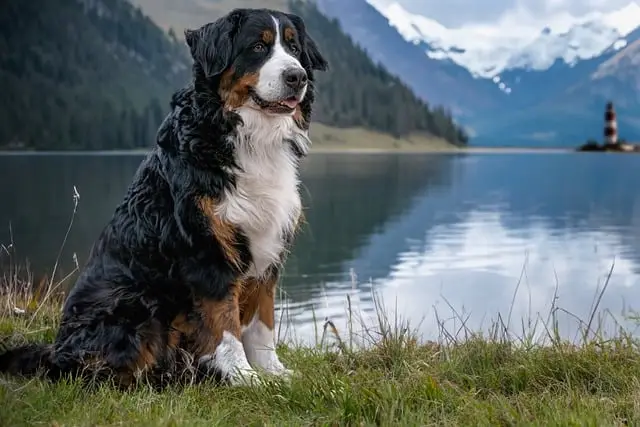
- Bernese Mountain Dog
- German Shepherd
- Great Dane
- Newfoundland
- Labrador Retriever
- Rottweiler
Overview (ACVS)
Overview – ACVS
- Bernese Mountain Dogs, German Shepherds, and Golden retrievers among others are predisposed to UAP.
- Labrador retrievers, German Shepherds, and Golden retrievers have an increased predilection among other breeds for developing medial compartment disease (MCD).


What is Elbow Dysplasia
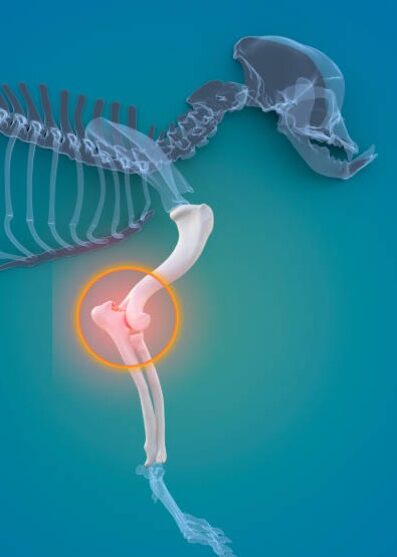
What Is Elbow Dysplasia in Dogs? (PetMD)
What Is Elbow Dysplasia in Dogs? PetMD
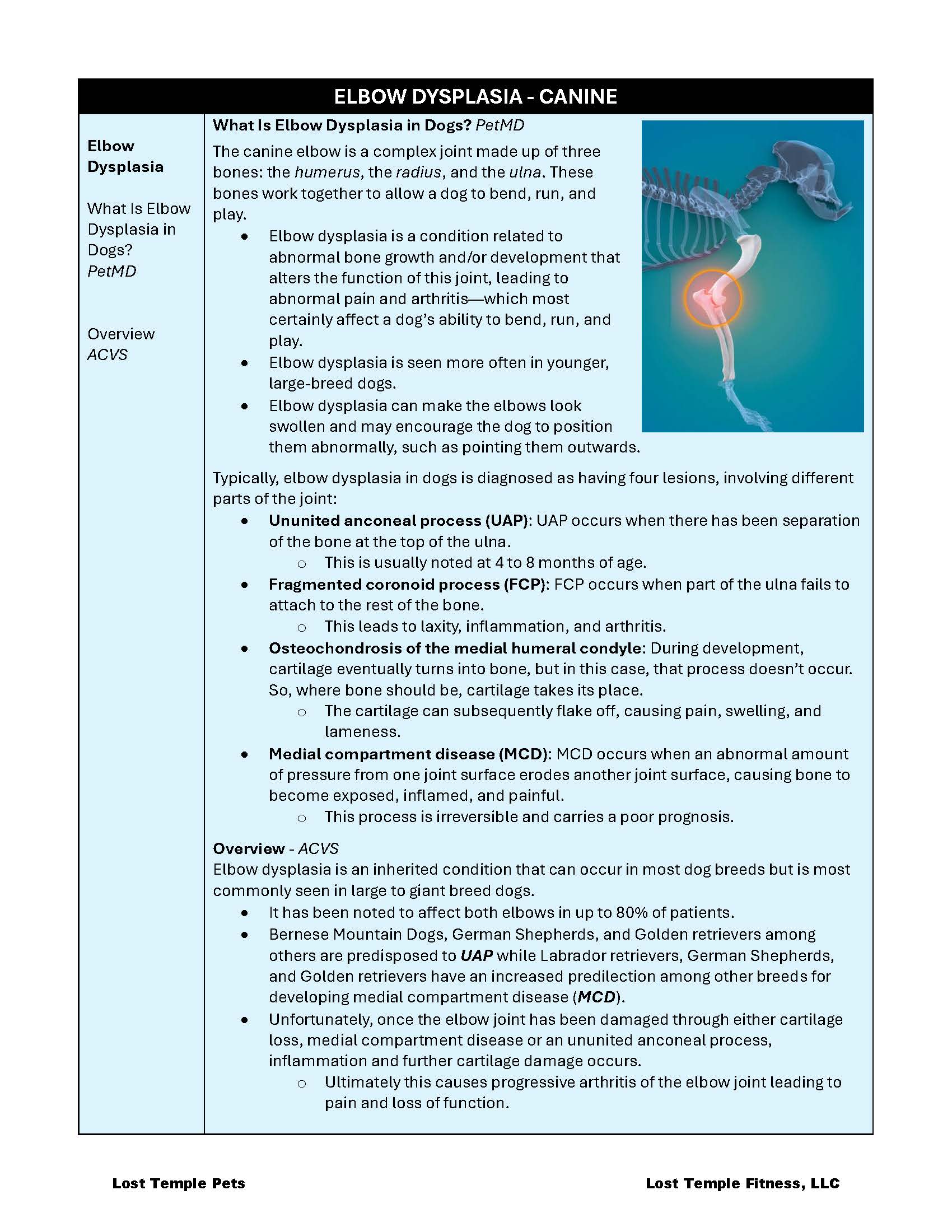
The canine elbow is a complex joint made up of three bones: the humerus, the radius, and the ulna. These bones work together to allow a dog to bend, run, and play.
- Elbow dysplasia is a condition related to abnormal bone growth and/or development that alters the function of this joint, leading to abnormal pain and arthritis—which most certainly affect a dog’s ability to bend, run, and play.
- Elbow dysplasia is seen more often in younger, large-breed dogs.
- Elbow dysplasia can make the elbows look swollen and may encourage the dog to position them abnormally, such as pointing them outwards.
Typically, elbow dysplasia in dogs is diagnosed as having four lesions, involving different parts of the joint:
- Ununited anconeal process (UAP): UAP occurs when there has been separation of the bone at the top of the ulna.
- This is usually noted at 4 to 8 months of age.
- Fragmented coronoid process (FCP): FCP occurs when part of the ulna fails to attach to the rest of the bone.
- This leads to laxity, inflammation, and arthritis.
- Osteochondrosis of the medial humeral condyle: During development, cartilage eventually turns into bone, but in this case, that process doesn’t occur. So, where bone should be, cartilage takes its place.
- The cartilage can subsequently flake off, causing pain, swelling, and lameness.
- Medial compartment disease (MCD): MCD occurs when an abnormal amount of pressure from one joint surface erodes another joint surface, causing bone to become exposed, inflamed, and painful.
- This process is irreversible and carries a poor prognosis.
Overview (ACVS)
Overview – ACVS
Elbow dysplasia is an inherited condition that can occur in most dog breeds but is most commonly seen in large to giant breed dogs.
- It has been noted to affect both elbows in up to 80% of patients.
- Bernese Mountain Dogs, German Shepherds, and Golden retrievers among others are predisposed to UAP while Labrador retrievers, German Shepherds, and Golden retrievers have an increased predilection among other breeds for developing medial compartment disease (MCD).
- Unfortunately, once the elbow joint has been damaged through either cartilage loss, medial compartment disease or an ununited anconeal process, inflammation and further cartilage damage occurs.
- Ultimately this causes progressive arthritis of the elbow joint leading to pain and loss of function.
Elbow Dysplasia Videos
YouTube Videos that help explain Elbow Dysplasia in Dogs
Disclaimer:
This is for research only and Lost Temple Pets does not endorse any video presented on this website.
It is advised that you ALWAYS CHECK WITH YOUR VETERINARIAN for a proper diagnosis and treatment plan.
Playlist
Causes
Causes of Elbow Dysplasia in Dogs (PetMD)
Causes of Elbow Dysplasia in Dogs – PetMD
Elbow dysplasia in dogs is thought to be an inherited condition, but it has also been associated with:
- Prior trauma
- Nutritional imbalances or deficiencies
- Defects in cartilage growth or bone development
- Hormonal factors
- Certain large breeds are predisposed to elbow dysplasia in dogs, which often affects both elbows rather than one.
What Causes Elbow Dysplasia in Dogs? (WebMD)
What Causes Elbow Dysplasia in Dogs? WebMD
Elbow dysplasia normally starts to affect puppies when they are between 5 and 18 months old.
- Typically, this condition affects medium-to-large breeds and is often hereditary.
- If a puppy has elbow dysplasia, either one or both of its elbow joints will start to grow incorrectly.
- There are three places in the elbow where dogs can get elbow dysplasia. Depending on the dog, they may have elbow dysplasia in one or more of these areas.
The three different abnormalities are:
- Ununited anconeal process (UAP)
- Fragmented coronoid process (FCP)
- Osteochondritis of the elbow joint (OCD)
Studies show that genetic traits usually determine which abnormalities a puppy may get.
- Puppies from the same litter or family may all have elbow dysplasia as they grow.
- Your dog’s environment may also determine if they get elbow dysplasia.
- Possible environmental factors include diet and level of exercise, as well as the environment their mother was in while your puppy was in the womb.
Signs & Symptoms
Signs & Symptoms (ACVS)
Signs & Symptoms – ACVS
Dogs affected by elbow dysplasia often show signs from an early age, typically from 5 months on, but some may first be diagnosed after 4–6 years.
- Affected dogs develop a front limb lameness that typically worsens over a period of weeks to months.
- Lameness is usually worse after exercise and typically never completely resolves with rest.
- Often both fore legs are affected, which can make detection of lameness difficult, as the gait is not asymmetric.
- When both elbows are involved the dog usually becomes unwilling to exercise for long periods or may even refuse to complete a walk.
Symptoms (College of Veterinary Medicine)
Symptoms – College of Veterinary Medicine
Generally, dogs with elbow dysplasia will be lame after exercise and won’t recover fully with just rest.
- Some dogs will start refusing to exercise, with a noticeable decrease in their overall activity level.
- Dogs with this defect often move by turning their paw inward, noticeably holding their elbow out from the body in an attempt to shift weight off the sore part of the joint.
If your dog has elbow dysplasia only on one side of their body, you or your veterinarian may notice their lameness earlier.
- Favoring the defective limb will often be evident by a “head bob,” which means that your dog’s head goes higher on the bad footfall to take weight off that leg, bobbing down when the “good leg” lands.
That is the clinical picture if both elbows are affected but one side hurts more than the other.
If both elbows are equally affected, then it can be more difficult to pick up on lameness.
- Most dogs will try to compensate with a shortened stride, and the range of motion in their joints is generally reduced.
- Another clue is if you see your dog manipulating their leg by extending and flexing the elbow joint — an action that is often associated with pain.
- Even with a more stoic dog, owners may notice some swelling of affected elbow joints along with abnormal warmth in the area.
Diagnoses
How to Diagnose Elbow Dysplasia in Dogs (AKC)
How to Diagnose Elbow Dysplasia in Dogs – AKC
“Early diagnosis of elbow dysplasia in dogs is important because you want to treat the condition before it causes osteoarthritis in the dog’s joint,” says Dr. Jerry Klein, AKC chief veterinary officer.
- Sometimes elbow dysplasia is difficult to diagnose early on because the dog shows only slight or intermittent signs of lameness. Clinical signs of canine elbow dysplasia usually involve lameness, which the Orthopedic Foundation for Animals (OFA) says may remain subtle for long periods of time, making it hard to diagnose.
- The OFA attributes the occurrence of lameness on factors such as severity of changes, rate of weight gain, and amount of exercise.
Here are some signs to watch out for. If you see any of these signs, you’ll want to make an appointment for your dog with the veterinarian.
- The dog limps on occasion, especially after exercise or when first standing up.
- One or both front legs rotate inward with elbows rotating outward.
- The elbow joint appears stiff or unable to move freely.
- You hear a crackling sound when the elbow joint moves.
- Your dog is suddenly hesitant to go for walks or chase a ball.
The vet will ask you for the history and circumstances of the symptoms.
- They’ll also rotate the joint to check range of motion and thickening and use X-rays to look for changes in the joint.
- A CT scan may be necessary to identify the cause and extent of the problem.
- The vet will usually examine both elbows because the condition can develop in both legs at the same time.
Diagnosis & Grading (College of Veterinary Medicine)
Diagnosis & Grading – College of Veterinary Medicine
True elbow dysplasia will not be diagnosed before 4 to 6 months of age, when the growth plates in joints are still closing.
- Most dogs are a couple of months older before a clear-cut diagnosis is made.
- Most dogs are diagnosed with elbow dysplasia by physical examination and by doing a thorough lameness evaluation at 4 to 12 months of age.
- In mild cases, however, affected dogs may not show lameness until 7 or 8 years of age, when arthritis kicks in.
Diagnosing an elbow problem requires a thorough lameness exam with radiographs.
- Flexed views of both elbows can show defective areas and identify early arthritic changes.
- A CT scan and arthroscopic surgery to look into the joint are used to guide diagnosis and therapy.
Grading elbow dysplasia
Elbow grades are based on radiographic findings, but they don’t always correlate with the clinical signs. Some dogs feel very sore with a Grade 1 diagnosis, whereas others rated Grade 3 are minimally lame.
- Grade 1: Minimal bone change along the anconeal process of their ulna (at less than 2 mm)
- Grade 2: Additional bone proliferation along the anconeal process (2–5 mm) and subchondral bone changes (trochlear notch sclerosis)
- Grade 3: Well-developed degenerative joint disease with bone proliferation along the anconeal process being greater than 5 mm
Treatment & Therapies
Treatment Options (WebMD)
Treatment Options – WebMD
Treatment depends on the severity of your dog’s elbow dysplasia.
- For moderate to serious cases, your vet will likely recommend surgery.
Depending on which of the three abnormalities your dog has, surgery might include:
- Removing coronoid fragments or loose cartilage, if the cause is FCP.
- Changing the elbow joint to take your dog’s weight off of the damaged part of the elbow.
- Reattaching or removing a UAP to the medial joint compartment (if the cause is UAP).
- Surgically correcting the joint.
- Replacing the joint completely.
If your vet doesn’t think that your dog needs surgery, there are other things that you can do to treat and manage your dog’s pain:
- Weight control: Symptoms will worsen if your dog becomes overweight. Keeping your dog at a healthy weight will avoid putting excess pressure on their joints.
- Exercise: Even if your dog isn’t excited to exercise, they need to keep fit to stay healthy. Regular, short walks without too much running or jumping will help.
- Medication: Your vet may give your dog anti-inflammatory medication to manage the pain.
- Rest: Make sure your dog gets proper rest, especially after exercising.
- Physiotherapy and hydrotherapy: These are great ways for your dog to get exercise and are both easy on the joints.
Non-Surgical Therapies (ACVS)
Non-Surgical Therapies – ACVS
Therapies include:
- Weight management: Simply getting your dog to their normal weight may decrease their pain dramatically.
- Exercise: Moderate exercise moves the joint and builds cushion. Be sure to use proper warm-up and cool-down periods.
- For example, if your dog loves to play ball, a 10-minute walk will help loosen their joints so that they can move more freely.
- Physical therapy: Massage and hydrotherapy, like underwater treadmills and swimming, are typically done after elbow dysplasia surgery, but they also can be used to help the joint in cases where surgery isn’t possible.
- Laser treatments, TENs (transcutaneous electrical nerve stimulation), ice therapy and acupuncture may be worth trying.
- Pain medications: Your veterinarian may recommend a non-steroidal anti-inflammatory drug (NSAID), such as carprofen, to help keep your dog comfortable.
- Joint supplements: Ingredients like glucosamine, hyaluronic acid and chondroitin encourage healthy cartilage and increased joint fluid, which help act as cushions.
- The choices on the market are plentiful, but they aren’t all effective. Work with your veterinarian to choose the best supplement for your dog.
- Injectables: Adequan is another injectable drug that could help with the accompanying osteoarthritis and pain. While it can help alleviate some pain, it won’t help the elbow dysplasia itself.
- Injecting platelet-rich plasma (PRP) into the joint has also been used with some success in canine elbow dysplasia.
- Synovetin OA is a new, injectable medication that uses electron therapy to target macrophages and synoviocytes in the painful elbow. It must be injected directly into the affected joint.
- Braces: Although you’ll find braces for elbow dysplasia on the market, they’re more suited for luxations (dislocations), hygromas (fluid buildup around joints) and ligament tears — not loose pieces of cartilage or bone.
- If you’re going to try a brace, proper fit is critical to it being effective, so be sure to involve your veterinarian or a veterinary rehab specialist in your decision-making process.
Surgery, Treatment & Aftercare
Treatment Options, Aftercare & Outcomes (ACVS)
Treatment Options- ACVS
Treatment depends on the severity of the disease in the elbow.
- In most cases surgery is recommended, but your veterinarian may recommend medical management if the problem is very mild or so severe that the joint may not likely benefit from routine surgery.
- Treatment will depend on the primary cause of the elbow dysplasia.
- Often surgery is best performed arthroscopically, but conventional open surgery can also be done.
Depending on the individual dog’s elbow problem surgery may involve:
- Removal of any coronoid fragments and removal of loose cartilage (FCP).
- Surgical alteration of the elbow joint to shift weight away from damaged areas.
- Reattachment or removal of an united anconeal process (UAP) of the medial joint compartment.
- Correction of joint step/incongruity; this is usually done by cutting the ulna to re-establish elbow congruence.
- Joint replacement if the elbow is severely diseased
Aftercare and Outcome
Surgery aftercare will depend on the type of surgery performed, and your veterinarian will advise you of exactly what is required.
- In general, your dog will need to be quiet and confined for a period of time, usually from 2–6 weeks or more.
- The outcome will vary between dogs, but in general the more mild the disease, and the earlier it is treated, the better the long-term outcome.
- Most dogs will benefit from surgical treatment even if disease is more advanced, but unfortunately once arthritis is established it will slowly progress regardless of any treatment.
- On average, with treatment 85% of cases will show some degree of improvement in lameness and comfort despite progression of arthritis on x-rays.
- The aim of treatment is to slow the progression of arthritis and prolong the patients’ use of the elbow.
Unfortunately elbow dysplasia cannot be cured but it can be well managed and our patients can have a good long-term prognosis and outcome with a combination of surgical and medical management.
Prevention
Prevention of Canine Elbow Dysplasia (AKC)
Prevention of Canine Elbow Dysplasia – AKC
The OFA strongly recommends that dogs from at-risk breeds who are being considered for a breeding program, as well as their siblings, be radiographed to determine their elbow status.
- This information should be an important and carefully considered part of breeding decisions. “Elbow dysplasia can be extremely debilitating … This makes it increasingly important to reduce the incidence of the disease through selective breeding, which has been shown to reduce its incidence.”
- “The best way for breeders to prevent hereditary causes of elbow dysplasia is to screen their breeding dogs for this condition,” says Dr. Klein. “ OFA health testing can help breeders determine the condition of their dog’s elbows.”
Joint supplements are another way to help prevent elbow dysplasia.
- These can help improve joint function, reduce inflammation, and slow the progression of joint damage.
- Glucosamine and chondroitin are two common joint supplement ingredients that are used in both humans and dogs.
- These supplements work by reducing inflammation, promoting healing, and increasing water retention in the cartilage, which provides more cushioning for the joint.
- Green-lipped mussel (GLM) is another proven joint supplement ingredient for both humans and dogs and contains beneficial nutrients such as omega-3 fatty acids, glycosaminoglycans, and antioxidants. GLM is a powerful anti-inflammatory that can help decrease pain and preserve joint function.
- Joint supplements are often used as an early intervention and throughout the progression of osteoarthritis because they’re safe for long-term use in most patients.
Prevention (College of Veterinary Medicine)
Prevention – College of Veterinary Medicine
For any puppy, but especially ones with a greater risk for any orthopedic defect, keeping the puppy trim as they grow is important.
- You don’t want to scrimp on essential nutrients, but you don’t want a chubby puppy either. Your veterinarian may recommend some joint supplements right from a young age, even for normal pups, and they will encourage moderate exercise.
- “Jump down” injuries can lead to a variety of front leg problems for dogs. This is when your dog repetitively jumps down off the bed, off the couch, out of your car and other similar movements.
- Going down long flights of stairs frequently can also add trauma.
- Many breeders recommend that puppies avoid more than 2 or 3 stairs until 6 months of age or older since the potential for damage is worse for puppies than for adult dogs.
- Rigorous use of screenings for breeding animals (with full public information) is currently the best bet for decreasing cases of elbow dysplasia.
- Normal parents may produce elbow problems, but the incidence is much lower than if one or both parents have bad elbows themselves.
- “A registry system to reduce the number of dysplastic puppies produced would be the most important strategy to effectively decrease the number of cases of elbow dysplasia”.
References
References
ACVS – American College of Veterinary Surgeons – Canine Elbow Dysplasia
https://www.acvs.org/small-animal/canine-elbow-dysplasia/
AKC – American Kennel Club – Elbow Dysplasia in Dogs: Signs, Symptoms, Treatment
By Harriet Meyers
Updated: Mar 26, 2024
https://www.akc.org/expert-advice/health/elbow-dysplasia-in-dogs/
College of Veterinary Medicine – Canine Elbow Dysplasia
Elbow lameness: In a young dog, a deformed elbow may be the problem
Cornell University College of Veterinary Medicine’s DogWatch newsletter, published by Belvoir Media Group.
https://www.vet.cornell.edu/departments-centers-and-institutes/riney-canine-health-center/canine-health-information/elbow-dysplasia
Merck Veterinary Manual (Professional Version) – Elbow Dysplasia in Dogs
By Joseph Harari, MS, DVM, DACVS, Veterinary Surgical Specialists, Spokane, WA
Reviewed/Revised Nov 2020 | Modified Oct 2024
PetMD – Elbow Dysplasia in Dogs: Symptoms, Causes, and Treatment
Michael Kearley, DVM
By Michael Kearley, DVM. Reviewed by Brittany Kleszynski, DVM
Updated Jul. 2, 2024
https://www.petmd.com/dog/conditions/musculoskeletal/elbow-dysplasia-in-dogs
WebMD – What Is Elbow Dysplasia in Dogs?
Written by Christine Loconti
Medically Reviewed by Amy Flowers, DVM on September 03, 2024
https://www.webmd.com/pets/dogs/what-is-elbow-dysplasia-in-dogs
Arthritis/Breed Chart
| Breed | ORTHOPEDIC | Elbow Displasia | Hip Displasia | Legg-Calve-Perthes | Patella Luxation |
|---|---|---|---|---|---|
| Affenpinscher | Hip Displasia Legg-Calve-Perthes Patella Luxation | Hip Displasia | Legg-Calve-Perthes | Patella Luxation | |
| Afghan Hound | Hip Displasia | Hip Displasia | |||
| Airedale Terrier | Elbow Displasia Hip Displasia | Elbow Displasia | Hip Displasia | ||
| Akita (American) | Elbow Displasia Hip Displasia Patella Luxation | Elbow Displasia | Hip Displasia | Patella Luxation | |
| Alaskan Malamute | Elbow Displasia Hip Displasia | Elbow Displasia | Hip Displasia | ||
| American Eskimo, Toy and Standard | Elbow Displasia Hip Displasia Legg-Calve-Perthes Patella Luxation | Elbow Displasia | Hip Displasia | Legg-Calve-Perthes | Patella Luxation |
| American Foxhound | |||||
| American Pitt Bull Terrier | |||||
| American Staffordshire Terrier | Elbow Displasia Hip Displasia | Elbow Displasia | Hip Displasia | ||
| American Water Spaniel | Hip Displasia | Hip Displasia | |||
| Anatolian Shepherd Dog | Elbow Displasia Hip Displasia | Elbow Displasia | Hip Displasia | ||
| Australian Cattle Dog | Elbow Displasia Hip Displasia Patella Luxation | Elbow Displasia | Hip Displasia | Patella Luxation | |
| Australian Shepherd | Elbow Displasia Hip Displasia | Elbow Displasia | Hip Displasia | ||
| Australian Terrier | |||||
| Basenji | Hip Displasia | Hip Displasia | |||
| Basset Hound | |||||
| Beagle | Elbow Displasia Hip Displasia Patella Luxation | Elbow Displasia | Hip Displasia | Patella Luxation | |
| Bearded Collie | Hip Displasia | Hip Displasia | |||
| Beauceron | Elbow Displasia Hip Displasia | Elbow Displasia | Hip Displasia | ||
| Bedlington Terrier | |||||
| Belgian Groenendael | Elbow Displasia Hip Displasia | Elbow Displasia | Hip Displasia | ||
| Belgian Malinois | Elbow Displasia Hip Displasia | Elbow Displasia | Hip Displasia | ||
| Belgian Tervuren | Elbow Displasia Hip Displasia | Elbow Displasia | Hip Displasia | ||
| Bernese Mountain Dog | Elbow Displasia Hip Displasia | Elbow Displasia | Hip Displasia | ||
| Bichon Frise’ | Hip Displasia Legg-Calve-Perthes Patella Luxation | Hip Displasia | Legg-Calve-Perthes | Patella Luxation | |
| Black and Tan Coonhound | Elbow Displasia Hip Displasia | Elbow Displasia | Hip Displasia | ||
| Black Russian Terrier | Elbow Displasia Hip Displasia | Elbow Displasia | Hip Displasia | ||
| Bloodhound | Elbow Displasia Hip Displasia Patella Luxation | Elbow Displasia | Hip Displasia | Patella Luxation | |
| Boerboel | Hip Displasia | Hip Displasia | |||
| Border Collie | Elbow Displasia Hip Displasia | Elbow Displasia | Hip Displasia | ||
| Border Terrier | Hip Displasia Patella Luxation | Hip Displasia | Patella Luxation | ||
| Borzoi | Elbow Displasia Hip Displasia | Elbow Displasia | Hip Displasia | ||
| Boston Terrier | Patella Luxation | Patella Luxation | |||
| Bouvier des Flandres | Elbow Displasia Hip Displasia | Elbow Displasia | Hip Displasia | ||
| Boxer | Hip Displasia | Hip Displasia | |||
| Briard | Elbow Displasia Hip Displasia | Elbow Displasia | Hip Displasia | ||
| Brittany | Elbow Displasia Hip Displasia | Elbow Displasia | Hip Displasia | ||
| Brussels Griffon | Hip Displasia Patella Luxation | Hip Displasia | Patella Luxation | ||
| Bull Terrier | Patella Luxation | Patella Luxation | |||
| Bull Terrier, Miniature | |||||
| Bulldog, English | Elbow Displasia Hip Displasia Patella Luxation | Elbow Displasia | Hip Displasia | Patella Luxation | |
| Bullmastiff | Elbow Displasia Hip Displasia | Elbow Displasia | Hip Displasia | ||
| Cairn Terrier | Patella Luxation | Patella Luxation | |||
| Canaan Dog | Elbow Displasia Hip Displasia Patella Luxation | Elbow Displasia | Hip Displasia | Patella Luxation | |
| Cane Corso (Italian Mastiff) | Elbow Displasia Hip Displasia Patella Luxation | Elbow Displasia | Hip Displasia | Patella Luxation | |
| Caucasian Shepherd | Elbow Displasia Hip Displasia Patella Luxation | Elbow Displasia | Hip Displasia | Patella Luxation | |
| Cavalier King Charles Spaniel | Hip Displasia Patella Luxation | Hip Displasia | Patella Luxation | ||
| Chesapeake Bay Retriever | Elbow Displasia Hip Displasia | Elbow Displasia | Hip Displasia | ||
| Chihuahua | Patella Luxation | Patella Luxation | |||
| Chinese Shar-Pei | Elbow Displasia Hip Displasia Patellar Luxation | Elbow Displasia | Hip Displasia | Patella Luxation | |
| Chinese Crested | Elbow Displasia Hip Displasia Legg-Calve-Perthes | Elbow Displasia | Hip Displasia | Legg-Calve-Perthes | |
| Chow Chow | Elbow Displasia Hip Displasia Patella Luxation | Elbow Displasia | Hip Displasia | Patella Luxation | |
| Clumber Spaniel | Elbow Displasia Hip Displasia | Elbow Displasia | Hip Displasia | ||
| Cocker Spaniel (American) | Hip Displasia | Hip Displasia | |||
| Collie, Rough / Smooth Coat | |||||
| Curly Coated Retriever | Elbow Displasia Hip Displasia | Elbow Displasia | Hip Displasia | ||
| Dachshund | Patella Luxation | Patella Luxation | |||
| Dalmation | Hip Displasia | Hip Displasia | |||
| Dandie Dinmont Terrier | |||||
| Doberman Pinscher | Hip Displasia | Hip Displasia | |||
| Dogo Argentino | Hip Displasia | Hip Displasia | |||
| Dogue de Bordeaux (Mastiff) | Elbow Displasia Hip Displasia Patella Luxation | Elbow Displasia | Hip Displasia | Patella Luxation | |
| English Cocker Spaniel | Hip Displasia Patella Luxation | Hip Displasia | Patella Luxation | ||
| English Foxhound | |||||
| English Setter | Elbow Displasia Hip Displasia | Elbow Displasia | Hip Displasia | ||
| English Springer Spaniel | Elbow Displasia Hip Displasia | Elbow Displasia | Hip Displasia | ||
| English Toy Spaniel AKA King Charles Spaniel | Patella Luxation | Patella Luxation | |||
| Field Spaniel | Elbow Displasia Hip Displasia Patella Luxation | Elbow Displasia | Hip Displasia | Patella Luxation | |
| Finnish Spitz | |||||
| Flat-Coated Retriever | Hip Displasia Patellar Luxation | Hip Displasia | Patella Luxation | ||
| Fox Terrier, Smooth | Patella Luxation | Patella Luxation | |||
| Fox Terrier, Toy | Legg-Calve-Perthes Patellar Luxation | Legg-Calve-Perthes | Patella Luxation | ||
| Fox Terrier, Wire | Patella Luxation | Patella Luxation | |||
| French Bulldog | Elbow Displasia Hip Displasia Patella Luxation | Elbow Displasia | Hip Displasia | Patella Luxation | |
| German Pinscher | Hip Displasia | Hip Displasia | |||
| German Shepherd | Elbow Displasia Hip Displasia | Elbow Displasia | Hip Displasia | ||
| German Shorthaired Pointer | Elbow Displasia Hip Displasia | Elbow Displasia | Hip Displasia | ||
| German Wirehaired Pointer | Elbow Displasia Hip Displasia | Elbow Displasia | Hip Displasia | ||
| Glen of Imaal Terrier | Elbow Displasia Hip Displasia | Elbow Displasia | Hip Displasia | ||
| Golden Retriever | Elbow Displasia Hip Displasia | Elbow Displasia | Hip Displasia | ||
| Gordon Setter | Elbow Displasia Hip Displasia | Elbow Displasia | Hip Displasia | ||
| Great Dane | Hip Displasia | Hip Displasia | |||
| Great Pyrenees | Elbow Displasia Hip Displasia Patella Luxation | Elbow Displasia | Hip Displasia | Patella Luxation | |
| Greater Swiss Mountain Dog | Elbow Displasia Hip Displasia Shoulder Dysplasia | Elbow Displasia | Hip Displasia | ||
| Greyhound | |||||
| Harrier | Hip Displasia | Hip Displasia | |||
| Havanese | Hip Displasia Patellar Luxation | Hip Displasia | Patella Luxation | ||
| Ibizan Hound | Hip Displasia | Hip Displasia | |||
| Irish Setter | Hip Displasia | Hip Displasia | |||
| Irish Terrier | |||||
| Irish Water Spaniel | Elbow Displasia Hip Displasia | Elbow Displasia | Hip Displasia | ||
| Irish Wolfhound | Elbow Displasia Hip Displasia | Elbow Displasia | Hip Displasia | ||
| Italian Greyhound | Hip Displasia Legg-Calve-Perthes Patellar Luxation | Hip Displasia | Legg-Calve-Perthes | Patella Luxation | |
| Japanese Chin | Patella Luxation | Patella Luxation | |||
| Keeshond | Elbow Displasia Hip Displasia Patellar Luxation | Elbow Displasia | Hip Displasia | Patella Luxation | |
| Kerry Blue Terrier | Hip Displasia | Hip Displasia | |||
| Komondor | Hip Displasia | Hip Displasia | |||
| Kuvasz | Elbow Displasia Hip Displasia Patella Luxation | Elbow Displasia | Hip Displasia | Patella Luxation | |
| Labrador Retriever | Elbow Displasia Hip Displasia | Elbow Displasia | Hip Displasia | ||
| Lakeland Terrier | |||||
| Lhasa Apso | |||||
| Lowchen | Hip Displasia Patella Luxation | Hip Displasia | Patella Luxation | ||
| Maltese | Patella Luxation | Patella Luxation | |||
| Manchester Terrier Toy | Legg-Calve-Perthes Patella Luxation | Legg-Calve-Perthes | Patella Luxation | ||
| Manchester Terrier, Standard | Legg-Calve-Perthes Patella Luxation | Legg-Calve-Perthes | Patella Luxation | ||
| Mastiff | Elbow Displasia Hip Displasia Patella Luxation | Elbow Displasia | Hip Displasia | Patella Luxation | |
| Miniature Pincher | Legg-Calve-Perthes Patella Luxation | Legg-Calve-Perthes | Patella Luxation | ||
| Neapolitan Mastiff | Elbow Displasia Hip Displasia | Elbow Displasia | Hip Displasia | ||
| Newfoundland | Elbow Displasia Hip Displasia | Elbow Displasia | Hip Displasia | ||
| Norfolk Terrier | Hip Displasia Patellar Luxation | Hip Displasia | Patella Luxation | ||
| Norwegian Buhund | Hip Displasia | Hip Displasia | |||
| Norwegian Elkhound | Hip Displasia Patellar Luxation | Hip Displasia | Patella Luxation | ||
| Norwich Terrier | Hip Displasia Patellar Luxation | Hip Displasia | Patella Luxation | ||
| Nova Scotia Duck Tolling Retriever | Hip Displasia | Hip Displasia | |||
| Old English Sheepdog | Hip Displasia | Hip Displasia | |||
| Otterhound | Elbow Displasia Hip Displasia | Elbow Displasia | Hip Displasia | ||
| Papillon | Patellar Luxation | Patella Luxation | |||
| Parsons Russell Terrier | Patellar Luxation | Patella Luxation | |||
| Pekingese | |||||
| Petit Basset Griffon Vendeen (PBGV) | |||||
| Pharaoh Hound | Hip Displasia Patellar Luxation | Hip Displasia | Patella Luxation | ||
| Plott Hound | |||||
| Pointer | Elbow Displasia Hip Displasia | Elbow Displasia | Hip Displasia | ||
| Polish Lowland Sheepdog | Hip Displasia | Hip Displasia | |||
| Pomeranian | Hip Displasia Legg-Calve-Perthes Patella Luxation | Hip Displasia | Legg-Calve-Perthes | Patella Luxation | |
| Poodle, Miniature | Hip Displasia Patellar Luxation | Hip Displasia | Patella Luxation | ||
| Poodle, Standard | Hip Displasia | Hip Displasia | |||
| Poodle, Toy | Patella Luxation | Patella Luxation | |||
| Portuguese Water Dog | Hip Displasia Patella Luxation | Hip Displasia | Patella Luxation | ||
| Presa Canario | Hip Displasia | Hip Displasia | |||
| Pug | Elbow Displasia Hip Displasia Patella Luxation | Elbow Displasia | Hip Displasia | Patella Luxation | |
| Puli | Elbow Displasia Hip Displasia Patella Luxation | Elbow Displasia | Hip Displasia | Patella Luxation | |
| Pyrenean Shepherd | Elbow Displasia Hip Displasia | Elbow Displasia | Hip Displasia | ||
| Rhodesian Ridgeback | Elbow Displasia Hip Displasia | Elbow Displasia | Hip Displasia | ||
| Rottweiler | Elbow Displasia Hip Displasia | Elbow Displasia | Hip Displasia | ||
| Saluki | Hip Displasia | Hip Displasia | |||
| Samoyed | Hip Displasia | Hip Displasia | |||
| Schipperke | Hip Displasia Patella Luxation | Hip Displasia | Patella Luxation | ||
| Schnauzer, Miniature | |||||
| Schnauzer, Giant | Elbow Displasia Hip Displasia | Elbow Displasia | Hip Displasia | ||
| Schnauzer, Standard | Hip Displasia | Hip Displasia | |||
| Scottish Deerhound | Hip Displasia | Hip Displasia | |||
| Scottish Terrier | |||||
| Sealyham Terrier | |||||
| Shetland Sheepdog | Hip Displasia Patella Luxation | Hip Displasia | Patella Luxation | ||
| Shiba Inu | Hip Displasia Patella Luxation | Hip Displasia | Patella Luxation | ||
| Shih Tzu | Hip Displasia Patella Luxation | Hip Displasia | |||
| Siberian Husky | Elbow Displasia Hip Displasia | Elbow Displasia | Hip Displasia | ||
| Silky Terrier | Patellar Luxation | Patella Luxation | |||
| Skye Terrier | |||||
| Soft-Coated Wheaten Terrier | Elbow Displasia Hip Displasia | Elbow Displasia | Hip Displasia | ||
| Spinone Italiano | Elbow Displasia Hip Displasia | Elbow Displasia | Hip Displasia | ||
| St. Bernard | Elbow Displasia Hip Displasia | Elbow Displasia | Hip Displasia | ||
| Staffordshire Bull Terrier | Elbow Displasia Hip Displasia Patella Luxation | Elbow Displasia | Hip Displasia | Patella Luxation | |
| Sussex Spaniel | |||||
| Swedish Vallhund | Hip Displasia | Hip Displasia | |||
| Tibetan Mastiff | Elbow Displasia Hip Displasia | Elbow Displasia | Hip Displasia | ||
| Tibetan Spaniel | Patellar Luxation | Patella Luxation | |||
| Tibetan Terrier | Elbow Displasia Hip Displasia Patellar Luxation | Elbow Displasia | Hip Displasia | Patella Luxation | |
| Tosa | Hip Displasia | Hip Displasia | |||
| Vizsla | Elbow Displasia Hip Displasia Patellar Luxation | Elbow Displasia | Hip Displasia | Patella Luxation | |
| Weimaraner | Elbow Displasia Hip Displasia | Elbow Displasia | Hip Displasia | ||
| Welsh Corgi, Cardigan | Hip Displasia | Hip Displasia | |||
| Welsh Corgi, Pembroke | Hip Displasia | Hip Displasia | |||
| Welsh Springer Spaniel | Elbow Displasia Hip Displasia | Elbow Displasia | Hip Displasia | ||
| Welsh Terrier | |||||
| West Highland White Terrier | Hip Displasia Patellar Luxation | Hip Displasia | Patella Luxation | ||
| Whippet | Hip Displasia | Hip Displasia | |||
| Wirehaired Pointing Griffon | Elbow Displasia Hip Displasia | Elbow Displasia | Hip Displasia | ||
| Yorkshire Terrier | Hip Displasia Legg-Calve-Perthes Patellar Luxation | Hip Displasia | Legg-Calve-Perthes | Patella Luxation |