fe

Feline
Cancers

Research, Resources & Education

Table of Contents

Pet research & education on 6 feline cancers including lymphoma, mast cell tumors, mammary tumors, osteosarcoma, squamous cell carcinoma & transitional cell carcinoma.


This website is based on research and is NOT created to diagnose your pet. 

Each animal is an individual and may exhibit symptoms in a different way.


It is advised that you ALWAYS CHECK WITH YOUR VETERINARIAN
 for a proper diagnosis and treatment plan.


Please visit Lost Temple Fitness & Cancer for more information of cancer in humans including What is Cancer and Treatments.


Feline Cancers

Cancer in cats, also known as feline cancer, occurs when abnormal cells in the body begin to grow and divide uncontrollably.

Some Types of Cancer include: Lymphoma, Mastocytoma (mast cell tumor), Mammary Tumors, Osteosarcoma (Bone Cancer), Squamous Cell Carcinoma & Transitional Cell Carcinoma.

Potential causes include genetics, viral infections, sun exposure, age, environmental factors and possible hormonal influences in mammary cancer.

For most types of cancer in pets, there are three main treatment options: surgery, chemotherapy, and radiation therapy. These can be used alone or in combination, depending on the specific situation.
Lymphoma is a cancer of the lymphocytes. Lymphocytes are cells involved in the immune system and travel throughout the body in the blood and lymphatic vessels; therefore, lymphoma is always considered to be a systemic, not localized, disease.

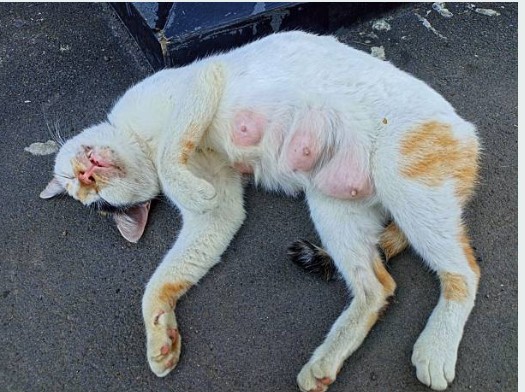
A mammary tumor is a tumor of the mammary gland. Cats have four pairs of mammary glands along their underside, starting with glands near the axillary (armpit) region and extending backward to the glands in the inguinal (groin) area.

A mast cell tumor (MCT) is a tumor that originates from mast cells. Mast cells are found in all the tissues of the body, but they are most numerous in the skin, the respiratory tract, and the digestive tract.

Osteosarcoma is an extremely aggressive cancer that affects the bones of cats. It is a malignant tumor that can spread rapidly and have devastating effects.

Squamous cell carcinoma (SCC) is a type of skin cancer that occurs when these cells rapidly and abnormally divide in the skin or tissue lining, forming singular tumors that often initially appear like small scabs or sores.

Transitional cell carcinoma (TCC) in cats is a rare but aggressive form of cancer that develops in the urinary tract's lining, primarily affecting the bladder and urethra.

Scroll to Top