
Feline Cancer
&
Breeds at Risk
Research, Resources & Education
This website is based on research and is NOT created to diagnose your pet.
Each animal is an individual and may exhibit symptoms in a different way.
It is advised that you ALWAYS CHECK WITH YOUR VETERINARIAN for a proper diagnosis and treatment plan.
Table of Contents
Feline Cancer
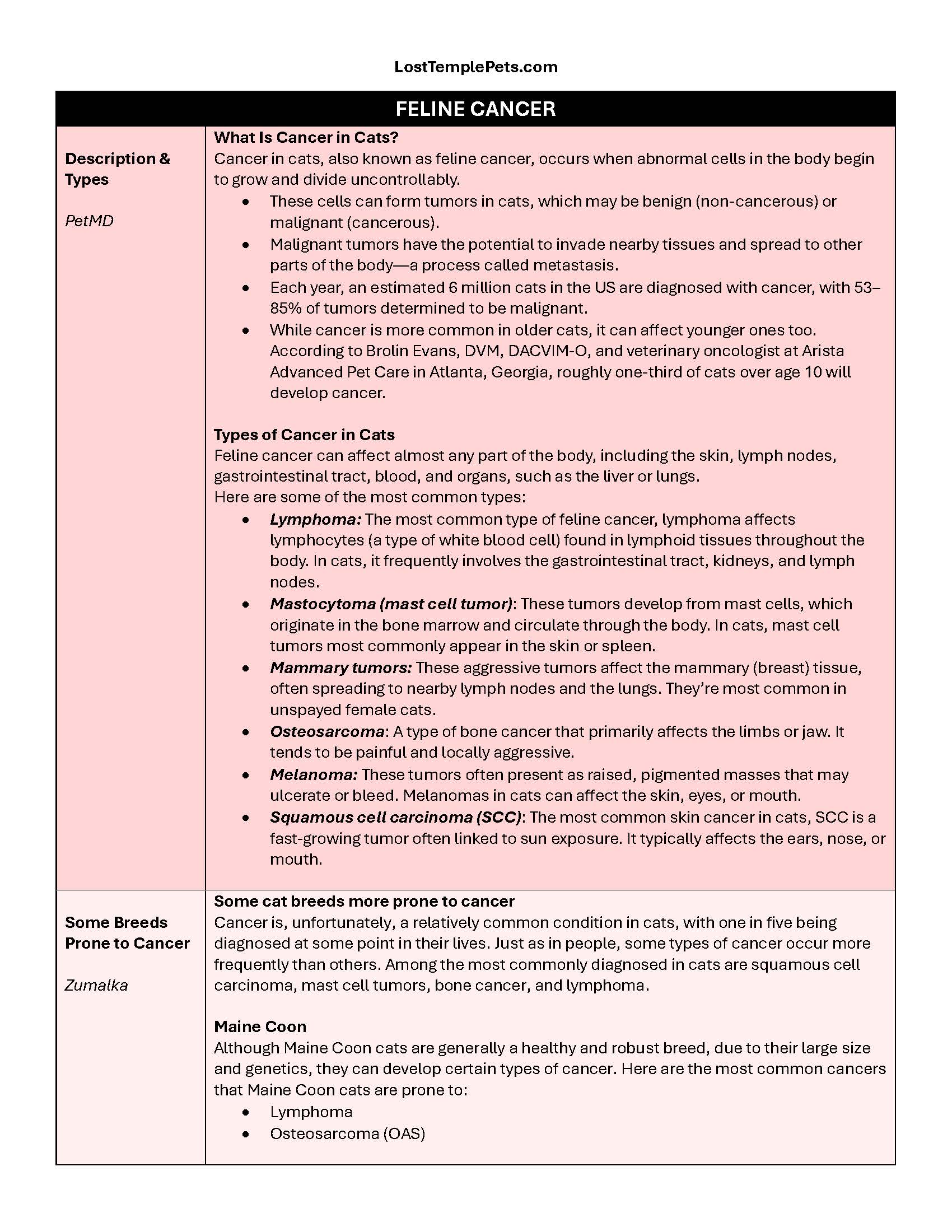
Cancer in cats, also known as feline cancer, occurs when abnormal cells in the body begin to grow and divide uncontrollably. These cells can form tumors in cats, which may be benign (non-cancerous) or malignant (cancerous).
Types of cancers include:
- Lymphoma
- Mastocytoma (mast cell tumor)
- Mammary tumors
- Osteosarcoma
- Squamous cell carcinoma (SCC)
- Transitional Cell Carcinoma
(PetMD)
What Cats are at Risk?
Some Cats at Risk due to Genetic Predisposition





Some Breeds Prone to Cancer (Zumalka)
Some cat breeds more prone to cancer
Cancer is, unfortunately, a relatively common condition in cats, with one in five being diagnosed at some point in their lives. Just as in people, some types of cancer occur more frequently than others. Among the most commonly diagnosed in cats are squamous cell carcinoma, mast cell tumors, bone cancer, and lymphoma.
Maine Coon
Although Maine Coon cats are generally a healthy and robust breed, due to their large size and genetics, they can develop certain types of cancer. Here are the most common cancers that Maine Coon cats are prone to:
- Lymphoma
- Osteosarcoma (OAS)
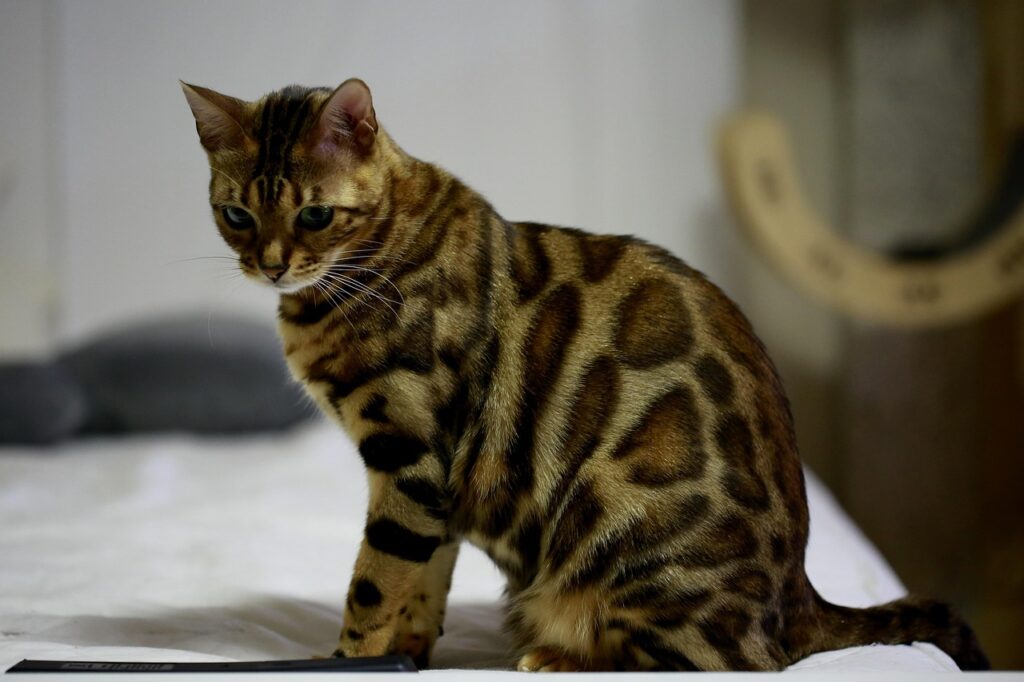
Bengal
Although the Bengal cat breed is generally healthy, there are a few conditions it is more prone to, including cancer. Here are the most common types of tumors reported in this breed of cat:
- Lymphoma
Siamese
This cat breed is prone to several types of cancer compared to other breeds. Here are the most common types of cancer in Siamese cats:
- Lymphoma
- Intestinal adenocarcinoma
- This type of cancer is an aggressive cancer that usually affects older cats. It can occur in the stomach, small intestine, or large intestine.
- Mammary cancer
- Osteosarcoma (OAS)
- Mast cell tumors
- In addition, as with mammary tumors, Siamese cats develop this type of cancer earlier than other breeds.
Persian
Persian cats are also prone to certain types of cancer, but not as many as Siamese cats. Here are the most common types of cancer that Persian cats can develop:
- Mammary tumors
- Basal cell carcinoma
- This type of skin cancer occurs more frequently in older cats, and Persian cats are more prone to it. Clinical signs include ulcers on the head, neck, and legs (the tumors are not raised from the skin). Basal cell carcinoma can spread throughout the body and even to organs (in rare cases). As a result, the treatment of choice is surgical removal.
- Sebaceous gland adenomas
- This type of cancer is benign (i.e., does not metastasize). Persian cats are most susceptible. Sebaceous gland adenomas can occur anywhere on the body but are most common on the head. These tumors may sometimes be covered with a crust or be inflamed with pus.
- Osteosarcoma (OAS)
Oriental Shorthair
Oriental Shorthair cats are descended from Siamese cats, which makes them more susceptible to some of the same types of cancer, such as lymphoma and mast cell tumors.
- Mediastinal Lymphoma
- Mast cell Tumor (MCT)
Scottish Fold
The characteristic appearance of Scottish Fold cats is given by a defect in the auditory cartilage. This defect is caused by an autosomal dominant gene – a mutation in the TRPV4 gene. This mutation causes, in addition to folded ears, a short and stiff tail. Moreover, the TRPV4 gene mutation leads to skeletal dysplasia (also called osteochondrodysplasia).
- Osteosarcoma
- Because of this, Scottish Fold cats are more prone to developing osteosarcoma, a rare bone cancer in cats.
What is Feline Cancer?
What Is Cancer in Cats? (PetMD)
What Is Cancer in Cats?
Cancer in cats, also known as feline cancer, occurs when abnormal cells in the body begin to grow and divide uncontrollably.
- These cells can form tumors in cats, which may be benign (non-cancerous) or malignant (cancerous).
- Malignant tumors have the potential to invade nearby tissues and spread to other parts of the body—a process called metastasis.
- Each year, an estimated 6 million cats in the US are diagnosed with cancer, with 53–85% of tumors determined to be malignant.
- While cancer is more common in older cats, it can affect younger ones too. According to Brolin Evans, DVM, DACVIM-O, and veterinary oncologist at Arista Advanced Pet Care in Atlanta, Georgia, roughly one-third of cats over age 10 will develop cancer.
Types of Cancer in Cats (PetMD)
Types of Cancer in Cats
Feline cancer can affect almost any part of the body, including the skin, lymph nodes, gastrointestinal tract, blood, and organs, such as the liver or lungs.
Here are some of the most common types:
- Lymphoma: The most common type of feline cancer, lymphoma affects lymphocytes (a type of white blood cell) found in lymphoid tissues throughout the body. In cats, it frequently involves the gastrointestinal tract, kidneys, and lymph nodes.
- Mastocytoma (mast cell tumor): These tumors develop from mast cells, which originate in the bone marrow and circulate through the body. In cats, mast cell tumors most commonly appear in the skin or spleen.
- Mammary tumors: These aggressive tumors affect the mammary (breast) tissue, often spreading to nearby lymph nodes and the lungs. They’re most common in unspayed female cats.
- Osteosarcoma: A type of bone cancer that primarily affects the limbs or jaw. It tends to be painful and locally aggressive.
- Melanoma: These tumors often present as raised, pigmented masses that may ulcerate or bleed. Melanomas in cats can affect the skin, eyes, or mouth.
- Squamous cell carcinoma (SCC): The most common skin cancer in cats, SCC is a fast-growing tumor often linked to sun exposure. It typically affects the ears, nose, or mouth.
Feline Cancer Videos
YouTube Videos that help explain Cancer in Cats
Disclaimer:
This is for research only and Lost Temple Pets does not endorse any video presented on this website.
It is advised that you ALWAYS CHECK WITH YOUR VETERINARIAN for a proper diagnosis and treatment plan.
Playlist
Causes & Risk Factors
Causes and Risk Factors for Cancer in Cats (Vet Verified)
Causes and risk factors for cancer in cats
The exact causes of cancer in cats are not always clear, but several factors may increase the risk:
- Age
- Older cats are more likely to develop cancer due to cumulative cellular damage over time.
- Genetics
- Certain breeds, such as Siamese cats, may have a higher predisposition to some cancers.
- Viral infections
- Feline leukaemia virus (FeLV) and feline immunodeficiency virus (FIV) can increase the risk of lymphoma and other cancers.
- Environmental factors
- Exposure to second-hand smoke, pesticides, and chemicals may contribute to cancer development.
- Sun exposure
- Cats with light-colored or thin fur are at a higher risk of squamous cell carcinoma due to prolonged sun exposure.
- Hormonal influences
- Unspayed female cats have a significantly higher risk of developing mammary
Signs & Symptoms
Possible Signs of Cancer (Merck Veterinary Manual)
Possible Signs of Cancer
Changes in a pet’s behavior or appearance can indicate it may have cancer. Although these signs don’t always mean cancer, noticing them and consulting a veterinarian early can improve treatment outcomes.
Signs to watch for include:
- A growing or changing lump
- Swollen lymph nodes
- Sudden abdominal swelling
- Unexplained bleeding (from the anus, reproductive tract, mouth, nose, or other organs)
- Difficulty breathing, chewing, or swallowing
- Persistent sores or swellings
- Bad breath or unusual odors
- Dry cough
- Recurrent vomiting or diarrhea
- Weight loss or decreased appetite
- Lack of interest in activities
- Signs of pain, like limping or stiffness
Diagnostics
How Veterinarians Diagnose Cancer in Cats (PetMD)
How Veterinarians Diagnose Cancer in Cats
Your veterinarian will start by reviewing your cat’s entire medical history. It can be helpful to track symptoms you observe prior to the appointment and take pictures of masses that are visible. Next, your vet will perform a thorough exam and will likely test your cat’s blood and urine.
They may also perform or recommend imaging tests, such as:
- X-rays—These may be taken to view your cat’s chest, abdomen, or limbs.
- Ultrasound—This provides real-time images of your cat’s internal organs.
- Endoscopy—This involves inserting a small camera into your cat’s mouth or rectum to view the stomach or intestines
- Computed tomography (CT)—CT uses a computer to make cross-sectional images of parts of a cat’s body with high resolution and contrast.
- Magnetic resonance imaging (MRI)—An MRI scan provides detailed images of your cat’s body without using radiation.
- Imaging allows your veterinarian to see a tumor but does not diagnose the type of cancer your cat has.
Biopsy
Your vet may also collect a sample from the tumor to examine the cells inside it.
- A fine needle aspirate (FNA) involves inserting a needle into the tumor and using a syringe to suction cells that will be viewed under a microscope.
- A biopsy involves surgically removing part of the tumor and viewing the cells under a microscope.
- Biopsies typically provide a more accurate diagnosis and can help your veterinarian predict how a tumor may act.
Cats that are not healthy enough for sedation or anesthesia may not be able to undergo more advanced tests, such as CT or MRI imaging, or a biopsy.
Prevention
Can cancer in cats be prevented? (Vet Verified)
Can cancer in cats be prevented?
While not all cancers can be prevented, certain steps can reduce the risk:
- Regular veterinary check-ups
- Annual check-ups help detect early signs of cancer and other health problems.
- Vaccination
- Vaccinating against feline leukaemia virus reduces the risk of FeLV-associated cancers.
- Spaying and neutering
- Spaying female cats before their first heat cycle significantly reduces the risk of mammary
- Sun protection
- Keeping cats indoors during peak sun hours or applying pet-safe sunblock can help prevent skin cancer in light-colored cats.
- Minimizing environmental toxins
- Avoiding exposure to tobacco smoke, pesticides, and harmful chemicals can lower cancer risk.
- Balanced diet and healthy weight
- A high-quality diet and maintaining a healthy weight may help reduce the likelihood of cancer and improve overall well-being.
Treatment
Treatment Options (Merck Veterinary Manual)
Treatment Options
For most types of cancer in pets, there are three main treatment options: surgery, chemotherapy, and radiation therapy. These can be used alone or in combination, depending on the specific situation.
Can Surgery Help With My Pet’s Cancer?
The goal of surgery is to remove all cancerous cells.
- If cancer is caught early, surgery can sometimes completely cure the animal.
- Surgery can also improve the pet’s comfort or appearance by removing tumors that cause problems. However, if cancer has spread, surgery may not be as effective.
- In a biopsy, a small piece of a tumor is removed and examined under the microscope. This helps a veterinarian determine the type of cancer and develop treatment options.
- Even if a tumor can’t be completely removed, surgery can decrease its size, making other treatments more effective.
What Is Radiation Therapy?
Radiation therapy uses high-energy rays to damage cancer cells so they can’t grow.
- This treatment is given in small doses over several weeks to minimize harm to healthy tissue.
- Radiation is often used alongside surgery or chemotherapy to treat tumors in animals, as in people.
- Not all cancers respond well to radiation, so veterinarians will consider the type of cancer when recommending this treatment.
- Side effects can occur, and veterinarians will discuss these with pet owners before starting treatment.
What Is Chemotherapy?
Chemotherapy involves using drugs to kill cancer cells.
- It can help shrink tumors or stop cancer from spreading. Although it’s not usually a cure, chemotherapy can control cancer and improve a pet’s quality of life.
- Chemotherapy can be given by mouth or through injections, depending on the tumor type and on what drugs are being used.
- Some cancers don’t respond to chemotherapy, so it is not used to treat all tumors in pets.
- When chemotherapy is used to treat a pet’s tumor, side effects (such as nausea and decreased appetite) can occur, but pets generally tolerate these side effects better than people do.
- Veterinarians will monitor pets closely during treatment and adjust medications as needed.
What Is Combination Therapy?
Combination therapy uses two or more treatments (such as chemotherapy and radiation) together, often providing the best chance for success.
- The treatment plan will depend on the cancer’s stage (how advanced it is) and type.
Other Treatments (Chewy)
Other Treatments
- Electrochemotherapy: This treatment combines chemotherapy with electrical pulses to help the medication better penetrate tumor cells, increasing its effectiveness. This is relatively new and may not be widely available, depending on your location.
- Immunotherapy: Immunotherapy helps activate your cat’s immune system to fight cancer.
Recovery & Palliative Care
How Can I Help Manage My Cat’s Cancer at Home? (Chewy)
How Can I Help Manage My Cat’s Cancer at Home?
While your veterinarian will guide the medical treatment, there’s a lot you can do at home to support your cat’s comfort and well-being.
- Provide a Nutritious, Vet-Recommended Diet
- Cats with cancer often require high-calorie, easily digestible foods to maintain their weight and energy levels.
- Ask your vet about veterinary-recommended cancer-supportive diets, such as Hill’s Prescription Diet ONC Care.
- If your cat’s appetite is low, ask your vet about an appetite stimulant, like mirtazapine.
Make Hydration Easy
Cats undergoing treatment may become dehydrated more easily, especially if they’re experiencing vomiting, diarrhea, or reduced appetite.
- To encourage drinking, try a cat water fountain, like the PetNF Transparent Fountain.
- Your vet might also recommend administering subcutaneous fluids (that go under the skin) at home.
Create a Calm, Cozy Space
“Providing comfortable, quiet places to rest can help your cat’s quality of life,” says Megan McCarthy, staff veterinarian at Best Friends Animal Society, in Salt Lake City, Utah. “There are many orthopedic cat beds or heated beds available.”
- Keeping your cat’s environment calm and comfortable by minimizing noise, using calming aids like Feliway diffusers, and giving them plenty of gentle affection can also reduce stress.
Stock Up on Supplies
Your vet can guide you on what your cat might need during their treatment or recovery.
Here are some items that might come in handy:
- Oral syringes: For giving liquid medications
- Waterproof blanket: To protect furniture and bedding in case of accidents
- Pill pocket treats: To make giving pills less stressful (for you and your cat!)
- Soft recovery cone: To prevent licking or scratching after surgery
- Pet-safe bathing wipes: To keep your cat clean without the stress of a full bath
Monitor for Changes
Keep a daily log of your cat’s symptoms, appetite, litter box use, and energy. Catching changes early can give your vet helpful insights for adjusting treatment.
- Keep Up with Medications and Vet Visits
- Follow your vet’s instructions carefully when it comes to medications and checkups.
- Use a pet medication tracker or pill organizer to stay on top of your cat’s care routine.
Palliative Hospice Care (Cats.com)
Palliative Hospice Care
Sometimes, treatment may not be the best option for the cat or cat owners.
- In these cases, palliative hospice care can be an option to ensure a good quality of life until the cat owner decides to euthanize.
- Palliative care can involve pain control, appetite stimulants, anti-nausea medications, fluids, and other medications and treatments as needed to keep the cat comfortable.
References
References
Chewy – What Is Cancer in Cats? What Are the Signs?
By Katie Koschalk. Reviewed by Dr. Teresa Manucy; Updated May 5, 2025
https://www.chewy.com/education/cat/health-and-wellness/cancer-in-cats
Cats.com – Cancer in Cats: Causes, Symptoms & Treatment
Last updated Sep 27, 2024
Written by Amanda Jondle, DVM; Fact checked by Mallory Crusta
https://cats.com/cancer-in-cats
Catster – 5 Most Common Cancers in Cats (Vet Answer): Signs, Causes & Treatments
By Dr. Megan Barnes · Written by Dr. Meg Barnes
Updated on June 19, 2025
https://www.catster.com/ask-the-vet/common-cancers-in-cats-vet-answer/
Merck Veterinary Manual (Pet Owners) – Reducing the Risk of Cancer in Animals
By Manuals Staff
Reviewed By Laurie Hess, DVM, DABVP, The MSD Veterinary Manual
Reviewed/Revised Jul 2025
PetMD by Chewy – Cancer in Cats: Types, Causes, and Treatment
By Charlotte Hacker, PhD. Reviewed by Michael Kearley, DVM
Updated Dec. 16, 2024
https://www.petmd.com/cat/conditions/cancer/cancer-cats
Vet Verified – Cancer in Cats: Causes, Symptoms, Diagnosis, Treatment, and Prevention
May 11, 2025
https://vetverified.com/articles/cancer-in-cats-causes-symptoms-diagnosis-treatment-and-prevention
Vets Explain Pets – What Causes Cancer In Cats
https://vetexplainspets.com/what-causes-cancer-in-cats/#
Zumalka – Which Cat Breeds Are More Likely to Get Cancer?
Authored by Iuliana Mihai, DVM, MSc, PhD
Reviewed by a Certified Homeopath Suzie Cyrenne.
https://www.zumalka.com/blogs/blog-pet-health/vet-verified-cat-cancer-risk-by-breed