
Feline
Diabetes
Research, Resources & Education
This website is based on research and is NOT created to diagnose your pet.
Each animal is an individual and may exhibit symptoms in a different way.
It is advised that you ALWAYS CHECK WITH YOUR VETERINARIAN for a proper diagnosis and treatment plan.
Table of Contents
Feline Diabetes
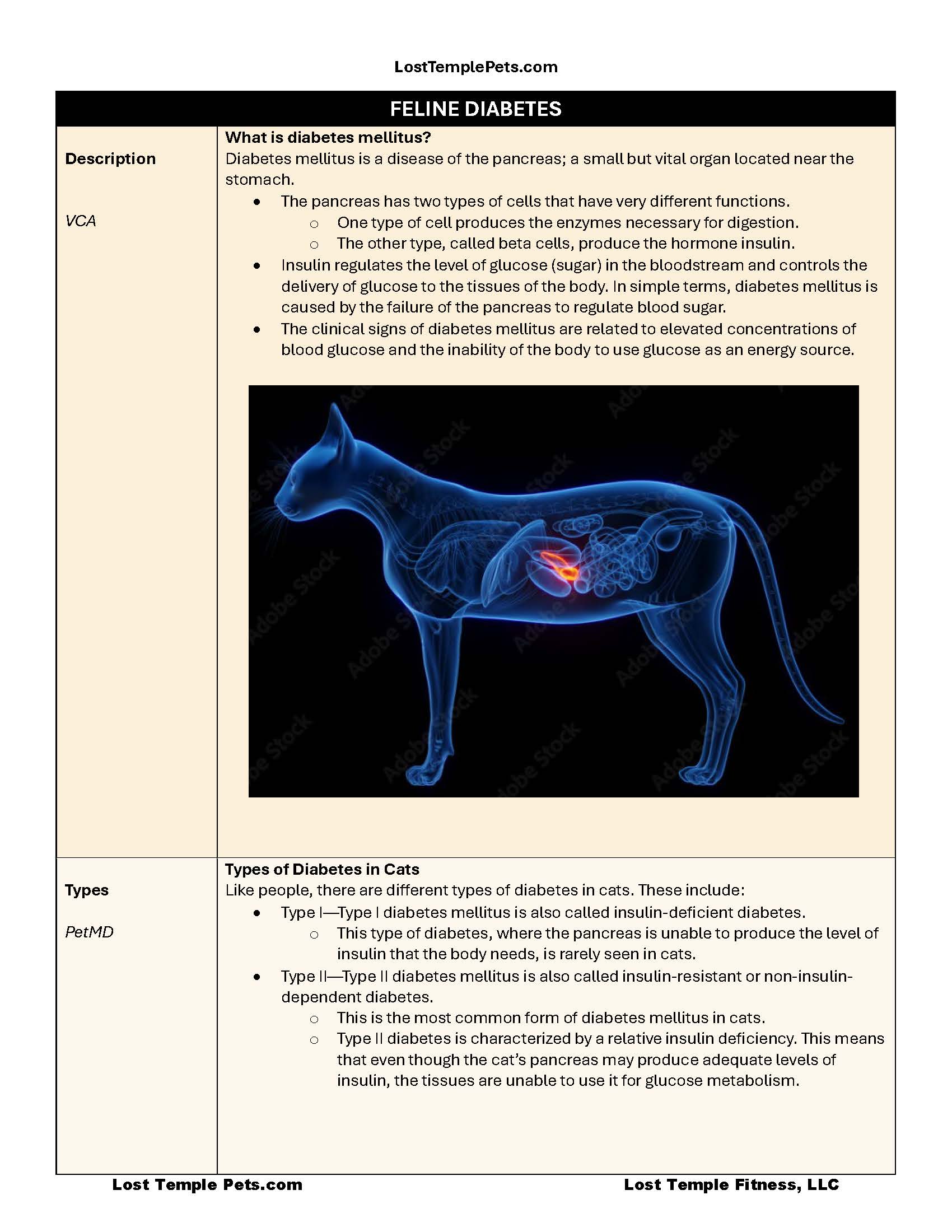
Diabetes mellitus is a disease of the pancreas; a small but vital organ located near the stomach. Like people, there are different types of diabetes in cats.
These include:
Type I—Type I diabetes mellitus is also called insulin-deficient diabetes, which is rarely seen in cats.
Type II—Type II diabetes mellitus is also called insulin-resistant or non-insulin-dependent diabetes. This is the most common form of diabetes mellitus in cats.
What is Feline Diabetes
What is Diabetes Mellitus? (VCA)
What is diabetes mellitus?
Diabetes mellitus is a disease of the pancreas; a small but vital organ located near the stomach.
- The pancreas has two types of cells that have very different functions. One type of cell produces the enzymes necessary for digestion.
- The other type, called beta cells, produce the hormone insulin.
- Insulin regulates the level of glucose (sugar) in the bloodstream and controls thedelivery of glucose to the tissues of the body. In simple terms, diabetes mellitus iscaused by the failure of the pancreas to regulate blood sugar.
- The clinical signs of diabetes mellitus are related to elevated concentrations ofblood glucose and the inability of the body to use glucose as an energy source.
Types of Diabetes in Cats (PetMD)
Types of Diabetes in Cats
Like people, there are different types of diabetes in cats. These include:
- Type I—Type I diabetes mellitus is also called insulin-deficient diabetes.
- This type of diabetes, where the pancreas is unable to produce the level of insulin that the body needs, is rarely seen in cats.
- Type II—Type II diabetes mellitus is also called insulin-resistant or non-insulin-dependent diabetes.
- This is the most common form of diabetes mellitus in cats.
- Type II diabetes is characterized by a relative insulin deficiency. This means that even though the cat’s pancreas may produce adequate levels of insulin, the tissues are unable to use it for glucose metabolism.
Feline Diabetes Videos
YouTube Videos that help explain Diabetes in Cats.
Disclaimer:
This is for research only and Lost Temple Pets does not endorse any video presented on this website.
It is advised that you ALWAYS CHECK WITH YOUR VETERINARIAN for a proper diagnosis and treatment plan.
Playlist
Causes & Risk Factors
Causes & Risks (PetMD)
Causes
Diabetes is more common in overweight and sedentary cats. Affected kitties are usually middle-aged or older.
- Cats usually suffer from the Type 2 kind of diabetes, caused by abnormalities in their pancreas.
- Affected cats respond poorly to their own insulin, which is called insulin resistance. Over time, without treatment, prolonged insulin resistance and high blood sugar levels result in even less insulin being produced by the pancreas.
- Diabetes can occur in any age or breed of cat but tends to affect middle-aged and older cats.
- Some breeds, such as the Burmese, may have a genetic predisposition to develop diabetes, and so are at higher risk.
- (Other breeds include the Maine Coon & Birman).
Cat Diabetes Risk Factors
It’s estimated that between 0.5-1% of the general feline population suffers from diabetes, but an increasing number of cats are being diagnosed each year.
- Any cat has the potential to develop diabetes throughout their lifetime, but certain breeds—such as the Burmese cat breed—have been reported to carry a higher lifetime risk.
- Most commonly, diabetes is seen in middle-aged male cats that are obese.
The most important risk factors for diabetes mellitus in cats are:
- Obesity
- Lack of physical activity
- Increasing age
- Sex (males are diagnosed more frequently than females)
- Being neutered
- Glucocorticoid (steroid) therapy
- Certain medical conditions may also predispose a cat to developing diabetes. These conditions include:
- Hyperthyroidism
- Pancreatitis
- Asthma (due to steroid medication use)
Signs / Symptoms
The 7 Signs Your Cat May Have Diabetes (Catster)
The 7 Signs Your Cat May Have Diabetes
The idea of diabetes can be scary, but veterinarians can provide treatments and advice on managing clinical signs associated with the disease.
Frequent Urination
- If your cat goes to the bathroom more often, it might be a sign of diabetes, which also causes increased thirst. If you notice your cat urinating and drinking more, take your pet to the veterinarian.
Lethargy or Weakness
- Lethargy is another symptom of diabetes. A lively cat that suddenly becomes less active is a reason for concern. This applies to how your cat walks.
- For example, a cat walking flat on its hind legs (plantigrade stance) or tripping may be a sign that they have diabetes.
- If left untreated, it could lead to permanent paralysis of the hind legs.
Change in Appetite
- A cat eating more than usual or less often can be a sign of diabetes. Several factors can affect your cat’s appetite, but you shouldn’t risk your cat’s health by assuming the condition will improve.
Rapid Weight Change
- Rapid weight loss or gain is a common sign of diabetes in cats. The more overweight a cat is, the more symptomatic they may be.
Vomiting
- Vomiting is an obvious sign your cat is sick, and it’s also a symptom sometimes seen with severe cases of diabetes. If your cat begins vomiting, get them to a vet as soon as possible.
Using the Bathroom Outside of the Litter Box
- A cat using the bathroom outside of the litter box could mean the lethargy and weakness brought on by the diabetes is making it harder for them to get to the litter box.
Lack of Interest
- If your cat usually enjoys playing and suddenly doesn’t care anymore, then you should talk to a vet. A sudden change in personality could be due to fatigue brought on by diabetes.
- If you need to speak with a vet but can’t get to one, head over to PangoVet. It’s an online service where you can talk to a vet online and get the advice you need for your pet — all at an affordable price!
Diagnostics
Diagnosis (Cornell)
Diagnosis
Your veterinarian will diagnose diabetes mellitus by demonstrating persistently elevated glucose levels in a cat’s blood and urine. This testing, along with consistent clinical signs, will lead to the diagnosis of diabetes.
- A single blood glucose reading in a veterinary clinic may not be sufficient to diagnose diabetes in all cases. Cats can develop a short-term elevation in blood glucose as a response to stress, known as stress hyperglycemia.
- In these uncertain cases a lab test known as a fructosamine concentration can be helpful. This test gives a rough average of a cat’s blood glucose concentration over the last two weeks, so would not be affected by stress hyperglycemia
- Other tests will likely be recommended by the veterinarian to rule out other diseases which might be contributing to a cat’s clinical signs, such as a urinary tract infection, chronic kidney disease, pancreatitis or hyperthyroidism.
Is Diabetes Common in Cats?
How Common is Diabetes Mellitus in Cats? (VCA)
How Common is Diabetes Mellitus in Cats?
Diabetes mellitus is the second most common endocrine disease in cats.
- It is seen more frequently in middle-aged to senior cats and is more common in males than in females.
- While the exact incidence is unknown, the number of diabetic cats is increasing at an alarming rate due to the tremendous increase in the number of overweight and obese cats.
- It is important to note that a cat three pounds over its ideal weight is considered obese, and that means the average domestic cat weighing 13 pounds or more is at high risk of developing type 2 diabetes mellitus.
Treatment
Treatment (PetMD)
Treatment
The primary goals of treatment of feline diabetes are centered on:
- Restoring normal blood glucose levels
- Reducing or eliminating the clinical signs of excess thirst and urination
- Normalizing weight and appetite
- Avoiding inducing inappropriately low glucose levels
How is Diabetes Mellitus Treated in Cats? (VCA)
How is Diabetes Mellitus Treated in Cats?
Diabetes mellitus is a treatable condition. Although long-term treatment requires commitment and dedication, it can be rewarding to manage this condition successfully in a beloved cat.
- Initial steps in treating a diabetic cat include removing potential predisposing causes for the diabetes.
- For example, some medications such as corticosteroids predispose cats to develop diabetes, and withdrawal of these drugs may lead to resolution of the condition.
- Obesity is a risk factor for diabetes in cats, so weight normalization may lead to resolution of diabetes in some cats.
- All cats with diabetes mellitus benefit from being fed a well-balanced diet, and your veterinarian is the best source for guidance about which nutrient profile will most benefit your cat.
- Many cats with diabetes mellitus benefit from a diet that is high in protein and relatively low in carbohydrates, because this type of diet decreases the amount of glucose absorbed from the intestinal tract and lowers the requirement for insulin.
- Unfortunately, while nutrition is a critical element of diabetes management in cats, it is generally not as easy as making a simple nutritional choice.
- There are now two types of treatment for diabetes mellitus: insulin injections and oral medication. Both require careful monitoring to ensure they are effective.
- Not all cats are good candidates for oral medication.
- Treatment options are dependent on the medical history and overall health of your cat. Your veterinarian will recommend the best option for your cat.
- Many cats need insulin injections once or twice daily.
- Your cat may require several hospital visits until an appropriate insulin dosage is determined.
- New technology has allowed the adoption of home glucose monitoring with the use of a simple device, such as an AlphaTrak® or a continuous glucose monitoring system such as the Freestyle Libre®.
- Additional home monitoring can involve the evaluation of urine for the presence of glucose, although this is not a very sensitive way to monitor glucose levels and insulin changes should not be made based on urine glucose levels.
- Most cats will achieve initial stabilization within a few days to a few weeks and will require once- or twice-daily injections of insulin.
- Very small needles are available that cause no pain to the cat, and within a short time the procedure becomes routine.
- Insulin “pens” make it even easier to give your pet an insulin injection. Your veterinarian will determine the appropriate administration frequency, dosages, and type of insulin that your cat requires.
Home Monitoring & Possible Complications
Caring for a Diabetic Cat at Home (PetMD)
Caring for a Diabetic Cat at Home
When caring for your diabetic cat, you will need to consistently perform few tasks to help manage your pet’s condition.
Monitoring Your Cat’s Glucose Levels
- At-home monitoring of your cat’s blood glucose levels is important for monitoring your cat’s glycemic control long-term. This typically involves pricking the inside of your cat’s ear and using a glucometer (AlphaTRAK®).
- Your veterinarian will work with you to determine the method of monitoring that works best for you and your cat.
Monitoring Your Cat’s Insulin Response
- One of the most serious risks and potential complication of managing a diabetic cat at home is the risk of hypoglycemia (low blood sugar).
- This can happen to any pet being managed for diabetes at home, even if you give them the appropriate dose (or less than the appropriate dose) prescribed by the veterinarian.
- For this reason, it’s important that you strictly follow your veterinarian’s instructions and schedule for feeding and giving insulin, and that you never administer a full dose of insulin to your pet if they are not eating.
Managing Your Cat’s Diet and Weight
- Nutrition is an important part of managing diabetes in cats. Your veterinarian may recommend a diet change to help regulate your cat’s glucose levels and promote weight loss, as obesity complicates diabetes management.
- Once you have identified a nutritional plan that works for your cat, it’s critical that you maintain a strict feeding schedule.
- Don’t change your cat’s diet without consulting your veterinarian first.
- Providing Appropriate Exercise
- Keeping your cat physically active is another important component of helping your cat achieve a healthy weight.
Keep a daily log of your cat’s:
- Diet
- Glucose test results
- Daily insulin dose
- Weekly body weight
You can see trends and recognize when your cat deviates from their regular pattern. Any change in patterns should be brought to your vet’s attention.
Possible Complications (Cornell)
Possible Complications
Insulin therapy and SGLT2 medications lower blood glucose, possibly to dangerously low levels.
- Signs of low blood sugar (hypoglycemia) include weakness, lethargy, vomiting, lack of coordination, seizures, and coma.
- Hypoglycemia can be fatal if left untreated, so any diabetic cat that shows any of these signs should be offered its regular food immediately.
- If the cat does not eat voluntarily, it should be given oral glucose in the form of honey, corn syrup, or proprietary dextrose gels (available at most pharmacies) and brought to a veterinarian immediately.
- It is important, however, that owners do not attempt to force fingers, food, or fluids into the mouth of a convulsing or comatose cat.
Ketoacidosis
Diabetic cats with uncontrolled diabetes may develop a condition known as ketoacidosis.
- This occurs when cells starved for glucose begin to break down fats for energy, a process that creates chemicals called ketones, which make the blood more acidic.
- Ketoacidosis is considered a medical emergency, and cats diagnosed with this complication require hospitalization for ideal management.
References
References
Cats.com – Diabetes in Cats: Causes, Symptoms, and Treatment
Written by Dr. Chris Vanderhoof, DVM, MPH; Last updated May 30, 2025
https://cats.com/feline-diabetes
Catster – How to Tell if Your Cat Has Diabetes: 7 Vet-Reviewed Signs to Look For
By Patricia Dickson · Reviewed & fact-checked by Dr. Maxbetter Vizelberg DVM
Updated on July 6, 2025
https://www.catster.com/cat-health-care/how-to-tell-if-cat-has-diabetes/
Catster 2 Prevention – How to Prevent Diabetes in Cats: 7 Vet-Reviewed Tips
By Lorre Luther · Reviewed & fact-checked by Dr. Lauren Demos (DVM)
Updated on June 19, 2025
https://www.catster.com/cat-health-care/how-to-prevent-diabetes-in-cats/
Cornell College of Veterinary Medicine; Feline Health Center – Feline Diabetes
Updated 2024
PetMD by Chewy – Diabetes in Cats: Signs, Treatment, and Prognosis
By Samantha Morici, DVM. Reviewed by Barri J. Morrison, DVM
Updated Dec. 16, 2024
https://www.petmd.com/cat/conditions/endocrine/c_ct_diabetes_mellitus
TVP – Today’s Veterinary Practice – Managing Feline Diabetes Mellitus
Andrew Bugbee DVM, DACVIM and Madeline A. Fujishiro DVM
April 12, 2019 | Issue: May/June 2019
https://www.todaysveterinarypractice.com/endocrinology/managing-feline-diabetes-mellitus/
VCA Animal Hospital – Diabetes Mellitus in Cats: Overview
By Malcolm Weir, DVM, MSc, MPH; Krista Williams, BSc, DVM; Robin Downing, DVM, DAAPM, DACVSMR, CVPP; Ernest Ward, DVM
https://vcahospitals.com/know-your-pet/diabetes-mellitus-in-cats-overview