Feline Hyperthyroidism
Research, Resources & Education
This website is based on research and is NOT created to diagnose your pet.
Each animal is an individual and may exhibit symptoms in a different way.
It is advised that you ALWAYS CHECK WITH YOUR VETERINARIAN for a proper diagnosis and treatment plan.
Table of Contents
Feline Hyperthyroidism
Hyperthyroidism is caused by excess of the thyroid hormones, T3 and T4. It is most likely to be seen in middle-aged to old cats.
A hormone-producing, benign thyroid tumor is the most common cause of feline hyperthyroidism. Both thyroid lobes are typically enlarged and may be felt by your veterinarian.
The most common signs include weight loss, excessive appetite, hyperexcitability, increased thirst and urination, vomiting, diarrhea, and increased fecal volume.
(Merck)
What is Feline Hyperthyroidism?
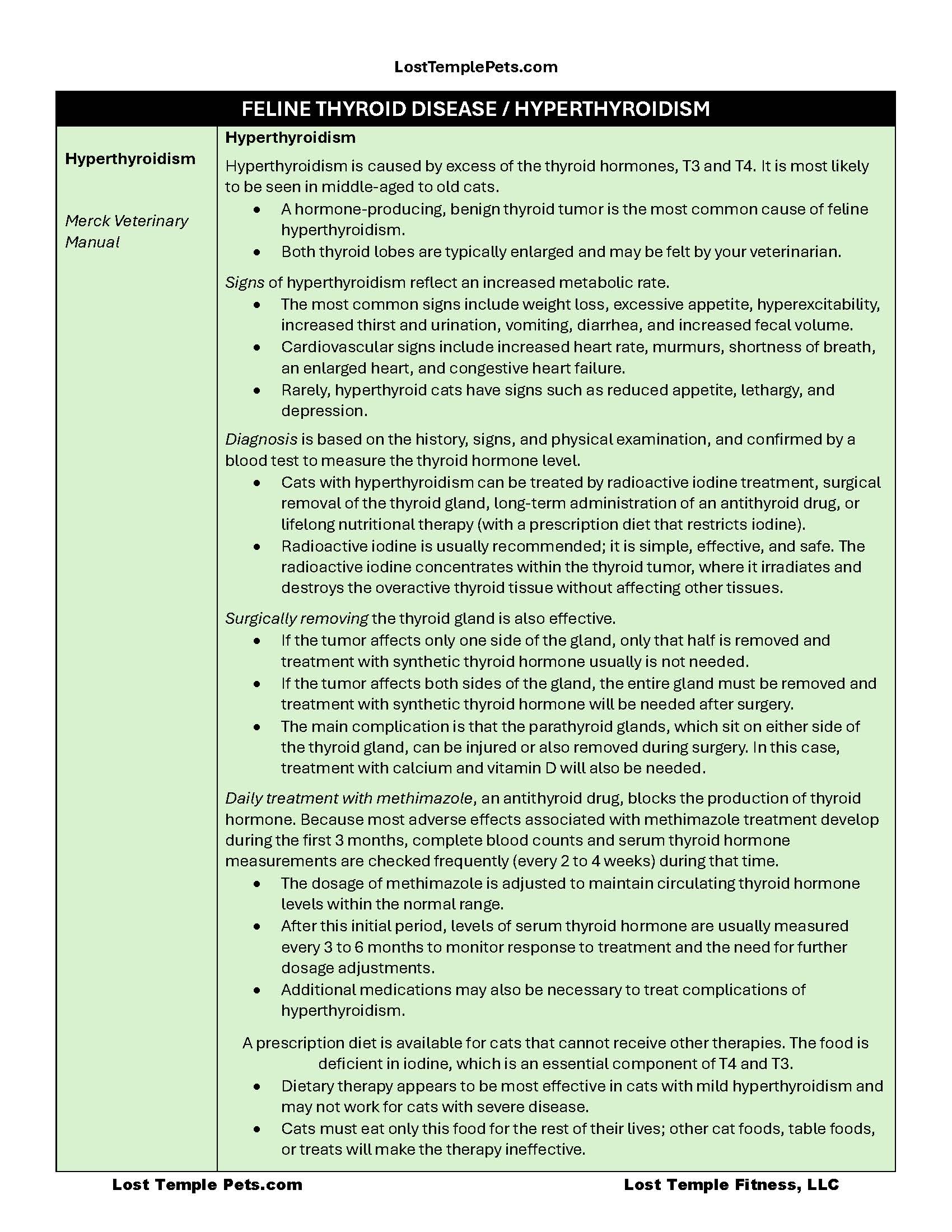
Hyperthyroidism (Merck Veterinary Manual)
Hyperthyroidism
Hyperthyroidism is caused by excess of the thyroid hormones, T3 and T4. It is most likely to be seen in middle-aged to old cats.
- A hormone-producing, benign thyroid tumor is the most common cause of feline hyperthyroidism.
- Both thyroid lobes are typically enlarged and may be felt by your veterinarian.
Signs of hyperthyroidism reflect an increased metabolic rate.
- The most common signs include weight loss, excessive appetite, hyperexcitability, increased thirst and urination, vomiting, diarrhea, and increased fecal volume.
- Cardiovascular signs include increased heart rate, murmurs, shortness of breath, an enlarged heart, and congestive heart failure.
- Rarely, hyperthyroid cats have signs such as reduced appetite, lethargy, and depression.
Diagnosis is based on the history, signs, and physical examination, and confirmed by a blood test to measure the thyroid hormone level.
- Cats with hyperthyroidism can be treated by radioactive iodine treatment, surgical removal of the thyroid gland, long-term administration of an antithyroid drug, or lifelong nutritional therapy (with a prescription diet that restricts iodine).
- Radioactive iodine is usually recommended; it is simple, effective, and safe. The radioactive iodine concentrates within the thyroid tumor, where it irradiates and destroys the overactive thyroid tissue without affecting other tissues.
Surgically removing the thyroid gland is also effective.
- If the tumor affects only one side of the gland, only that half is removed and treatment with synthetic thyroid hormone usually is not needed.
- If the tumor affects both sides of the gland, the entire gland must be removed and treatment with synthetic thyroid hormone will be needed after surgery.
- The main complication is that the parathyroid glands, which sit on either side of the thyroid gland, can be injured or also removed during surgery. In this case, treatment with calcium and vitamin D will also be needed.
Daily treatment with methimazole, an antithyroid drug, blocks the production of thyroid hormone. Because most adverse effects associated with methimazole treatment develop during the first 3 months, complete blood counts and serum thyroid hormone measurements are checked frequently (every 2 to 4 weeks) during that time.
- The dosage of methimazole is adjusted to maintain circulating thyroid hormone levels within the normal range.
- After this initial period, levels of serum thyroid hormone are usually measured every 3 to 6 months to monitor response to treatment and the need for further dosage adjustments.
- Additional medications may also be necessary to treat complications of hyperthyroidism.
A prescription diet is available for cats that cannot receive other therapies. The food is deficient in iodine, which is an essential component of T4 and T3.
- Dietary therapy appears to be most effective in cats with mild hyperthyroidism and may not work for cats with severe disease.
- Cats must eat only this food for the rest of their lives; other cat foods, table foods, or treats will make the therapy ineffective.
What Does the Thyroid Gland Do? (PetMD)
What Does the Thyroid Gland Do?
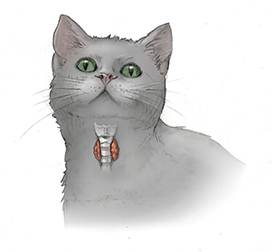
In cats, the thyroid gland has two parts, with one on each side of the trachea (windpipe), just below the larynx (voice box).
The thyroid gland makes several different hormones (mostly thyroxine, or T4). These thyroid hormones affect many of your cat’s body processes:
Regulation of body temperature
- Metabolism of fats and carbohydrates
- Weight gain and loss
- Heart rate and cardiac output
- Nervous system function
- Growth and brain development in young animals
- Reproduction
- Muscle tone
- Skin condition
Hypothyroidism (Merck Veterinary Manual)
Hypothyroidism
In hypothyroidism, decreased levels of thyroid hormones result in a slower metabolic rate.
- In cats, the most common reason for hypothyroidism is surgical removal or destruction (for example, by radioiodine or antithyroid drugs) of the thyroid gland as a treatment for hyperthyroidism.
- Although naturally occurring hypothyroidism is extremely rare in cats, when it does occur, it appears to be due to a disorder in the thyroid gland itself (rather than in the pituitary gland, as is seen in some other animals).
Because a deficiency of thyroid hormone affects the function of all organ systems, signs vary.
- In cats with mild disease, signs are mild or absent.
- In cats with advanced disease, signs include lethargy, dullness, hair loss, low body temperature, decreased appetite, and occasionally decreased heart rate.
- Obesity may develop, especially in cats with hypothyroidism caused by destruction of the gland stemming from treatment for hyperthyroidism.
- In cats that are born with hypothyroidism (or that develop it at a young age), signs include dwarfing, severe lethargy, mental dullness, constipation, lack of appetite, and decreased heart rate.
Accurately diagnosing hypothyroidism requires close evaluation of signs and various laboratory tests, including demonstration of low blood concentrations of thyroid hormones (especially T4) in combination with high levels of thyroid-stimulating hormone.
Hypothyroidism is treated using replacement with synthetic thyroid hormone.
- The success of treatment can be measured by the amount of improvement in signs.
- Thyroid hormone concentrations are also monitored to determine whether the dosage of thyroid hormone needs adjustment.
- Once the dose has been stabilized, thyroid hormone levels are usually checked once or twice a year.
- Treatment is generally lifelong.
Feline Hyperthyroidism Videos
YouTube Videos that help explain Hyperthyroidism in Cats.
Disclaimer:
This is for research only and Lost Temple Pets does not endorse any video presented on this website.
It is advised that you ALWAYS CHECK WITH YOUR VETERINARIAN for a proper diagnosis and treatment plan.
Playlist
Causes & Risk Factors
Are Certain Cats More Likely to Develop Hyperthyroidism? (VCA)
Are certain cats more likely to develop hyperthyroidism?
Older cats are at greater risk for developing hyperthyroidism. No individual breed is known to have a greater risk, although Siamese, Burmese, Persian, Abyssinian, Tonkinese, and British shorthair breeds appear to have a somewhat decreased incidence of hyperthyroidism compared to other breeds.
What Causes Cats to Be Hyperthyroid? (PetMD)
What Causes Cats to Be Hyperthyroid?
Hyperfunctioning thyroid nodules (where the thyroid nodules produce excess thyroid hormones outside of the control of the pituitary gland) cause hyperthyroidism. But what causes the thyroid to go haywire?
There are several theories about what causes cats to become hyperthyroid:
- Rarely, thyroid cancer
- Some reports have linked hyperthyroidism in cats to some fish-flavored canned food diets
- Research has pointed to flame-retardant chemicals (PBDEs) that are used in some furniture and carpeting and circulated in house dust
- Advancing age increases risk
Signs & Symptoms
What Are the Signs of Hyperthyroidism in Cats? (Catster)
What Are the Signs of Hyperthyroidism in Cats?
Clinical signs of hyperthyroidism in cats vary depending on the stage of the disease and how long the glands have been overactive.
- Early signs of hyperthyroidism include:
- Increase in appetite
- Weight loss
- Increase in vocalization
- Palpable mass in the neck
- Behavioral changes (more anxious/fractious/aggressive)
- A sudden increase in energy
- Increased thirst
- Increased urination
- Gastrointestinal signs such as vomiting and diarrhea
- Loss of coat condition
- Reduction in grooming activities
- Alopecia
- Lethargy
- Faster heartbeat
- Sleep disturbances
Clinical signs once the disease has become well established vary slightly.
- The clinical signs mentioned above will progress and become more profound.
- As the disease affects more organs, conditions such as high blood pressure, heart disease, kidney disease, liver disease, respiratory issues, skin disorders, and blindness can become apparent.
Clinical signs noted by owners as the disease progresses include:
- Seizures
- Incoordination
- Muscle tremors
- Muscle weakness and wastage
- Dilated pupils
- Blindness
- Heart arrhythmias and murmurs
Diagnosis & Secondary Problems
Diagnosis & Secondary Problems (Cornell)
Diagnosis
A veterinarian who suspects a cat has a thyroid problem will conduct a physical examination and palpate the cat’s neck area to check for an enlarged thyroid gland.
- The cat’s heart rate and blood pressure may also be checked.
- If thyroid disease is a possibility, your veterinarian will likely order a blood chemistry panel and an analysis of thyroid hormone levels.
- Most cats with hyperthyroidism have elevated levels of the thyroid hormone T4 in their bloodstream, but a small percentage of cats with hyperthyroidism have T4 levels within the normal range.
- If your cat does not have elevated T4 levels but your veterinarian still suspects your cat has hyperthyroidism, additional tests may be recommended.
- Since hyperthyroidism can predispose a cat to other conditions, it is important to evaluate general health, with particular focus on the heart and kidneys.
- A blood chemistry panel and urinalysis will provide information about other organs and provide your veterinarian with an overall picture of your cat’s health.
Secondary Problems
Because of the important role the thyroid gland plays in the body, some cats with hyperthyroidism develop secondary problems, including heart disease and high blood pressure.
- Elevated thyroid hormones stimulate an increased heart rate and a stronger contraction of the heart muscle, and can cause thickening of the left ventricle of the heart over time.
- If left untreated and unmanaged, these changes may eventually compromise the normal function of the heart and can even lead to heart failure. For this reason, some cats with hyperthyroidism may require additional treatment to control secondary heart disease. However, once the underlying hyperthyroidism has been controlled, the cardiac changes will often improve or may even resolve completely.
- Hypertension, or high blood pressure, is another potential complication of hyperthyroidism, and can cause additional damage to several organs, including the eyes, kidneys, heart, and brain.
If hypertension is diagnosed along with hyperthyroidism, drugs may be needed to control the blood pressure and reduce the risk of damaging other organs. As in the case of heart disease, after the hyperthyroidism has been successfully treated, high blood pressure will often resolve, and permanent treatment for it may not be required.
Prevention
Can Hyperthyroidism be Prevented? (VCA)
Can Hyperthyroidism be Prevented?
There are currently no known preventive measures for hyperthyroidism, but early diagnosis decreases the secondary problems and improves the prognosis.
- All middle-aged and senior cats should receive a complete physical examination by a veterinarian every 6 months.
- Special attention should be given to the thyroid glands to look for evidence of enlargement and the clinical signs of hyperthyroidism.
- Annual blood and urine tests are important in all cats aged 7 years and older to detect hyperthyroidism before potentially irreversible damage occurs.
Treatment
Treatment for Hyperthyroid Cats – (PetMD)
Treatment for Hyperthyroid Cats – (PetMD)
The gold standard therapy is radioiodine (I131) treatment, which can cure the hyperthyroidism in most cases. Daily medication (methimazole) or feeding a low-iodine diet are good options when radioiodine therapy is not an option due to financial considerations or the cat’s overall health.
Radioiodine Therapy (Radioactive Iodine Treatment)
Radioiodine therapy, or I131 treatment, uses radioactive iodine to kill the diseased tissue in the thyroid gland. Most cats undergoing I131 treatment are cured of the disease with one treatment.
- The cat’s thyroid levels are monitored after treatment. Rare cases require a second treatment. Hypothyroidism is not common after treatment, but it can occur, and it can be managed with a daily thyroid medication.
- The use of radioiodine is restricted to a confined medical facility, since the treatment itself is radioactive. Depending on the state you live in and the guidelines in place, your cat will need to be hospitalized from several days to a few weeks after being treated with radioactive medicine, to allow the radioactive material to leave your cat’s body before coming home.
- Precautions will still need to be taken after bringing your cat home. Your veterinarian will give you specific instructions to reduce your risk of exposure to the radioactive material, which will probably include storing your cat’s used litter in a sealed container for a period of time before disposing of it in the garbage.
Surgically Removing the Thyroid Gland
Surgical removal of the diseased thyroid gland is another potential treatment. Like I131 treatment, surgical treatment is curative, but these cats also must be monitored afterward for hypothyroidism.
- Surgical removal of the thyroid gland is best performed when only one thyroid gland is affected, as removal of both can possibly lead to hypothyroidism. Another complication that can occur after surgical removal of the affected thyroid gland is the successive hyperactivity of the remaining thyroid gland.
Methimazole Medication
Giving your cat a medication called methimazole is probably the most common treatment choice. It’s administered by mouth in pill form, or it can be formulated by a compounding pharmacy into a transdermal gel that can be applied to your cat’s ear. Methimazole is often given before radioiodine treatment or surgery to stabilize your cat’s clinical signs.
- Methimazole is effective in controlling the symptoms of hyperthyroidism. However, it does not cure the disease—your cat will need to receive the medication for the rest of his life. If a cat is younger at diagnosis (under 10 years old) and does not have underlying diseases, the cost of methimazole for a lifetime may exceed surgery or radioiodine.
- Methimazole has rare but significant side effects in some cats, so make sure to make and keep regular monitoring appointments with your veterinarian.
Iodine-Restricted Diet
Feeding a diet that restricts iodine is a newer alternative for treatment of feline hyperthyroidism. Like methimazole treatment, this alternative is not curative, and your cat will require lifelong treatment.
- This diet must be given exclusively. The hyperthyroid cat on this diet must not have access to or be given any treats, other cat food, or human food.
- Other cats in the household may eat this food, but they must be supplemented with an appropriate cat food for their age and health in order to provide adequate iodine.
How is Hyperthyroidism Treated? (VCA)
How is hyperthyroidism treated?
Treatment is usually very successful, as fewer than 2% of cats with hyperthyroidism have cancerous growths of the thyroid gland.
- Before deciding the form of treatment, several tests are performed, including additional blood tests, a urinalysis, chest X-rays (radiographs), an ECG, and blood pressure measurements.
- These tests are needed to evaluate your cat’s overall health and predict the likelihood of complications with the chosen treatment protocol.
- Ultrasound of the heart (called echocardiography) may be recommended based on your cat’s condition, especially if there is any concern about cardiomyopathy.
- Thyroid scintigraphy (a radioactive scan of the thyroid gland) may also be recommended to confirm a diagnosis and determine the size of the organ before surgery or radioactive iodine.
Prognosis
Prognosis/Life Expectancy (VCA)
Prognosis/Life Expectancy
The outcome of most cat hyperthyroidism treatments is excellent.
- Even if your cat is older, hyperthyroidism can still be treated, and your cat can have a healthy life. For instance, cats who receive radioactive iodine therapy usually return to normal within a few weeks, while cats treated with medication or put on a special diet do well as long as the drug or diet is given consistently and they receive regular checkups.
- If you suspect that your cat has hyperthyroidism, there is an excellent chance your veterinarian can find the right therapy and get your cat back to feeling good faster than you’d think.
References
References
Catster – Hyperthyroidism in Cats: Our Vet Explains the Causes, Signs & Treatments
By Dr. Emma Chandley · Written by Dr. Emma Chandley; Updated on June 19, 2025
https://www.catster.com/ask-the-vet/hyperthyroidism-in-cats-vet-answer/
Cornell College of Veterinary Medicine; Feline Health Center – Hyperthyroidism in Cats
and Pic; Updated January 2017
Merck Veterinary Manual (Pet Owner Version) – Disorders of the Thyroid Gland in Cats
By Mark E. Peterson, DVM, DACVIM-SAIM, Animal Endocrine Clinic, New York; Janice E. Kritchevsky, VMD, DACVIM-LAIM, Department of Veterinary Clinical Sciences, College of Veterinary Medicine, Purdue University
Reviewed/Revised Aug 2018 | Modified Sept 2024
PetMD by Chewy – Hyperthyroidism in Cats: Symptoms and Treatment
By Lorie Huston, DVM. Reviewed by Jennifer S. Fryer, DVM; Updated Mar. 18, 2020
https://www.petmd.com/cat/conditions/endocrine/c_ct_hyperthyroidism
VCA Animal Hospital – Hyperthyroidism in Cats
By Malcolm Weir, DVM, MSc, MPH; Krista Williams, BSc, DVM; Robin Downing, DVM, CVPP, CCRP, DAAPM; Ernest Ward, DVM
https://vcahospitals.com/know-your-pet/hyperthyroidism-in-cats