
Feline
Leukemia Virus (FeLV)
Research, Resources & Education
This website is based on research and is NOT created to diagnose your pet.
Each animal is an individual and may exhibit symptoms in a different way.
It is advised that you ALWAYS CHECK WITH YOUR VETERINARIAN for a proper diagnosis and treatment plan.
Table of Contents
Feline Leukemia Virus (FeLV)
Feline leukemia virus (FeLV) is one of the most important infectious diseases of cats worldwide.
Affected cats can develop anemia (a low red blood cell level), cancers, and/or suppression of the immune system. The disease worsens over time and is usually fatal. The virus can infect domestic and wild cats.
Widespread testing and vaccination efforts have helped to reduce the prevalence of the disease over the past 30 years, and in 2010 approximately 3% of the cats in the United States were infected.
(Merck)
What is Feline Leukemia Virus (FeLV)
Feline leukemia virus (FeLV) (Merck Veterinary Manual)
Feline leukemia virus (FeLV)
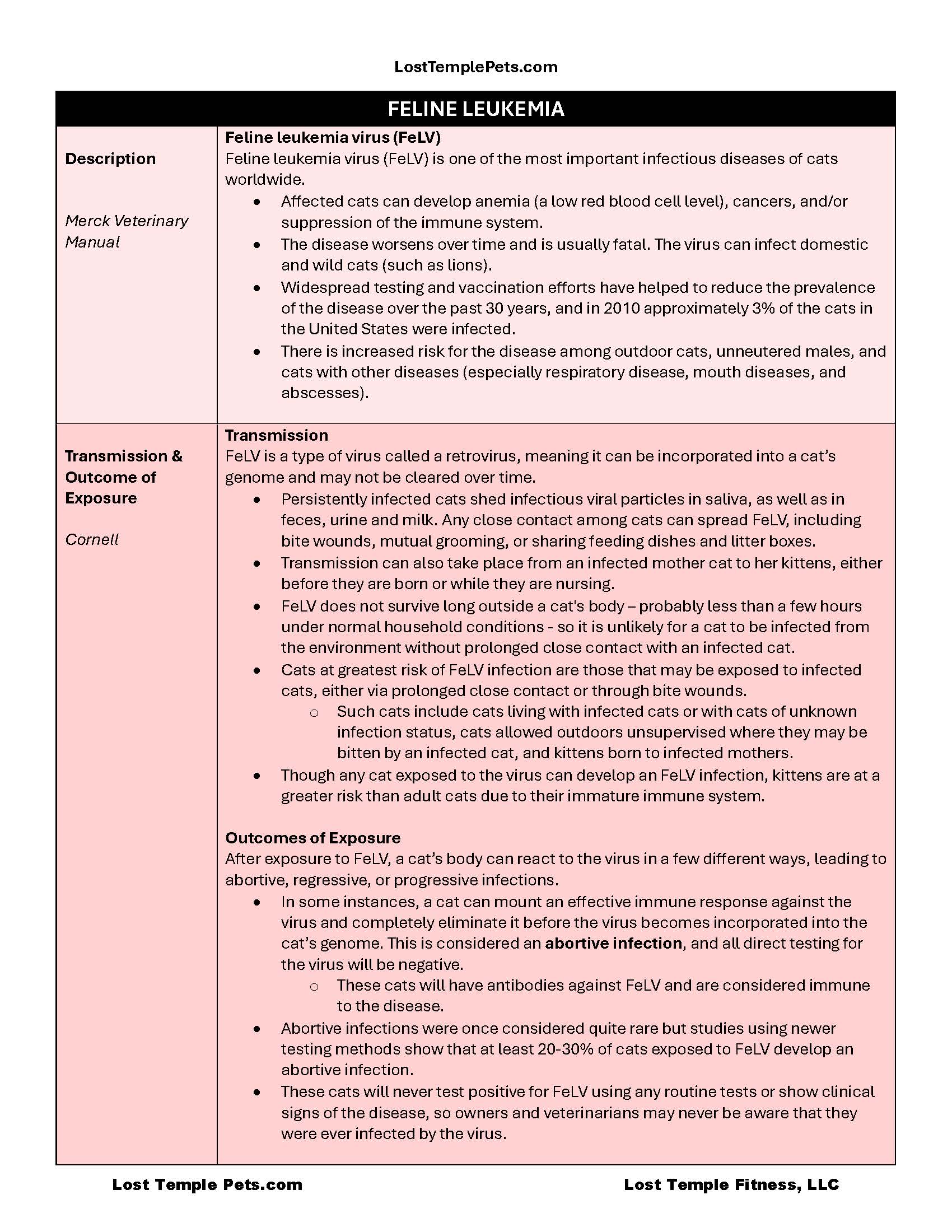
Feline leukemia virus (FeLV) is one of the most important infectious diseases of cats worldwide.
- Affected cats can develop anemia (a low red blood cell level), cancers, and/or suppression of the immune system.
- The disease worsens over time and is usually fatal. The virus can infect domestic and wild cats (such as lions).
- Widespread testing and vaccination efforts have helped to reduce the prevalence of the disease over the past 30 years, and in 2010 approximately 3% of the cats in the United States were infected.
- There is increased risk for the disease among outdoor cats, unneutered males, and cats with other diseases (especially respiratory disease, mouth diseases, and abscesses).
Transmission & Outcome of Exposure (Cornell)
Transmission
FeLV is a type of virus called a retrovirus, meaning it can be incorporated into a cat’s genome and may not be cleared over time.
- Persistently infected cats shed infectious viral particles in saliva, as well as in feces, urine and milk. Any close contact among cats can spread FeLV, including bite wounds, mutual grooming, or sharing feeding dishes and litter boxes.
- Transmission can also take place from an infected mother cat to her kittens, either before they are born or while they are nursing.
- FeLV does not survive long outside a cat’s body – probably less than a few hours under normal household conditions – so it is unlikely for a cat to be infected from the environment without prolonged close contact with an infected cat.
- Cats at greatest risk of FeLV infection are those that may be exposed to infected cats, either via prolonged close contact or through bite wounds.
- Such cats include cats living with infected cats or with cats of unknown infection status, cats allowed outdoors unsupervised where they may be bitten by an infected cat, and kittens born to infected mothers.
- Though any cat exposed to the virus can develop an FeLV infection, kittens are at a greater risk than adult cats due to their immature immune system.
Outcomes of Exposure
After exposure to FeLV, a cat’s body can react to the virus in a few different ways, leading to abortive, regressive, or progressive infections.
- In some instances, a cat can mount an effective immune response against the virus and completely eliminate it before the virus becomes incorporated into the cat’s genome. This is considered an abortive infection, and all direct testing for the virus will be negative.
- These cats will have antibodies against FeLV and are considered immune to the disease.
- Abortive infections were once considered quite rare but studies using newer testing methods show that at least 20-30% of cats exposed to FeLV develop an abortive infection.
- These cats will never test positive for FeLV using any routine tests or show clinical signs of the disease, so owners and veterinarians may never be aware that they were ever infected by the virus.
About 30-40% of cats have a partially effective immune response following exposure to the virus and develop a regressive infection.
- In these infections, the virus is incorporated into the cat’s genome, but the immune system prevents prolonged viral replication, so there are no viral particles present in the cat’s blood after the initial infection.
- While a cat has a regressive infection, it cannot actively infect other cats with the disease, and it is very unlikely to experience clinical signs from FeLV. However, it is possible for the virus to reactivate and start replicating again, especially if the cat becomes immunosuppressed through illness or medications.
- When this happens, the cat is again infectious to other cats and at risk of developing clinical illness.
Progressive FeLV infection carries the worst prognosis, and cats with progressive FeLV are at high risk of developing potentially fatal associated diseases.
- With a progressive infection, a cat’s bone marrow becomes infected with the virus and allows for continual viral replication.
- Cats with progressive FeLV infection shed viral particles and can infect other cats.
- Studies suggest that 30-40% of cats exposed to FeLV develop a progressive infection, but kittens are at much higher risk of developing progressive disease than cats exposed to the virus as an adult.
Disorders that can Develop from Infected Cats (Merck Veterinary Manual)
Cats infected by feline leukemia virus can develop a number of different disorders, including:
- Anemia
- Cancer (especially lymphoma and leukemia)
- Suppression of the immune system (increasing the risk of other infections)
- Immune-mediated disease (in which the cat’s immune system causes damage to its own cells)
- Reproductive problems (loss of pregnancy and “fading kitten” syndrome)
- Intestinal inflammation, neurologic disorders (including nerve dysfunction and blindness)
- Stomatitis (severe inflammation in the mouth)
These disorders can be worsened by the presence of other infectious diseases, such as feline panleukopenia or calicivirus.
Feline Leukemia Virus (FeLV) Videos
YouTube Videos that help explain Leukemia in Cats.
Disclaimer:
This is for research only and Lost Temple Pets does not endorse any video presented on this website.
It is advised that you ALWAYS CHECK WITH YOUR VETERINARIAN for a proper diagnosis and treatment plan.
Playlist
Causes & Risk Factors
Causes of Feline Leukemia Virus (FeLV) (PetMD)
Causes of Feline Leukemia Virus (FeLV)
FeLV in cats is spread through saliva.
- It is spread most commonly from those exposed to one another for longer periods of time through mutual grooming, mating, or shared food/water/litter boxes.
- It may also be spread by bite wounds and from a mother to her kittens through the placenta.
A cat at any age can be infected with feline leukemia virus through exposure.
- Allowing an unvaccinated cat to be unsupervised while outdoors may expose it to infected cats.
- Bringing a new cat into the home that has not tested negative for the feline leukemia virus may also spread the disease.
Fortunately, the virus is not very hardy in the environment and can only survive on surfaces for a couple of hours.
- Transmission usually occurs from direct contact between cats.
- Feline leukemia virus is not contagious to people or to other pets, like dogs or rabbits.
Signs & Symptoms
Clinical Signs (Cornell)
Clinical Signs
FeLV adversely affects a cat’s body in many ways. It is the most common cause of cancer in cats, may cause various blood disorders, and may lead to a state of immune deficiency that hinders a cat’s ability to protect itself against other infections.
- Because of this, common bacteria, viruses, protozoa, and fungi that usually do not affect healthy cats can cause severe illness in FeLV-infected cats.
- These secondary infections are responsible for many of the diseases associated with FeLV.
During the early stages of infection, it is common for cats to exhibit no signs of disease at all.
- Over time, however, (weeks, months, or even years) an infected cat’s health may progressively deteriorate or he/she may experience repeating cycles of illness and relative health.
Signs can include:
- Loss of appetite
- Progressive weight loss
- Poor coat condition
- Enlarged lymph nodes
- Persistent fever
- Pale gums and other mucus membranes
- Inflammation of the gums (gingivitis) and mouth (stomatitis)
- Infections of the skin, urinary bladder, and upper respiratory tract
- Persistent diarrhea
- Seizures, behavior changes, and other neurological disorders
- A variety of eye conditions
- Abortion of kittens or other reproductive failures
A cat with progressive infection is most at risk of developing these clinical signs, but a cat with regressive infection can also develop FeLV associated diseases if the virus reactivates.
Diagnostics
How Veterinarians Diagnose Cancer in Cats (PetMD)
How Veterinarians Diagnose Feline Leukemia Virus (FeLV)
Feline leukemia is usually diagnosed by a test that requires a small amount of blood, called an ELISA test.
- This test is quick and routinely done in veterinary clinics. Your veterinarian may recommend repeating the test if they get a positive result, especially in young cats and kittens.
- Repeating the test 8 to 12 weeks later helps to confirm if an infection is persistent.
- Some cat immune systems can eliminate the virus when they are first exposed. About 20 to 30 percent of cats will eliminate the virus successfully when they’re first exposed.
FeLV undergoes several Stages.
In the first stage, infected cats show very little signs of disease as the virus enters their mouths and replicates on their tonsils.
- A little less than one-third of cats can eliminate the virus in this stage—if their immune system is healthy.
- For the remaining two-thirds of cats, the virus will spread to the lymph tissue and intestines, leading to shedding of viral particles in the feces in addition to the saliva.
- In advanced stages of the disease, it infects the bone marrow as well. Once the virus gets into the bone marrow it cannot be cleared and these cats are persistently infected for life.
Diagnosis of Feline Leukemia Viral Disease (VetX)
Diagnosis of Feline Leukemia Viral Disease
Because of the non-specificity of clinical signs associated with FeLV infection, it is recommended that FeLV testing be performed on virtually all sick cats presented for evaluation.
- Two tests commonly in use today offer exceptional sensitivity and specificity in detecting FeLV antigen in infected cats’ blood.
- The ELISA test is an excellent in-hospital screening test that has exceptional sensitivity.
- Confirmatory IFA should be performed on a peripheral blood smear of ELISA-positive cats.
Diagnosis of FeLV
Recently, a PCR test has been used for the detection of FeLV antigen. However, most authors agree that the PCR test offers no significant advantage in detecting FeLV antigen over the conventional in-hospital ELISA test.
The disease is similar to many cat diseases like:
- Chronic upper respiratory infection.
- Periodontitis is a common oral/respiratory signs that justify antigen testing.
Differential Diagnosis of FeLV
Since FeLV has oncogenic potential, cats with neoplasia, especially lymphoid tumors, should be tested for feline Leukemia.
Hematologic abnormalities such as:
- Nonregenerative anemia.
- Lymphoblastic Leukemia.
- Leukopenia, thrombocytopenia.
- Thrombocytosis is commonly associated with Feline leukemia infection.
Prevention
How can Infection be Prevented? (VCA)
How can infection be prevented?
Vaccines are available to protect cats against FeLV infection.
- Their use is highly recommended for any adult cat that goes outside at any time and therefore could have contact with FeLV-infected cats.
- Vaccination is also recommended for all kittens, regardless of lifestyle, because kittens are highly susceptible to infection.
- As with other vaccines, an initial course of two injections is required, and regular boosters are necessary to maintain immunity. Your veterinarian will discuss the most appropriate vaccination options for your cat with you.
- All cats should be tested for FeLV prior to vaccination.
Although vaccination is very helpful in preventing infection with FeLV and therefore controlling FeLV-related disease, no vaccine is 100% protective.
- Do not allow your cat to roam. When possible, do not allow your cat, particularly as a kitten, to come into close contact with known FeLV-infected cats or cats without a known history of proper vaccinations.
- In larger colonies of cats, it is possible to control FeLV infection through a combination of routine FeLV testing, quarantine, and vaccination programs.
- Fortunately, vaccinating a cat does not interfere with future blood testing for FeLV.
Treatment
Treatment & Recovery / Management (PetMD)
Treatment of Feline Leukemia Virus (FeLV)
Unfortunately, feline leukemia virus does not have a cure.
- Affected cats are managed medically by treating any secondary infections that can result from the disease.
- Cats infected with feline leukemia virus often develop secondary skin, upper respiratory tract, eye, or urinary tract infections due to their immune system being compromised.
- Antibiotics may be prescribed to treat any secondary bacterial infections that may be present.
- Sometimes appetite stimulants or anti-inflammatory medications are prescribed in leukemia cat pet patients who have a poor appetite or fever.
- Occasionally, blood transfusions may be recommended for continued quality life for cats with severe anemia.
If your cat tests positive for feline leukemia virus, it is important to limit its exposure to secondary infections.
- It is best that she remains indoors only and does not have access to other cats that may have spreadable diseases.
- While a simple upper respiratory tract infection may be easily cleared by a healthy cat’s immune system, feline leukemia patients have a compromised immune system and will require more aggressive treatment and earlier intervention with antibiotics.
- Any illness, no matter how small, is a threat to a compromised immune system.
Recovery and Management of Feline Leukemia Virus (FeLV)
Some cats diagnosed with FeLV can live normal lives for years, especially if they are kept indoors with minimal exposure to secondary illnesses.
- The average life span after testing positive for leukemia virus is less than three years.
- If your cat has feline leukemia and is allowed access to the outdoors, be sure it is under supervision. It is also important to prevent any cat interactions, such as fighting.
- If your cat enjoys the outdoors, but you want to limit its exposure to the elements, consider a catio.
- Always avoid allowing shared food/water bowls and litter boxes between affected and non-affected cats to reduce risk of transmission.
Management of a cat with feline leukemia may require more frequent cleaning of the eyes and ears to keep them free of debris.
- Secondary skin, respiratory, eye, ear and urinary tracts can be common in cats with compromised immune systems, so it’s helpful to keep them clean.
- Commercial ear cleaners, like Epi-Otic or Epi-Klean, can be used to clean out any waxy debris in the ear canals. Eye washes can be helpful in keeping the eyes clear.
- Regular brushing will keep the skin and coat healthy.
- If any signs of infection are noted, such as green-yellowish drainage in the eyes or nose, lethargy, decreased appetite, cough, increased urination, or inflammation in the ears, schedule an appointment with your veterinarian as soon as possible.
- Often, vets tend to be more proactive with antibiotics in a cat that has feline leukemia, since its immune system is not as robust.
Prognosis
Prognosis (Cornell)
Prognosis
Although a diagnosis of FeLV can be emotionally devastating, it is important to realize that cats with FeLV can live normal lives for prolonged periods of time.
- The median survival time for cats after FeLV is diagnosed is 2.5 years, but this can be much longer for cats who develop a regressive infection.
- Once a cat has been diagnosed with FeLV, careful monitoring of weight, appetite, activity level, elimination habits, appearance of the mouth and eyes, and behavior is an important part of managing this disease.
- Any signs of abnormality in any of these areas should prompt immediate consultation with a veterinarian.
References
References
Cornell College of Veterinary Medicine; Feline Health Center – Feline Leukemia Virus
Updated 2024
Merck Veterinary Manual (Pet Owner Version) – Feline Leukemia Virus (FeLV)
By Julie K. Levy, DVM, PhD, DACVIM, University of Florida College of Veterinary Medicine; Amanda Burling, DVM, University of Florida College of Veterinary Medicine
Reviewed/Revised Aug 2018 | Modified Sept 2024
PetMD by Chewy – Feline Leukemia Virus (FeLV)
By Melissa Boldan, DVM; Published Feb. 6, 2023
https://www.petmd.com/cat/conditions/infectious-parasitic/feline-leukemia-virus-felv
VCA Animal Hospital – Feline Leukemia Virus Disease Complex
By Krista Williams, BSc, DVM, CCRP; Rania Gollakner, BS DVM; Ernest Ward, DVM
https://vcahospitals.com/know-your-pet/feline-leukemia-virus-disease-complex
VetX – Feline Leukemia: Causes, Signs, Diagnosis, Treatment, and Prevention
Iffat Kawsar, DVM, MS
https://www.thevetexpert.com/feline-leukemia-causes-signs-diagnosis-treatment-and-prevention/