
Feline
Osteosarcoma
(Bone Cancer)
Research, Resources & Education
This website is based on research and is NOT created to diagnose your pet.
Each animal is an individual and may exhibit symptoms in a different way.
It is advised that you ALWAYS CHECK WITH YOUR VETERINARIAN for a proper diagnosis and treatment plan.
Table of Contents
Feline Osteosarcoma
Osteosarcoma is an extremely aggressive cancer that affects the bones of cats. It is a malignant tumor that can spread rapidly and have devastating effects.
Osteosarcoma affects cats of all ages, although it is relatively rare in cats and is not quite as aggressive in cats as it is in dogs.
(Catster)
Treatment can include surgery, radiation, chemotherapy, and/or pain management
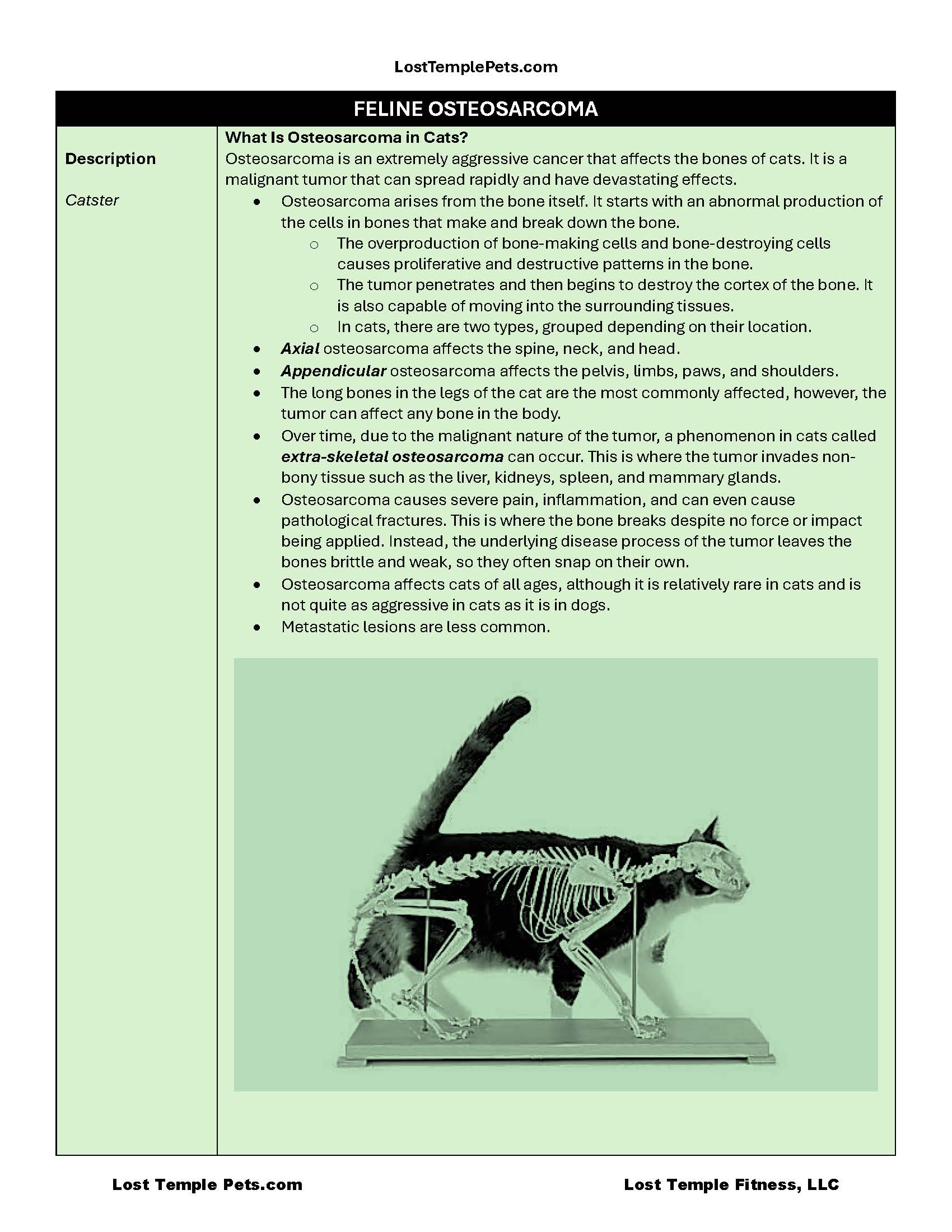
What is Feline Osteosarcoma?
What Is Osteosarcoma in Cats? (Catster)
What Is Osteosarcoma in Cats?
Osteosarcoma is an extremely aggressive cancer that affects the bones of cats. It is a malignant tumor that can spread rapidly and have devastating effects.
- Osteosarcoma arises from the bone itself. It starts with an abnormal production of the cells in bones that make and break down the bone.
- The overproduction of bone-making cells and bone-destroying cells causes proliferative and destructive patterns in the bone.
- The tumor penetrates and then begins to destroy the cortex of the bone. It is also capable of moving into the surrounding tissues.
- In cats, there are two types, grouped depending on their location.
- Axial osteosarcoma affects the spine, neck, and head.
- Appendicular osteosarcoma affects the pelvis, limbs, paws, and shoulders.
- The long bones in the legs of the cat are the most commonly affected, however, the tumor can affect any bone in the body.
- Over time, due to the malignant nature of the tumor, a phenomenon in cats called extra-skeletal osteosarcoma can occur. This is where the tumor invades non-bony tissue such as the liver, kidneys, spleen, and mammary glands.
- Osteosarcoma causes severe pain, inflammation, and can even cause pathological fractures. This is where the bone breaks despite no force or impact being applied. Instead, the underlying disease process of the tumor leaves the bones brittle and weak, so they often snap on their own.
- Osteosarcoma affects cats of all ages, although it is relatively rare in cats and is not quite as aggressive in cats as it is in dogs.
- Metastatic lesions are less common.
Feline Osteosarcoma Videos
YouTube Videos that help explain Osteosarcoma in Cats.
Disclaimer:
This is for research only and Lost Temple Pets does not endorse any video presented on this website.
It is advised that you ALWAYS CHECK WITH YOUR VETERINARIAN for a proper diagnosis and treatment plan.
Playlist
Causes
What Causes Feline Osteosarcoma? (ACCC)
What Causes Feline Osteosarcoma?
The exact cause of osteosarcoma in cats is not fully understood in most cases. However, some factors are suspected to play a role:
- Age: Feline osteosarcoma is typically seen in older cats, usually over 10 years of age.
- Chronic Trauma or Inflammation: While a direct causal link is not definitively established, some theories suggest that chronic trauma, inflammation, or pre-existing bone lesions might contribute to the development of osteosarcoma in rare cases.
- Radiation Exposure: Prior radiation therapy for other conditions can rarely increase the risk of osteosarcoma at the irradiated site.
- Injection Site Sarcoma (ISS): It’s important to distinguish osteosarcoma from injection site sarcomas (ISS), which are soft tissue sarcomas that can sometimes involve underlying bone, and are linked to inflammatory reactions at injection sites (e.g., vaccines, long-acting medications).
- While not an osteosarcoma, ISS can be a differential diagnosis for a bone lesion in certain areas.
- It’s important to reassure you that feline osteosarcoma is not contagious to other pets or humans.
Signs & Symptoms
Signs and Symptoms of Osteosarcoma in Cats – (PetCure Oncology)
Signs and Symptoms of Osteosarcoma in Cats
The symptoms of osteosarcoma in cats can be subtle, and they may include:
- Lameness that doesn’t go away and swelling of the affected bone; these are the most common symptoms when a tumor affects a limb
- Swelling or a mass; this is often the first sign of a tumor in the skull, jaw, or ribs
- Difficulty eating if a tumor affects the jaw
- Neurologic signs, such as seizures or a wobbly gait, with the skull or spinal/vertebral tumors
- Breathing difficulties or lameness with rib tumors
- Loss of appetite and lethargy
Symptoms of Osteosarcoma in Cats (PetMD)
Symptoms of Osteosarcoma in Cats
One of the first signs of OSA in cats may be a change in behavior or the development of lameness.
- Bone cancer in cats is extremely painful. Your cat may stop eating and may be withdrawn, more irritable, and aggressive.
- The symptoms of OSA are often related to where the tumor originated.
- For example, if your cat’s tumor affects one of their limbs, you may notice lameness, swelling, and pain to the touch at the site as well as a reluctance to walk, run, or jump.
- If the tumor affects the cat’s jaw, then you may notice your cat having difficulty eating, swallowing, or opening and closing the mouth, and they may lose weight as a result.
- As the bone cancer progresses, fractures can occur.
- You may notice an acute start of lameness, disuse of the limb, misalignment of the jaw, and a refusal to walk altogether.
- If you notice any signs of a broken bone, your cat should be examined by your veterinarian immediately.
Diagnostics
How is Feline Osteosarcoma Diagnosed? (ACCC)
How is Feline Osteosarcoma Diagnosed?
Diagnosing feline osteosarcoma typically involves a combination of the following:
- Physical Examination: A veterinarian will perform a thorough physical examination, paying close attention to any lameness, pain, or swelling in the bones or limbs.
- Radiographs (X-rays): Radiographs of the affected bone are essential and often highly suggestive of osteosarcoma. They can reveal characteristic bone changes such as bone destruction (lysis), abnormal bone production, and periosteal (outer bone layer) reaction.
- Bone Biopsy: A bone biopsy is necessary for a definitive diagnosis of osteosarcoma and to rule out other bone conditions such as fungal infections, osteomyelitis (bone infection), or other types of bone tumors. Biopsies can be obtained using a specialized bone biopsy needle or through a surgical procedure.
- Histopathology: The collected biopsy samples are sent to a specialized pathologist for microscopic examination to confirm the diagnosis of osteosarcoma and assess its grade, which provides prognostic information.
- Thoracic Radiographs (X-rays) or CT Scan of the Chest: To check for metastasis to the lungs.
- While the metastatic rate is lower than in dogs, it’s still the most common site of distant spread.
- A CT scan is more sensitive for detecting small lung nodules.
- Blood Work: A complete blood count (CBC) and serum chemistry panel are typically performed to assess your cat’s overall health and rule out other systemic issues. We may also test for FeLV and FIV.
- Advanced Imaging (CT Scan/MRI): For axial skeleton tumors (skull, jaw, ribs, spine), a CT scan or MRI can provide more detailed information about the tumor’s extent and its relationship to vital structures, aiding in surgical planning.
Management / Care
How Do I Care for a Cat with Osteosarcoma? (Catster)
How Do I Care for a Cat with Osteosarcoma?
If the tumor has spread from the bone to other places in the body, this carries a very poor prognosis.
- If there is no sign of metastatic disease, your vet will attempt to control the primary tumor and prevent it from growing and spreading.
- If the tumor involves one of the bones of the limbs, this often requires amputation of the affected limb.
- This sounds very dramatic and lots of owners are extremely upset by this suggestion when discussing options with their vet. However, cats cope very well with three limbs.
- If the tumor is in the bones of the jaw, mandibulectomy or maxillectomy are performed—these operations involve removing parts of the jaw.
- Depending on whether metastatic disease is present, chemotherapy and/or radiotherapy can also be used.
- Radiation can help improve a patient’s quality of life.
- Chemotherapy is often used if surgery is not an option, for example, if the cat is not a suitable candidate for a general anesthetic.
- Your vet will also always use pain relief when an osteosarcoma has been diagnosed.
- It is a very uncomfortable condition and strong pain relief is required.
- Your vet will often refer you to a specialist veterinary oncologist to tailor a treatment plan for your cat.
Treatment
Treatment Option 1: Surgical Intervention (The Pet Vet)
Treatment Option 1: Surgical Intervention
Surgery remains the cornerstone of treatment for feline osteosarcoma and often provides the best chance for long-term management or potential cure. For many cats, surgical intervention is the first line of defense against this aggressive type of sarcoma in cats.
- For tumors located in limbs, complete amputation is typically the most effective approach.
- While this might sound drastic to many pet owners, cats adapt remarkably well to life on three legs.
- The surgery removes the primary source of pain and can significantly improve quality of life.
- Most cats return to normal activities within weeks following amputation.
- For osteosarcoma in non-limb locations, surgical excision with wide margins is attempted when possible.
- The goal is to remove the entire tumor along with a margin of healthy tissue to ensure no cancer cells remain.
- The success of surgery depends largely on the tumor’s location, size, and whether metastasis (spread to other body parts) has occurred.
- When caught early and combined with adjuvant therapy, surgical intervention can provide cats with extended survival times and good quality of life.
Treatment Option 2: Radiation Therapy (The Pet Vet)
Treatment Option 2: Radiation Therapy
Radiation therapy is a valuable treatment option for feline osteosarcoma, particularly in cases where surgery isn’t possible or as an adjunct to surgical intervention. According to the American Veterinary Medical Association, radiation can be particularly effective for certain types of feline cancer.
Two main types of radiation protocols are used:
- Palliative radiation focuses on pain relief and improved function rather than curing the cancer. This typically involves fewer, larger doses of radiation and can significantly reduce pain for months.
- Definitive (curative-intent) radiation uses multiple smaller doses over several weeks to target the tumor aggressively. This approach may be used when surgery cannot completely remove the tumor.
Side effects of radiation therapy can include skin irritation at the treatment site, mild fatigue, and occasionally, hair loss in the treated area.
- These effects are typically temporary and manageable with supportive care.
- Radiation therapy is particularly valuable for osteosarcoma affecting the jaw or facial bones, where complete surgical removal might be challenging without significant functional or cosmetic consequences.
Treatment Option 3: Chemotherapy Protocols (The Pet Vet)
Treatment Option 3: Chemotherapy Protocols
Chemotherapy plays an important role in treating feline osteosarcoma, particularly when there’s concern about metastasis or when the cancer has already spread.
- As with many tumors in cats, a systemic approach is often necessary to address cancer cells that may have migrated beyond the primary site.
Common chemotherapy agents used in feline osteosarcoma include:
- Carboplatin
- Doxorubicin
- Cisplatin (used less frequently in cats due to potential toxicity)
- These medications are typically administered intravenously every 2-3 weeks for several months. The exact protocol will depend on your cat’s specific situation, overall health, and response to treatment.
- While chemotherapy in pets can cause side effects, they’re typically milder than what humans experience.
- Most cats maintain good quality of life during treatment, with potential side effects including temporary decreased appetite, mild nausea, or lowered white blood cell counts.
- Your veterinary oncologist will monitor your cat closely and may prescribe supportive medications to manage any discomfort.
- Chemotherapy can extend survival times significantly when combined with surgery, potentially adding months or even years of quality life for cats with osteosarcoma. VCA Animal Hospitals notes that most cats tolerate chemotherapy remarkably well compared to humans.
Treatment Option 4: Pain Management and Palliative Care (The Pet Vet)
Treatment Option 4: Pain Management and Palliative Care
Regardless of which primary treatment is chosen, comprehensive pain management is essential for cats with osteosarcoma. Bone cancer is painful, and addressing this pain is crucial for maintaining quality of life.
Effective pain management typically includes:
- NSAIDs (Non-Steroidal Anti-Inflammatory Drugs) specifically approved for feline use
- Opioid medications for moderate to severe pain
- Gabapentin for nerve pain
- Bisphosphonates like pamidronate, which can strengthen bone and reduce pain
Beyond medication, palliative care focuses on the cat’s overall comfort and may include:
- Environmental modifications (providing soft bedding, easy access to resources)
- Nutritional support with high-quality, appetizing foods
- Gentle physical therapy to maintain mobility
- Alternative therapies such as acupuncture or therapeutic laser
For some cats, especially those with advanced disease or other health complications, palliative care may be the most appropriate primary approach, focusing on quality rather than quantity of life.
References
References
ACCC- Animal Cancer Care Clinic – Feline Osteosarcoma
https://animalcancercareclinic.com/feline-osteosarcoma/
Catster – Osteosarcoma in Cats: Signs, Causes & Treatment (Vet Answer)
By Dr. Emma Chandley · Written by Dr. Emma Chandley
Updated on June 19, 2025
https://www.catster.com/ask-the-vet/osteosarcoma-in-cats/
PetCure Oncology – What You Should Know About Osteosarcoma (Bone Cancer) In Cats
https://petcureoncology.com/what-you-should-know-about-osteosarcoma-bone-cancer-in-cats/
PetMD by Chewy – Osteosarcoma In Cats
By Michael Kearley, DVM; Published Oct. 26, 2022
https://www.petmd.com/cat/conditions/musculoskeletal/osteosarcoma-cats
The Pet Vet – Osteosarcoma in Cats: 5 Essential Treatment Options Revealed
Written by The Pet Vet Team on April 3, 2025. Posted in Symptoms in Pets.
https://thepetvet.com/osteosarcoma-in-cats/
VCA Animal Hospital – Osteosarcoma in Cats
By Krista Williams, BSc, DVM, CCRP; Debbie Stoewen DVM, MSW, RSW, PhD; Christopher Pinard, DVM
https://vcahospitals.com/five-points/know-your-pet/osteosarcoma-in-cats