
Feline
Upper
Respiratory
Infections (URI)
Research, Resources & Education
This website is based on research and is NOT created to diagnose your pet.
Each animal is an individual and may exhibit symptoms in a different way.
It is advised that you ALWAYS CHECK WITH YOUR VETERINARIAN for a proper diagnosis and treatment plan.
Table of Contents
Feline Upper Respiratory Infections (URI)
Feline upper respiratory infection (URI) is the common term for a respiratory infection caused by one or more viral or bacterial agents.
(VCA)
By far, viruses are the most common causes of upper respiratory infections in cats. About 80%- 90% of infections are viral, while most of the rest are caused by bacteria.
(PetMD)
The symptoms of a feline upper respiratory infection include coughing, sneezing, eye inflammation, lethargy, and more.
(Cats.com)
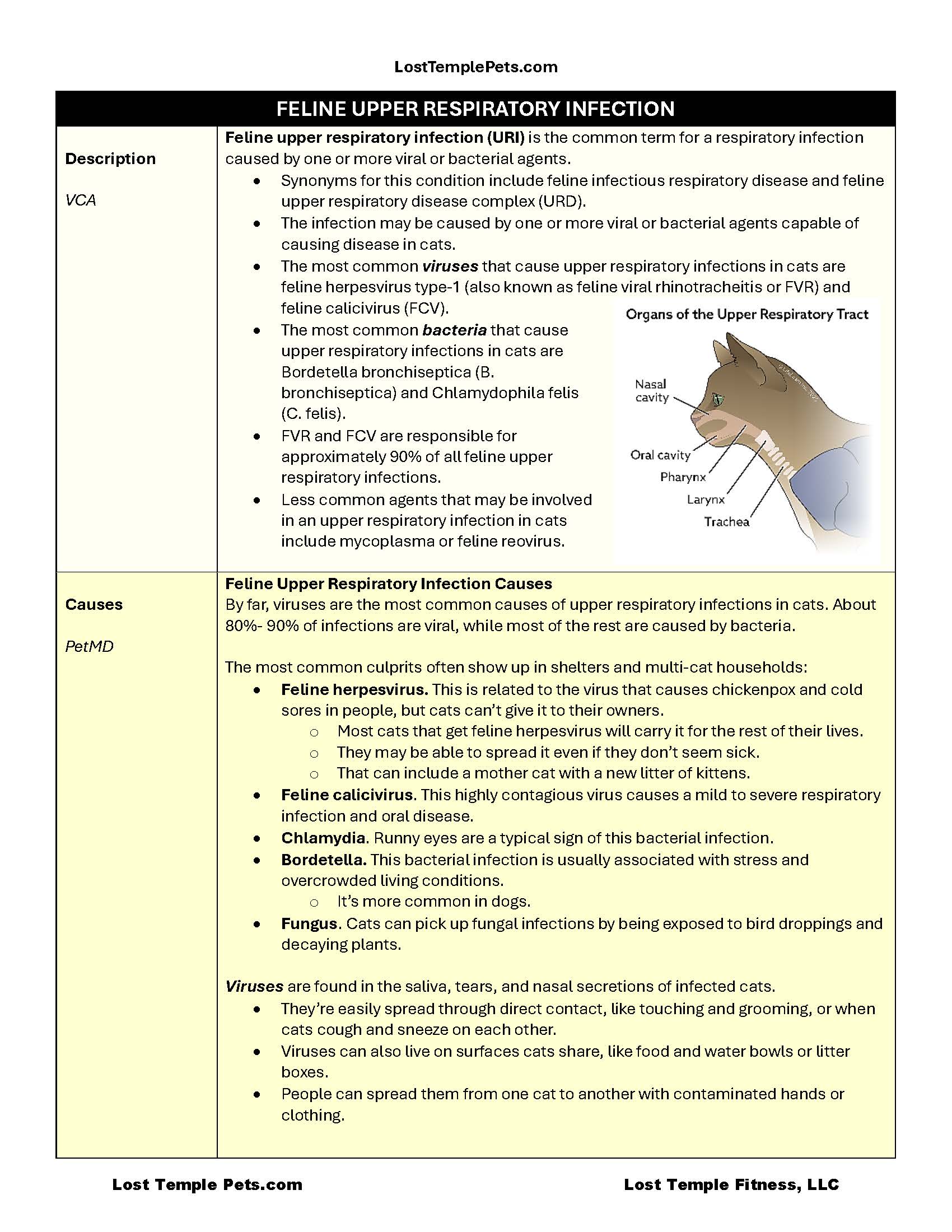
What is a Feline Upper Respiratory Infection?
Feline Upper Respiratory Infection (VCA)
Feline upper respiratory infection (URI) is the common term for a respiratory infection caused by one or more viral or bacterial agents.
- Synonyms for this condition include feline infectious respiratory disease and feline upper respiratory disease complex (URD).
- The infection may be caused by one or more viral or bacterial agents capable of causing disease in cats.
- The most common viruses that cause upper respiratory infections in cats are feline herpesvirus type-1 (also known as feline viral rhinotracheitis or FVR) and feline calicivirus (FCV).
- The most common bacteria that cause upper respiratory infections in cats are Bordetella bronchiseptica (B. bronchiseptica) and Chlamydophila felis (C. felis).
- FVR and FCV are responsible for approximately 90% of all feline upper respiratory infections.
- Less common agents that may be involved in an upper respiratory infection in cats include mycoplasma or feline reovirus.
Feline Upper Respiratory Infections Videos
YouTube Videos that help explain Upper Respiratory Infections in Cats.
Disclaimer:
This is for research only and Lost Temple Pets does not endorse any video presented on this website.
It is advised that you ALWAYS CHECK WITH YOUR VETERINARIAN for a proper diagnosis and treatment plan.
Playlist
Causes & Risks
Feline Upper Respiratory Infection Causes (PetMD)
Feline Upper Respiratory Infection Causes
By far, viruses are the most common causes of upper respiratory infections in cats. About 80%- 90% of infections are viral, while most of the rest are caused by bacteria.
The most common culprits often show up in shelters and multi-cat households:
- Feline herpesvirus. This is related to the virus that causes chickenpox and cold sores in people, but cats can’t give it to their owners.
- Most cats that get feline herpesvirus will carry it for the rest of their lives.
- They may be able to spread it even if they don’t seem sick.
- That can include a mother cat with a new litter of kittens.
- Feline calicivirus. This highly contagious virus causes a mild to severe respiratory infection and oral disease.
- Chlamydia. Runny eyes are a typical sign of this bacterial infection.
- This bacterial infection is usually associated with stress and overcrowded living conditions.
- It’s more common in dogs.
- Fungus. Cats can pick up fungal infections by being exposed to bird droppings and decaying plants.
Viruses are found in the saliva, tears, and nasal secretions of infected cats.
- They’re easily spread through direct contact, like touching and grooming, or when cats cough and sneeze on each other.
- Viruses can also live on surfaces cats share, like food and water bowls or litter boxes.
- People can spread them from one cat to another with contaminated hands or clothing.
Feline Upper Respiratory Infection Risk Factors (WebMD)
Feline Upper Respiratory Infection Risk Factors
Upper respiratory infections are common for cats that live in crowded conditions, like shelters or breeding facilities. They’re also more likely in multi-cat households. Other risk factors include:
- Kittens and elderly cats are more likely to get infections.
- Vaccination status. Your cat’s vaccines can keep them from getting sick or cause an infection to be milder.
- Physical condition. Cats that have feline leukemia or feline immunodeficiency virus are more likely to get infections. Other illnesses or medications that suppress the immune system can put your cat at risk.
- Stress. It can make a cat more likely to pick up a virus in the first place and cause it to come back later in life.
- Breed. Persians and other flat-faced breeds are more likely to get upper respiratory infections because of their facial structure.
- Going outside. Outdoor cats are more likely to come in contact with infected cats or with fungi that can cause infections.
Are other Cats in the Household at Risk of Infection?
Are other cats in the household at risk of infection?
A cat with an acute upper respiratory infection will be infective to other cats during the incubation period and for up to three weeks after developing symptoms.
- A cat that is a carrier of an upper respiratory virus may always be infective to other cats.
- Cats that are unvaccinated, young, or that have chronic underlying conditions are more susceptible and may develop a serious illness.
- Adequately vaccinated adults will likely only develop a mild case of illness, which may resolve without treatment.
- It is always prudent to isolate a new cat from the other cats in your household for at least 1–2 weeks to minimize the risk of transmission of any infectious diseases.
- During this time, the cat should be examined by a veterinarian to ensure it is safe for the cats to make contact.
Symptoms
Symptoms of Cat Upper Respiratory Infections (Cats.com)
Symptoms of Cat Upper Respiratory Infections
Cat Upper Respiratory Infection Symptoms
- The symptoms of a feline upper respiratory infection resemble those of a human cold or flu, including coughing, sneezing, eye inflammation, lethargy, and more.
Cats with upper respiratory infections may have one or more of the following clinical signs:
- Coughing
- Sneezing
- Nasal congestion
- Nasal discharge (runny nose; may be clear or cloudy)
- Eye discharge (clear or cloudy)
- Conjunctivitis
- Blepharospasm (excessive squinting)
- Mouth ulcers
- Hoarse voice (meow sounds strange)
- Fever
- Lethargy (lack of energy, excessive sleeping)
- Anorexia (loss of appetite)
- Enlarged lymph nodes
Cats with upper respiratory symptoms may also experience one or more of the following symptoms of lower respiratory tract infection:
- Coughing
- Cyanosis (blue or gray lips, gums, and mouth)
- Difficulty breathing (shallow, labored, or rapid breathing)
Testing / Diagnostics
How Veterinarians Diagnose an Upper Respiratory Infection in Cats (PetMD)
How Veterinarians Diagnose an Upper Respiratory Infection in Cats
Upper respiratory infections in cats are usually diagnosed following a physical exam by your vet.
- They will look in your cat’s eyes and ears and at their nostrils for signs of inflammation (swelling) and drainage.
- They will feel your cat’s lymph nodes for any swelling and listen to their lungs.
- They will also take the pet’s temperature.
The following tests may also be recommended:
- Feline leukemia and FIV (feline immunodeficiency virus) testing. These are common viruses that can lower a cat’s immune system, making them more at risk of upper respiratory infections.
- X-rays. These let the vet look at the lungs and ensure the infection is just in the upper respiratory tract (like the nose) and hasn’t spread to the lungs (like pneumonia).
- Blood work. This checks the blood cells to ensure further treatment isn’t necessary.
- Bacterial culture or PCR test. Sometimes swabs of the nose, eyes, or mouth are recommended. These swabs can be sent off for a bacterial culture or a polymerase chain reaction (PCR) test to look for viral DNA.
Upper respiratory infections are common. They often clear up on their own and are readily diagnosed with an exam.
- However, let your vet know if your cat is not eating well or is acting depressed.
- This may change their diagnostic or treatment recommendations.
Prevention
Prevention of an Upper Respiratory Infection in Cats (PetMD)
Prevention of an Upper Respiratory Infection in Cats
Your cat’s risk of getting an upper respiratory infection can be reduced with vaccinations.
- While vaccination doesn’t always prevent the viruses it targets, it does lessen the severity of their symptoms if they are exposed.
The FVRCP vaccine that is recommended for healthy kittens and most adult cats is protective against many of the most common viruses that cause upper respiratory infections in cats.
FVRCP stands for:
- FVR= feline viral rhinotracheitis. This is another name for feline herpesvirus, the most common respiratory virus in cats.
- C= This stands for calicivirus, the second most common upper respiratory virus in cats.
- P= Stands for panleukopenia, also known as feline distemper.
Aside from vaccinating your cat, you can also reduce their risk by minimizing their exposure to other cats.
- If you visit cat cafes or other places where there are cats outside your home, be sure to wash your hands before returning to your house.
- If you have a cat in your home with an upper respiratory infection, separate them in their own room for three weeks to avoid shared food and water bowls or mutual grooming.
- Wash your hands thoroughly between handling infected and unaffected cats.
- To be on the safe side, isolate new cat additions to your home for a couple of weeks, to ensure they don’t start showing signs of upper respiratory infections before being introduced to your other cats.
Treatment
Treatment (ACVS)
Treatment (ACVS)
Surgery – Surgical removal of mast cell tumors is the preferred treatment once your pet is diagnosed with this disease.
- Mast cell tumors invade into surrounding tissues and wide surgical margins(wide area of healthy tissue surrounding the tumor are necessary to ensure removal of all cancerous cells.
- The excised (removed) tumor will be submitted for histopathology for confirmation of the tumor type and grading.
- Prior to surgery your pet’s primary care veterinarian or veterinary surgeon may recommend medical management.
- This often may include steroids, anti-histamines, and histamine blockers to help reduce the inflammation and associated side effects of these tumors prior to surgery.
Post-surgical radiation and chemotherapy are warranted on a case-by-case basis. Radiation is most commonly used as a multi-modal treatment approach for incompletely excised tumors.
- Chemotherapy is used in patients with disseminated disease to other organs or high grade tumors. Your pet’s primary care veterinarian and veterinary surgeon will work together to make the most appropriate recommendation for your pet’s continued care following surgery. (ACVS)
Recovery & Management
How Long Does a URI Last? (VCA)
How long does a typical feline upper respiratory infection last?
Once a cat is exposed to an infectious agent, the cat will go through an incubation period of 2–10 days before they develop clinical signs.
- If the infection is uncomplicated, it will typically last for 7–14 days, although signs may persist for up to 21 days, in some cases. During this time, the cat may be infective to other cats.
- With FVR, approximately 80% of cats become chronic carriers, meaning that they have the disease for life.
- In some cats that carry FVR, stress (due to surgery, other illnesses, changes in the home, boarding, etc.) may cause the virus to become reactivated throughout life.
- With FCV, about half of infected cats will become carriers of the disease.
- In some cases, the carrier state may only last for a few months.
- In a small percentage of cats, the carrier state may persist for life.
- These persistent carriers are usually asymptomatic but still serve as a constant source of FCV to susceptible cats.
Environmental Management (The Pet Vet)
Environmental Management
Creating a healthy environment reduces infection risk:
- Maintain good ventilation in your home
- Regularly clean food bowls, litter boxes, and bedding
- Avoid overcrowding in multi-cat households
- Isolate new cats before introducing them to resident pets
- Minimize stress, which can trigger viral reactivation
- Boosting Natural Immunity
- Healthy lifestyle choices support strong immune function:
- Provide a balanced, high-quality diet
- Ensure adequate hydration
- Maintain a healthy weight
- Schedule regular wellness exams
- Manage any underlying health conditions
References
References
Cats.com – Upper Respiratory Infection in Cats
Written by Jackie Brown; Medically reviewed by JoAnna Pendergrass, DVM
https://cats.com/cat-upper-respiratory-infection
Cornell College of Veterinary Medicine – Feline Health Center – Respiratory Infections
Updated June 2018
PetMD by Chewy – Upper Respiratory Infection in Cats: What Pet Parents Should Know
By Melissa Boldan, DVM; Published Sep. 8, 2025
https://www.petmd.com/cat/condition/respiratory/upper-respiratory-infection-in-cats
The Pet Vet – Feline Respiratory Infections: 5 Proven Treatments for Cats
Written by The Pet Vet Team on April 2, 2025. Posted in Symptoms in Pets.
https://thepetvet.com/feline-respiratory-infections/
VCA Animal Hospital – Feline Upper Respiratory Infection
By Malcolm Weir, DVM, MSc, MPH; Cheryl Yuill, DVM, MSc, CVH
https://vcahospitals.com/know-your-pet/feline-upper-respiratory-infection
WebMD – Feline Upper Respiratory Infection
Written by WebMD Editorial Contributors; Medically Reviewed by Amy Flowers, DVM on September 02, 2024
https://www.webmd.com/pets/cats/upper-respiratory-infection-cats