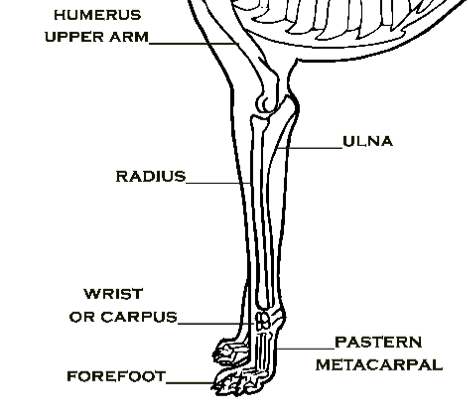
Front Assembly
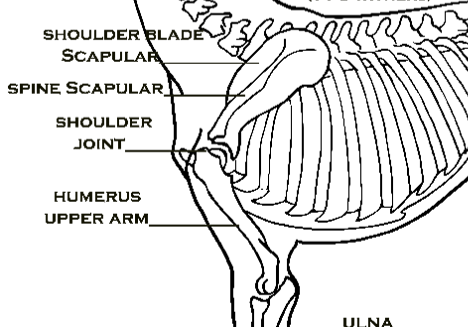
A dog’s front assembly refers to the structure and arrangement of its front limbs, including the bones, joints, and muscles that contribute to movement and stability.
Key Components
- Shoulder Joint: The shoulder connects the front leg to the body, allowing for a wide range of motion.
- Upper Arm: This bone connects the shoulder to the elbow and plays a crucial role in the dog’s reach and stride.
- Elbow Joint: This joint allows for flexion and extension of the forelimb.
- Forearm: Comprising the radius and ulna, it supports the weight of the dog and aids in movement.
- Wrist and Paw: The wrist (carpus) and paw (digits) provide balance and traction.
The canine front leg is a weight-bearing limb with the average weight distribution typically 60% to 65% which makes the dog front end loaded.
- Different body types in breeds can make a difference. The wider and/or deeper chest, like the bulldog, the more weight carried forward, up to 90% on the front legs.
- The various aspects of the body must perform in unison in order that the efforts of the front and hind assemblies produce movement, which is a smooth, synchronized, continuous recycling of effortless energy.
- This coordinated use of the body will produce the muscles essential to preserve the front assembly.
Front Angulation
Dog front angulation refers to the angles formed by the bones in a dog’s front assembly, particularly at the shoulder and elbow joints. This angulation is crucial for a dog’s movement, balance, and overall structure.
Key Aspects of Front Angulation:
- Definition: It involves the angle between the upper arm (humerus) and the shoulder blade (scapula), as well as the angle at the elbow joint.
- Importance: Proper angulation allows for efficient movement and helps in absorbing shock during activities like running and jumping.
- Variability: The angle can vary significantly among breeds, affecting their gait and performance. For example, a more angulated front may enhance reach and drive, while a straighter front can provide stability.
The angulation of the shoulder and upper arm affects how efficiently a dog can move.
- Proper angulation allows for better reach and drive during activities like running and jumping.
- The front assembly supports the dog’s torso and plays a vital role in locomotion, stability, and overall athletic performance.
- The greater the angulation the longer the stride, but the less stable the limb.
- The less angulation, the shorter the stride but now the limb is more stable.
- Moderate and similar degrees of angulation front to hind can produce coordinated, synchronized movement for optimal overall fitness levels.
Shoulders
The front shoulders of a dog, known as the fore assembly, consist of several key components that contribute to the dog’s mobility and strength.
- A moderately laid-back shoulder will sit at approximately 30 degrees.
- Anything less than 30 is considered ‘upright’ or ‘straight’ and will be found on most Terriers.
- A shoulder blade that sits at an angle greater than 30 degrees is described as ‘well laid back’ and will belong to most herding breeds or Sighthounds.
Key Components
- Scapula (Shoulder Blade):This bone serves as the foundation of the fore assembly and is uniquely shaped to allow for a wide range of motion.
- Humerus: The bone that connects the shoulder to the elbow, playing a crucial role in limb movement.
- Muscles and Tendons:Well-developed muscles and tendons surround the shoulder joint, providing stability and strength for various activities, such as running and jumping.
- Ligaments: These connective tissues help stabilize the shoulder joint, allowing for flexibility while maintaining structural integrity.
Moderate layback allows for good reach of the front legs in running and jumping .
- The better shoulder angle, the more reach and shock absorbency in the joints, and the smoother the dog moves.
- It also provides for greater stability during turning and braking.
- Moderate angulation will develop lots of healthy muscle tone over the entire front assembly.
- A well laid back shoulder is better structurally for most breeds.
- Exceptions: Sighthounds have a more open shoulder angle that works in concert with their more rounded croup to fulfill their purpose.
Unique Features
- Absence of Clavicle:Dogs do not have a collarbone/clavicle, which allows their front assembly to float and provides greater flexibility and cushioning, essential for a predator’s agility.
- Since there is no bony union connecting your dog’s arm to the body, there are no associated ligaments either to create security. There is no ball and socket joint like we find in the hip to provide structural strength to connect this weight bearing, multi-functional limb to the skeleton.
- Adaptation for Movement: The design of the shoulder allows dogs to have exceptional locomotive capabilities, enabling them to run swiftly and maneuver effectively.
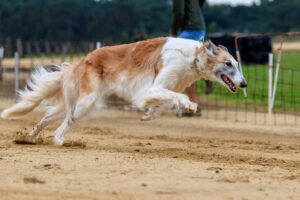
Shoulders - Straight and Wrinkles
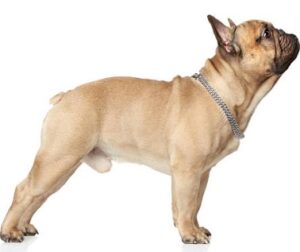
Straight shoulders in dogs refer to a specific conformation where the shoulder blades are positioned more vertically than ideally desired. This condition can affect a dog’s movement and overall performance.
Characteristics of Straight Shoulders:
- Angle of Layback: Ideally, a dog’s shoulder should have a slight angle, typically around 45 degrees. Straight shoulders lack this angle, leading to a more upright position.
- Impact on Movement: Dogs with straight shoulders may have restricted reach and stride, affecting their agility and efficiency in movement.
- A more upright shoulder layback limits the extension of the front legs, shortens the stride and restricts primary muscle development.
- This causes the secondary muscles to build up under the shoulder and eventually turn the elbows out creating compensatory use of the body which will lead to premature wear and tear.
- Breed Variations: The ideal shoulder structure can vary by breed, as some breeds are designed for specific tasks that require different shoulder angles.
An upright or straight shouldered dog will have limited range of motion creating a short stride that will also affect endurance as the dog must create more strides when travelling.
- This is one of the causes for wrinkles over the shoulders. When the neck does not flow smoothly onto the shoulders because they are too upright, wrinkles are created.
- Less surface for muscle attachment, which can affect neck and head carriage.
- Limited ROM will diminish the strength and quality of muscle development as the reach the dog can achieve when gaiting is restricted as is the height the dog is capable of jumping.
- Increases the risk of concussive injuries to wrists, elbows and shoulders, as the impact when the dog lands is harder due to the lack of shock absorption which also makes pinpoint turns risky for tendon damage.
- The pounding can also lead to interscapular pain, shoulder pain, tendonitis and elbow degeneration.
Risks:
Lack reach or length of stride. Movement will require more steps, so the dog will fatigue more quickly.
- The straighter the shoulder, the less tuck of the front legs when the dog is jumping.
Well Laid Back
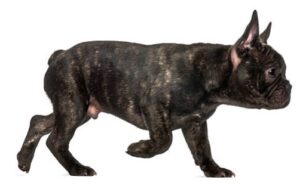
A dog with well laid-back shoulders has shoulder blades that are positioned at a more relaxed angle, typically around 45 to 60 degrees to the ground. This structure allows for better movement and efficiency, particularly in breeds that require agility and endurance.
Importance of Shoulder
- Angle: The shoulder blade is angled back, promoting a longer stride and smoother movement.
- Angulation:The angle of the shoulder blade affects the dog’s stride and balance. A well laid back shoulder allows for a longer stride, which is beneficial for breeds that require speed and agility.
- Shoulders: Movement: Dogs with this shoulder structure tend to move more fluidly, especially at a trot, due to the optimal alignment of their front limbs.
- Breed Variations: Different dog breeds may have varying shoulder angles based on their intended functions. For example, working breeds may have a more pronounced angulation to support their tasks.
The dog with well laid back shoulders will have increased flexibility and a longer reach, which enable them to achieve greater jump height and cover ground with fewer strides.
- This increased flexibility decreases stability with Increased risk of torsion injuries during braking, landing and turning.
- Forearm and carpus will be at risk of injury and the neck and chest muscles will strain attempting to provide the bracing needed to prevent this dog from folding every time he changes direction!
Breeds: Common in breeds like Border Collies and other working dogs, which benefit from this structure for tasks like herding or running.
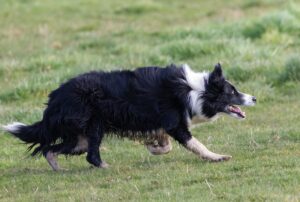
Shoulders - Wide and Wrinkles
Wide shoulders in a dog refer to the structure and breadth of the shoulder area, which can significantly influence a dog’s movement and overall conformation.
Anatomy of Wide Shoulders
- Muscle Development: Dogs with wide shoulders typically have well-developed muscles, particularly in the infraspinatus and supraspinatus areas, which support movement and strength.
- Bone Structure: The shoulder joint is a ball-and-socket type, allowing for a wide range of motion. A broader shoulder structure can enhance stability and power during activities.
Importance of Shoulder Width
- Movement Efficiency: Wider shoulders can improve a dog’s ability to extend its front legs, contributing to better locomotion.
- Breed Characteristics: Certain breeds, especially working or sporting dogs, are bred for wider shoulders to enhance their physical capabilities.
Wide shoulders create a wide front movement, ultimately wasting motion.
This creates a lateral side to side displacement, which in turn can cause a rolling motion.
- This gait is very tiring and leads to bulking and loaded shoulders.
- As with straight shoulders, the neck does not properly flow onto the shoulders when there is too much space between the tips of the shoulder blades. Neck skin will sag into the wrinkles over the shoulders.
- This is the second cause of wrinkles over the shoulder.
Health Considerations
- Joint Health: While wide shoulders can be advantageous, they may also predispose dogs to certain joint issues if not properly managed.
- Conformation Standards: In dog shows, shoulder width is often evaluated as part of the breed standard, influencing a dog’s competitiveness.
Shoulders - Narrow or Tight
Narrow shoulders in dogs refer to a specific anatomical structure where the distance between the shoulder blades is less than ideal. This condition can restrict the natural movement of the dog’s front legs and affect overall mobility.
Narrow shoulders can lead to several issues:
- Restricted Movement: Dogs with narrow shoulders may have limited range of motion in their shoulder joints, impacting their ability to run, jump, or play effectively.
- Inadequate Support: Insufficient space between the shoulder blades can lead to poor support for the elbows, potentially causing looseness or instability in the elbow joints.
- Conformation Issues: In dog breeding, narrow shoulders are often viewed negatively as they can indicate poor conformation, which may affect the dog’s performance in various activities.
The ability of most breeds to lower their noses to the ground depends largely on the proper spacing between the tips of the shoulder blades.
- When a dog lowers its head, its shoulder blades move towards one another until the tips touch.
- If the space is too narrow or tight, then the dog is unable to lower its nose to the ground from a standing position.
Risks:
Tight shoulders may pinch the elbows, which causes pasterns and feet to turn out, which creates wasted motion and puts greater stress on the elbows, pasterns and feet.
- May cause the dog to stand in an A-frame fashion for proper balance.
- A dog with tight shoulders that does regular jumping increases the risk of injury and structural degeneration.
- Problem for Scent hounds, Retrievers and Sighthounds that are expected to pick up prey while in full motion.
Shoulders - High
High shoulders in a dog refer to a conformation trait where the shoulder blades are positioned higher than the withers. This can affect the dog’s overall appearance and movement.
High shoulders can lead to a more upright stance and may influence the dog’s gait, potentially causing issues in mobility or performance in certain activities.
Characteristics of High Shoulders:
- Anatomical Position: The shoulder blades are elevated, creating a steep angle between the shoulder and the back.
- Impact on Movement:Dogs with high shoulders may have a different range of motion, which can affect their agility and speed.
- Breed Variations:Some breeds may naturally exhibit high shoulders as part of their standard conformation, while in others, it may indicate a deviation from the ideal structure.
Considerations:
- Health Implications:High shoulders can sometimes lead to joint stress or discomfort, especially in active dogs.
Evaluation: A veterinarian or a canine conformation expert can assess whether high shoulders are a concern for a specific dog.
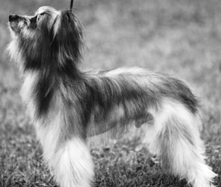
Shoulders should never be the highest point in the dog. The vertebral spines should be slightly higher than the tips of the shoulder blades.
- When they are higher, they are much more susceptible to injury, as there is no muscle over the shoulder blades to protect them.
- Exception: Pyrenean Shepherd
- A high shoulder blade is usually associated with a more upright neck and head carriage, which impedes the dog’s reach.
- It can diminish stamina and endurance because high shoulders tend to move up and down, as you see in a cat, instead of back and forth.
Risks:
Dogs should never work in a harness, as it will bear down and rub on high shoulders causes pain and bruising.
Pasterns
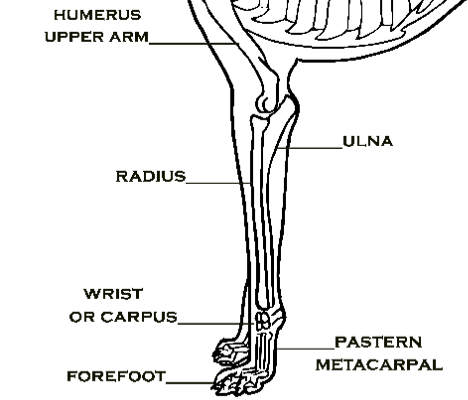
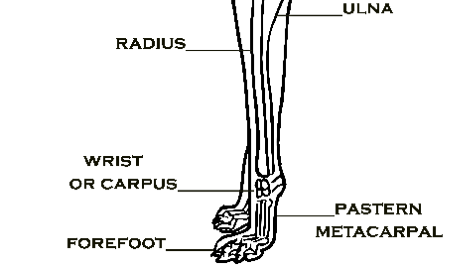
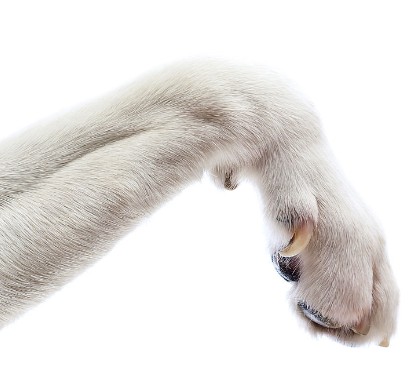
A pastern in a dog refers to the area of the leg between the wrist (carpus) and the foot (paw) in the front legs, and between the hock and the foot in the back legs. This structure plays a crucial role in absorbing shock during movement, providing flexibility and support as the dog runs and jumps.
Key Points
- Front Pastern: Located between the carpus and the paw, it acts as a shock absorber during activities.
- Back Pastern: Found between the hock and the rear foot, it serves a similar function as the front pastern.
- Importance: The length and strength of the pasterns can significantly affect a dog’s movement and overall conformation.
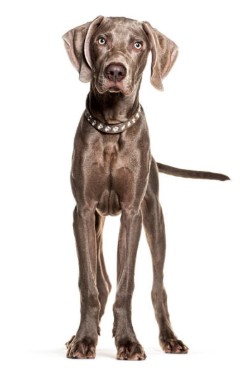
- Correct: Short and slightly angled, as a support system for the front assembly.
Pastern - Too Long
When working on walking on sand or loose dirt, a dog with long pasterns will tire more quickly because the interaction between muscle and tendon is less effective.
- Uneven terrain also puts added stress on the tendons.
- Insufficient support, strength and flexibility for competitive performance activities.
Risks:
Search and Rescue, Herding and another other working dogs with long pasterns should refrain from activities that take place on rough terrain.
Pasterns – Too Short and Upright
A front short pastern in a dog refers to the length of the pastern joint located between the dog’s wrist (carpus) and the foot.
Characteristics of a Short Front Pastern
- Stability: A shorter pastern generally provides greater stability and strength, which can be beneficial for endurance activities.
- Shock Absorption: While it may not absorb shock as effectively as a longer pastern, it helps in maintaining a strong structure during movement.
- Movement: The length of the pastern affects how a dog moves, influencing their gait and overall athletic ability. A shorter pastern can lead to a more powerful push-off during running.
Pasterns – Weak
A weak front pastern in a dog refers to a condition where the pasterns, which are the joints between the dog’s lower leg and paw, are not properly supported. This condition is often described as being “low in pasterns” or exhibiting hyperextension, where the pasterns appear flat-footed and lack the necessary strength to support the dog’s weight effectively.
Characteristics
- Appearance: The pasterns may appear to sag or bend excessively, leading to a flat-footed stance.
- Causes: This can occur when the muscles and ligaments grow faster than the bones, resulting in inadequate support.
- Impact on Movement: Weak pasterns can affect a dog’s gait, potentially leading to lameness or discomfort.
Inherit weakness in pasterns that are too straight or too sloped.
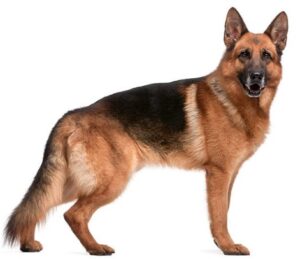
- Exception: German Shepherd.
Risks:
- The joint at the pastern acts as a shock absorber, so if the pastern is too straight or too sloped, the added stress makes the dog more prone to injuries or structural breakdown.
- May be one of the structural pieces more susceptible to injury.
Pasterns – East - West
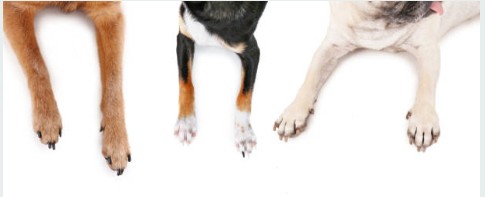
A front east-west pastern in dogs refers to a specific conformation issue where the dog’s front feet point outward rather than straight ahead.
This condition can be observed when the dog is standing or moving, resulting in a stance that resembles a ‘ten to two’ position, where the toes are angled outward.
Causes
- Genetics: Often inherited traits can lead to this conformation.
- Developmental Factors: Environmental influences during growth can also contribute.
Implications
- Gait Issues: This abnormal positioning can affect the dog’s gait, potentially leading to uneven wear on nails and joint stress over time.
Majority of this issue is created by puppy nutrition, not genetics.
- This can be a temporary issue during growth stages, particularly the “teenage” years. One of the few structural issues a puppy may outgrow.
- While a young dog’s chest is still shallow, the elbows tend to fall inward, which turns the feet and pasterns out.
Risks:
Places excessive strain on the joints and the inside of the legs and can accelerate structural breakdown, potentially leading to degenerative joint disease (arthritis).
Feet
The front feet of a dog, also known as forepaws or forelimbs, are crucial for various functions.
Foot Types
- Dogs can have various foot types, including cat feet (short and rounded) and hare feet (longer and narrower), which influence their movement and suitability for different activities
Anatomy Overview
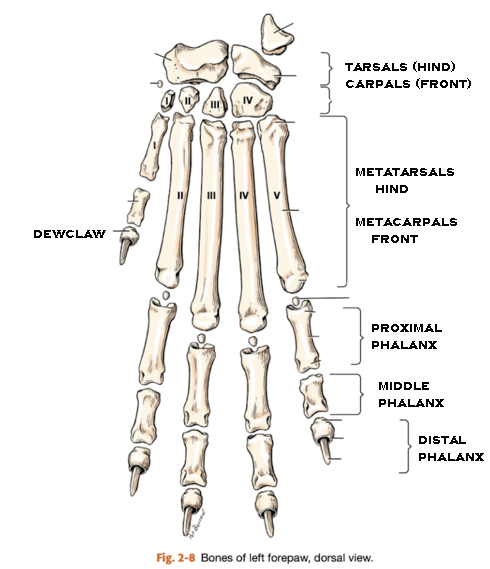
- Structure: Each front foot consists of several components, including toes, claws (or toenails), and pads. Typically, there are five toes on each front paw, including a dewclaw, which is often higher up on the leg.
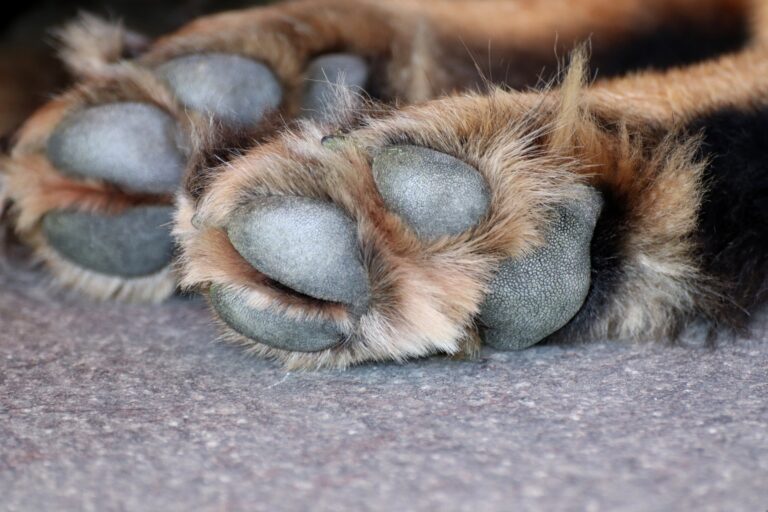
- Pads: The front paws have a metacarpal pad, which is the largest pad and bears most of the dog’s weight during movement. Each toe also has a small pad that helps with traction and cushioning.
Functions
- Movement: The front feet play a vital role in supporting the dog’s weight and facilitating movement, including running, jumping, and climbing.
- Traction and Grasping: They provide traction on various surfaces and assist in grasping objects.
Most breeds are better off with large feet, as long as properly structured.
- The smaller the foot, the less cushioning the foot has on impact.
- Flat foot is unacceptable, as it is prone to breakdown, especially if the dog does high-impact shorts or activities.
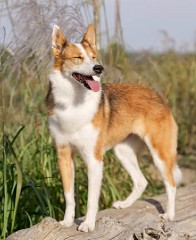
- Norwegian Lundehund: Minimum 6 toes and 8 pads on each front foot and seven pads on each rear foot. Bred to climb steep, slippery cliffs.
- Regular checks for injuries, nail trimming, and pad health are essential for maintaining the well-being of a dog’s front feet.
Front Feet - Placement
Front feet placement in dogs is crucial for balance and movement. Proper alignment and positioning of a dog’s front feet can significantly impact their mobility, stability, and overall health. Here are key aspects to consider:
Anatomy and Function
- Toe Pads: Dogs have toe pads that provide traction and shock absorption. The placement of these pads helps in gripping surfaces while running or walking.
- Metacarpal Pads: Located behind the toe pads, these larger pads also aid in shock absorption and stability.
Alignment
- Correct Positioning: Ideally, a dog’s front feet should be aligned with the body, allowing for efficient movement. Misalignment can lead to issues such as splayed feet or flat feet, which may affect their gait.
- Dewclaws: Some dogs have dewclaws on their front legs, which can assist in traction during sharp turns.
Front feet should face forward.
- Too much turning in or out adds greater stress on all joints of the feet, as well as the pasterns and elbows.
- Exception: Many achondroplastic breeds due to the wrap around front assembly.
- Improper foot placement can lead to various issues, including joint pain and mobility problems.
Risks:
All dogs competing in sports that require lateral stabilization or strength will risk deterioration of their structural integrity if the placement of their feet is improper.
Toes - High or Short Toes
Front foot high or short toes in dogs refer to specific toe structures that can affect their movement and overall foot function.
High Toes
- Definition: High toes are characterized by longer, more elongated toe bones (phalanges).
- Functionality: This structure can enhance agility and speed, allowing for better grip and push-off during running.
Short Toes
- Definition: Short toes have shorter phalanges, resulting in a more compact foot shape.
- Functionality: This design often provides stability and support, making it suitable for endurance activities.
All toes should touch the ground on impact.
- May be present at birth, but mostly the toe stops growing as the puppy grows.
- When the toe on outside of the foot is too short or too highly placed on the outside of the pastern (instead of ground) the dog is said to have high or short toes.
- This can lead to an imbalanced distribution of weight and damage to the inside toes and pads.
Risks:
- Earthdog Trials or Agility: Not advised because these dogs lack lateral stability.
- Flyball, Frisbee, Lure Coursing, Racing, Schutzhund, Sledding, Freestyle, Field trials and Herding: Also, not advised.
Knuckling Over
Front foot knuckling over in dogs refers to a condition where a dog’s front paw bends abnormally, causing the dog to walk on the dorsal (top) surface of the paw instead of the pads.
This condition is often a sign of underlying neurological issues, such as problems with the brain, spinal cord, or nerves, leading to a lack of proprioception (awareness of paw position).
Causes
- Neurological Disorders: Conditions affecting the nervous system can lead to knuckling.
- Injuries: Trauma to the limbs may result in improper paw positioning.
- Developmental Abnormalities: Some dogs may have congenital issues that affect their gait.
This can be caused by an either extremely straight front assembly, which puts to much stress on the joints, or by improper puppy nutrition, which leads to stretched and weakened tissue in the front legs.
- Exception: Harrier standard allows for slight knuckling over.
Symptoms
- Abnormal gait, dragging of the paw, or visible discomfort.
- The dog may not seem aware of the abnormal position of its paw.
Risks:
This can create bowed tendons, which increase the risk of injury, esp. with performance activities involving high-impact stress to the front assembly.
- Flyball or Agility: Should not be performed.
Dewclaws
Dew claws are small, vestigial digits located on the inner side of a dog’s leg. They are positioned higher than the other toes and typically do not touch the ground when the dog is standing.
Most dogs have dew claws on their front legs, and some breeds may also have them on their rear legs. Dew claws are often compared to a human thumb or big toe, serving a limited purpose in terms of grip and stability.
They are not used for weight-bearing like the other toes but serve several purposes:
- Grip and Balance: Dew claws can help dogs with grip and stability, especially during activities like running or turning sharply.
- Protection: They may protect the main claws from injury and can assist in climbing or gripping surfaces.
- Variations: Some dogs have double dew claws, particularly on the rear legs, which can be more common in certain breeds
- Vestigial Nature: They are considered vestigial, meaning they have lost much of their original function over time.
Care and Removal
- Maintenance: Regular trimming is necessary to prevent overgrowth and potential injury.
- Removal: In some cases, dew claws may need to be removed if they cause problems, such as injury or infection.
There are 5 tendons which innervate the dog’s wrist to either attach the dew claw or pass by it to connect to the toes
- Removal of the dew claw and the stress when bearing weight will be transmitted directly up the leg without the benefit of this crucial aspect to create stability and lead to compensatory use of the lower limb.
- This weight bearing pressure will attempt to communicate through tendons and muscle bundles which have atrophied due to surgical interference and non-use.
- Dewclaws grip the ground during faster gaits and are used for stabilization during landing and turning
- First line of defense to prevent a wrist sprain is the dewclaw and the second line of defense is the accessory carpal pad.
- Studies in Canine Sports medicine shows an increase in toe and carpal/wrist injuries (carpal tunnel syndrome) and Flexor tendon strains in dogs which have had their dewclaws removed.
Feet – Daisy Clipping
Daisy clipping refers to a specific running style in dogs where their front feet barely lift off the ground, often described as if they are clipping the tops of daisies.
This term is commonly used to illustrate how some dogs run with a low, smooth gait, particularly in breeds that are built for speed and agility.
Characteristics of Daisy Clipping
- Low Gait: The dog’s feet remain close to the ground, minimizing vertical movement.
- Efficient Movement: This style can enhance speed and efficiency, especially in breeds designed for quick turns and sprints.
- Common in Certain Breeds: Breeds like Greyhounds and Whippets often exhibit this running style due to their physical structure.
Daisy Clipping
- This may be defined as dogs that lift their front feet from the pasterns.
- This causes clumsy movement and stumbling.
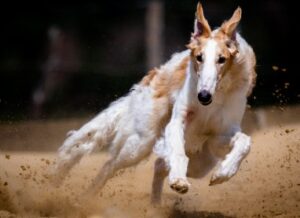
- Whippets, Greyhounds and other Sighthounds: Refers to the feet in motion just skimming above the ground.
- Traction and Stability: This running style can provide better traction and stability, especially on slippery surfaces.
- Reduced Injury Risk: By keeping their feet low, dogs may reduce the risk of injury during high-speed activities.
Hind Assembly
The hind assembly of a dog consists of several key anatomical components that contribute to its movement and overall structure.
Key Components:
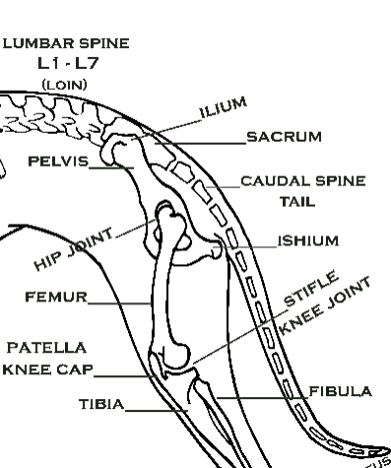
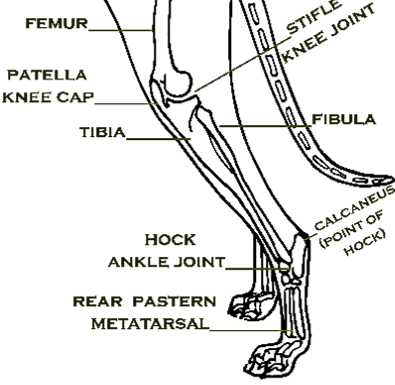
- Hindlimb Structure: The hind assembly includes the femur (thigh bone), patella (kneecap), tibia, and fibula (lower leg bones). These bones support movement and weight.
- Stifle Joint: This is the dog’s knee, located at the junction of the femur and tibia.
- Hock: The joint that connects the lower leg to the foot, similar to an ankle in humans. The hock, or ankle, comprises seven tarsal bones that provide flexibility and support.
- Metatarsals and Phalanges: There are five metatarsals leading to the toes, which consist of phalanges.
- Muscles: Various muscles surround these bones, contributing to movement and stability.
Functionality:
- The hind assembly plays a crucial role in propulsion, locomotion, balance, power and stability during movement, allowing dogs to run, jump, and change direction effectively.
- Proper angulation and structure are essential for optimal movement
- Proper conformation of the hind assembly is essential for performance in activities such as agility and dog shows.
A dog requires proper rear assembly in order to produce effective drive, speed, sprinting power and stamina.
- It also allows for more effective functioning of the front assembly.
- Some of the factors that influence the proper function of the hind assembly are angulation, length of second thigh, croup and tail set.
- The hind assembly of the dog is the strongest part of its structure, starting with the pelvis where the legs are joined at the hip joints.
- The femur, tibia and fibula come together at the stifle (or knee).
- Between the stifle and hock is the ‘second thigh’. The hock is the equivalent to the human heel. Since dogs stand on their toes, the area between the hock and the paw is the same as our foot.
- Below the hock are all the fine bones that lead into the paw.
- The other two aspects of the hind assembly which affect the range of motion of the hind legs are the croup and loin.
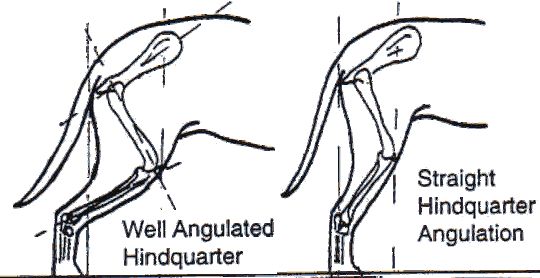
Hind Angulation
Hind angulation in dogs refers to the angle formed by the bones of the hindquarters, particularly at the stifle joint (knee) and the hock (ankle). This angulation is crucial for a dog’s movement and overall athletic ability, as it affects how efficiently a dog can propel itself forward.
Key Aspects of Hind Angulation
- Measurement: The angle is typically measured between the femur (thigh bone) and the tibia/fibula (lower leg bones). Most breed standards suggest an angle between 90 to 110 degrees for optimal performance.
- Importance: Proper angulation allows for effective movement and balance, impacting a dog’s ability to run, jump, and perform in various activities. Poor angulation can lead to mobility issues and decreased performance in athletic dogs.
- Moderate Angulation moderate angles will allow full range of motion and flexibility for adequate muscle development, while providing stability to protect the body during motion.
- Visual Assessment: Evaluating a dog’s hind angulation often involves observing the dog in motion to assess how well the angles support efficient movement.
Stack your dog properly then drop an imaginary line down from the point of buttock and then see where the foot is in comparison.
- A foot which sits ahead of the line indicates straight angulation and restricted range of motion.
- If your dog’s foot is behind the line then we have excessive angulation and huge range of motion.
- When a foot is at the line the dog has moderate angles, which will produce adequate range of motion for strength and enough stability that the dog will remain in control with perfect shock absorption to minimize concussive injury.
Short Rear Legs or Short Hindquarters
Short rear legs or short hindquarters in dogs refer to a condition where the hind limbs are disproportionately shorter than normal. This can affect a dog’s overall movement and posture, potentially leading to various health issues.
Key Characteristics
- Appearance: Dogs with short hindquarters may have a hunchback appearance due to the shortened vertebrae or spinal column, which is often associated with conditions like Short Spine Syndrome.
- Movement: Short hindquarters can impact a dog’s gait, making it less efficient in running or jumping.
- Breeds Affected: Certain breeds may be more prone to this condition, either due to genetic factors or breeding practices.
Health Implications
- Mobility Issues: Dogs with short hindquarters may experience difficulty in mobility, leading to joint stress or pain.
- Less angulation, which changes the mechanics of the rear assembly and creates abnormal wear and tear on the joints.
Bones of upper and lower thighs that are too short can lead to the rear legs being under the dog instead of behind.
- Minimal angulation restricts the range of motion needed for optimal muscle development and reduces flexibility to the extent that risk of impact injuries significantly increases.
Risks:
Improper placement of rear legs cause accelerated joint-capsule and joint-cartilage wear, which can lead to arthritis.
- These dogs may compensate by carrying more hindquarter weight in the spine, back and pelvic area, which can lead to spinal discomfort or injury.
- Reduces a dogs force propulsion, so they will be impaired if expected to participate in competitive activities such as Agility, Hunting, IGP, and Herding.
- Frequent or repetitive jumping, swimming, leaping or covering ground can speed the onset of pain and rear breakdown.
Long Rear Legs and Over-Angulation
Dogs with disproportionately long rear legs compared to their front legs can be normal or indicative of specific traits.
Normal Growth Patterns
- Many dog breeds, such as Greyhounds and Whippets, naturally have longer back legs. This structure enhances their speed and agility, making it a common and healthy trait.
Potential Health Concerns
- In some cases, longer hind legs can signal health issues, such as hip dysplasia, where the hip joints are loose or deformed. This condition can lead to pain and mobility problems.
When to Seek Veterinary Advice
If a dog exhibits signs of discomfort, limping, or difficulty in movement, it is advisable to consult a veterinarian. They can assess whether the leg length is a normal characteristic or a sign of an underlying issue.
Natural line of balance in the hindquarters runs from the point of the buttock, ischium, to the tips of the toes.
- If the foot is noticeably behind that line, the dog has long rear legs (bones of upper and lower thigh longer than normal), over angulation.
- Dogs may stand on their toes instead of their feet.
- Excessive angulation is so unstable that adequate muscle development is impossible to achieve.
- The farther behind the line that the foot is, the more stress on the stifle, hock and hip joint.
- Leads to breakdown of the stifle joint and lower back.
Risks:
- Herding, climbing walls in IGP and other sports, such as Flyball and Frisbee.
- Agility: Generally, these dogs will have trouble turning tightly, quickly or safely and will lack stability in weave poles, jumps and A-frame.
Long Lower Thigh
A long lower thigh in dogs refers to the length of the femur, or thigh bone, which connects the hip joint to the stifle (knee) joint.
This anatomical feature can influence a dog’s movement, agility, and overall athleticism.
Key Aspects
- Functionality: A longer femur can enhance a dog’s ability to run and jump, providing greater leverage and stride length.
- Breeds: Certain breeds, particularly those bred for speed or agility, may exhibit longer lower thighs, contributing to their performance in activities like racing or agility trials.
- Health Considerations: While a long lower thigh can be advantageous, it may also predispose dogs to certain joint issues, particularly if not paired with proper muscle support.
Upper/lower thigh should be relatively equal length.
- When the lower thigh, tibia, is longer, the dog tends to squat, move its feet forward in a sickle-like fashion, stand cow-hocked, or stand like a GSD with one foot forward in order to generate thrust.
- This is because the longer lever arm reduces muscle efficiency to drive the leg forward. This puts abnormal stress on the stifle joint, so it may shorten the rear stride or create ana exaggerated rear kick.
- The rearing muscle of the ischium is pulled down, which in turn can lift the front. This causes increased oscillation of the hindquarters and more vibration through the joints, tendons, ligaments and feet.
- The back is more susceptible to injury. This can also lead to arthritis due to excessive muscle fatigue and added pressure on the joints. It can force the front legs to move shorter strides, even if front is good.
- Same impact on all performance dogs.
Knees Out
The dog’s stifle refers to the knee joint, which is a crucial part of canine anatomy. It connects the femur (thigh bone), tibia (shin bone), and patella (kneecap).
This joint plays a vital role in a dog’s mobility, allowing them to walk, run, and jump effectively.
Common Issues
- Injuries: The stifle is prone to injuries such as ligament tears, particularly the cranial cruciate ligament, which can lead to instability and pain.
- Arthritis: Degenerative joint disease can also affect the stifle, causing discomfort and reduced mobility.
he stifle joint and patella (kneecap) should point slightly inward to the body.
- When pointed away, weight bearing capacity of the joint is diminished. This can cause a wide rear action, a swishy or sashaying rear motion or a piston-like or cycling of the rear legs.
- Severely diminishes rear drive and put stress on the hips.
- Susceptible to cruciate ligament and stifle injuries and luxating patella.
Risks:
Dogs should not participate in sports that involve sharp turns, rough terrain or impact with other dogs.
Legs Turn
Dogs can experience leg turning or weakness due to various factors.
This condition may manifest as legs giving out, twisting, or being unable to support the dog’s weight.
Common causes include:
- Injury or Trauma: Sprains, fractures, or ligament tears can lead to instability in the legs.
- Neurological Issues:Conditions affecting the nervous system can cause weakness or coordination problems.
- Musculoskeletal Disorders:Arthritis or hip dysplasia may result in pain and difficulty in movement.
- Genetic Conditions:Some breeds are predisposed to leg deformities or weakness.
When stacked and fulling weight bearing, rear legs should be stable.
- There is a problem if they are able to be turned out without resistance.
- The rear legs that turn out can become muscle-bound, and the dog’s rear steps will gradually shorten.
Narrow Rear
A dog’s narrow rear refers to the structure of its hindquarters, which can impact its overall health and movement.
Definition
- A narrow rear is characterized by a slim build in the hindquarters, which can lead to various physical issues.
Implications
- Joint Stress: A narrow rear can put pressure on the joints of the rear legs, increasing the risk of strain and degenerative joint disorders.
- Instability: This structure may lead to instability during activities, making the dog more prone to injuries.
Most breeds should be approximately the same width at the front and rear.
- Looking from the back, there should be an inverted U not V.
- Certain breeds may naturally have a narrower rear due to their genetic makeup and intended purpose, affecting their performance and health
- Exception: Bulldog is wider the in front and some Sighthounds are wider in the rear.
Dogs with a narrow rear are unable to develop rapid acceleration or speed.
- Puts excess pressure and stress on the outside edges of the joints in the rear legs, increasing the chances of strain and DJD.
- Increased chance of breeding and whelping problems.
Thin Thighs
Thin thighs in dogs can be attributed to various factors.
Possible Causes
- Genetics: Some breeds naturally have thinner legs and thighs due to their genetic makeup. For example, sighthounds like the Italian Greyhound are known for their slender build.
- Nutrition: Inadequate nutrition can lead to weight loss and muscle wasting, resulting in thinner thighs.
- Exercise: Excessive exercise without proper nutrition can also contribute to muscle loss.
- Health Issues: Medical conditions such as metabolic disorders or infections can affect a dog’s weight and muscle mass.
- Age: Older dogs may lose muscle mass, leading to thinner thighs.
Narrow appearance from the side can be a direct result of a short croup, which prohibits proper muscle attachment.
- Due to decreased muscle attachment, the thinner the thigh, the weaker the rear.
- This will intensify any structural issues, as decreased strength to help compensate for other rear assembly issues.
When to Consult a Vet
If a dog’s thin thighs are accompanied by other symptoms like lethargy, changes in appetite, or weight loss.
Rolling off Rear Pads
Rolling off the rear pads in dogs, often referred to as “rolling off the toe pads,” is a common postural deviation.
This condition occurs when a dog’s foot rolls under as it stands or walks, causing the digital pads to be visible from the front and side views. This can lead to discomfort and potential injuries, as the dog may end up standing on the top of their paw instead of the pads, which can cause abrasions or other injuries to the foot.
Causes
- Weakness or instability in the dog’s legs or feet.
- Improper foot alignment due to genetics or previous injuries.
- Muscle imbalances that affect posture and movement.
Implications
- Dogs may experience difficulty walking or running.
- Increased risk of injuries to the foot due to dragging or improper weight distribution.
Pads cushion the foot and help absorb the concussion of motion.
- Should never roll on the pads where the pads show from the front of the foot.
- Caused by connective tissue that is loose or too long.
- It now seems to be now showing up in the front feet as well.
- Common problem in Golden Retrievers, Samoyeds, Australian Shepherds and several others.
Hocks
The dog’s hock is a crucial joint located on the hind leg, similar to a human ankle. It consists of several bones, including the tibia, fibula, and talus, which work together to provide stability and support during movement.
The hock plays a vital role in mobility, balance, and overall joint health, enabling activities such as running, jumping, and standing.
Anatomy and Function
- Structure: The hock joint is complex, made up of multiple bones and ligaments that allow for flexibility and strength.
- Function: It acts as a pivot point for the dog’s hind legs, facilitating propulsion when the dog runs or jumps.
The hock should have no forward or side motion.
- The more let down the hock is, the more endurance and strength.
- A “well let down hock” is defined as a short rear pattern (hock close to the ground as possible) and should be no higher than 1/3 the height of the dog in the rear.
- Injuries to the hock can occur, often due to overexertion or trauma, leading to pain and mobility issues.
Cow Hocks
Cow hocks in dogs refer to a condition where the hocks (the joints equivalent to human ankles) are positioned inward, causing the feet to point outward.
This abnormal alignment can lead to various mobility issues and discomfort for the dog. It is often seen in certain breeds and can be more pronounced during the growth phase of puppies. While some dogs may outgrow mild cases, severe instances can lead to chronic pain and joint problems.
Characteristics of Cow Hocks
- Appearance: When viewed from behind, the hocks appear closer together than normal.
- Gait Impact: This condition can affect a dog’s gait, making movement less efficient and potentially painful.
Causes and Implications
- Genetics: Certain breeds are more prone to this condition.
- Muscle Imbalance: Weakness in specific muscle groups can contribute to the inward positioning of the hocks.
Management and Treatment
- Exercise: Targeted exercises can help improve muscle balance and alignment.
Hocks turn in toward each other and is caused by a greater amount of muscle mass on the inside of the rear legs than on the outside of the rear legs. The dog will stand and move cow-hocked.
- Dogs that stand but don’t move cow hocked are not actually cow hocked. They have the illusion, but can actually be caused by over-angulation, long lower thighs, knees out or rear feet out.
- It is acceptable for Border Collies to have rear feet that turn out slightly, as it helps stabilize the dog in a crouched position, but not cow hocked. This is not a sign of weakness so long as the limb is extended to the rear
- Double dew claws on the rear, for ex. Briard, Beauceron, Great Pyrenees, also have a tendency to have rear feet that point out slightly, but not cow hocked.
- Cow hocked with a roached back and limbs drawn forward is not a healthy stance
Risks:
Lack stability in the rear assembly, since it talks opposing force to create stability.
- There is a greater risk of injury in Agility, Frisbee and Herding
Barrel Hocks
Barrel hocks refer to a specific conformation issue in dogs where the hock joints turn outward, causing the feet to toe in. This condition can lead to various mobility problems and is often considered undesirable in dog breeding standards.
Characteristics of Barrel Hocks:
- Appearance: The hocks appear wider apart, creating a barrel-like shape.
- Movement: Dogs with barrel hocks may exhibit stilted or awkward movement due to the misalignment of their legs.
- Health Implications: This condition can lead to joint stress and potential injuries over time.
Causes:
- Genetic factors often play a significant role in the development of barrel hocks.
- Poor breeding practices can exacerbate this condition.
Management:
- Regular veterinary check-ups can help monitor any mobility issues.
- In some cases, corrective measures such as braces or surgery may be recommended.
AKA Spread or Open Hocks. This is the opposite of cow hocks.
- More muscle mass on the outside of the rear legs than on the inside. May toe in with hocks pointing outward when the dog is standing.
- Affects rear stability.
- The dog will overuse the muscles on the outside of the leg, weakening the inner groin muscles, straining the lower back and knees.
- In motion, dogs pick up the hocks and rotate them out, resulting in s screwing motion on the foot as it hits the ground. Over time, this motion will cause foot bruising.
- This puts excess strain on the entire hock structure, making the dog more susceptible to injury or breakdown.
Sickle Hocks
Sickle hocks in dogs refer to a conformational fault characterized by an overly angled hock joint.
This condition resembles the shape of a sickle and can lead to various issues, including increased stress on the joints and a predisposition to injuries.
Dogs with sickle hocks often have difficulty straightening their hock joints, which can affect their movement and overall stability.
Characteristics of Sickle Hocks
- Appearance: The hock joint appears excessively bent when viewed from the side.
- Movement Issues: Dogs may exhibit a bobbing motion while trotting, indicating weak hindquarters.
Causes
Sickle hocks are typically caused by an over-angulated rear structure, which can weaken the dog’s overall movement.
Rear pasterns are curved from the hock of the foot, resulting in the dog is unable to extend its rear foot in a backwards swing.
- Common term refers to a dog using its rear assembly in a sickle-like fashion. The rear legs are more forward normally, but do not extend in a normal fashion behind the dog.
- Results from some other issue, such as over angulation, too extreme of a hock angle or rounded croup.
- May create a lack of rear power, which impedes running and jumping and lack of rear assembly stability for quick turns.
Slipped Hocks
Slipped hocks in dogs refer to a condition where the hock joint becomes unstable or dislocated, leading to abnormal movement or wobbliness in the hind legs.
This condition can be caused by various factors, including ligament injuries, arthritis, or congenital issues.
Symptoms
- Wobbly or unstable hind legs
- Difficulty standing or walking
- Pain or discomfort in the affected leg
Diagnosis and Treatment
- Diagnosis typically involves a physical examination by a veterinarian, possibly supplemented by imaging techniques like X-rays.
- Treatment options may include rest, physical therapy, bracing, or in severe cases, surgery to stabilize the joint.
The hock falls forward and is caused by a weakness I the tissue rather than in the bones of the joint.
- These dogs will bring one rear leg forward for balance, roach their spines to lift weight off the rear, sink on their rear assemblies, or push rear weight forward to take stress off the hindquarters.
- Number one cause of slipped hocks is a roached topline.
- When only one hock is slipped, the dog will usually shift its weight to the good rear leg to avoid putting abnormal stress on the weaker leg.
- Usually push off for a jump with their front, instead of rear drive, so the front is more developed. This kind of jumping motion also makes the dogs raise their heads up, which can create more stress on the hock.
Risks:
- No performance activities with bilateral slipped hock, as dogs will try to compensate and cause injury.
- Earthdogs can have difficulty backing out of burrows.
- One slip hock: Although not as bad as both sides, unable to swim in a straight line.
- Disadvantage in agility, as will lack balance in jumps, turn better in one direction over the other and tendency to hit more bars.
- Pain in lumbosacral area. Legs sinks with every step, and the lower back and lumbosacral area have to take up the slack.