
Topline & Back
The canine topline refers to the outline of a dog’s back, extending from the base of the neck to the base of the tail.
This structure is crucial for assessing a dog’s overall health, strength, and suitability for various activities, including shows and performance events.
A well-defined topline indicates good muscle tone and balance, which are essential for mobility and stability.
Square: Smooth trotter. Slightly longer back than tall: Increases speed.
Long and low: Decreases length of stride.
Little longer than tall: Allows for forgiveness in motion.
Taller than long: No correct placement for the legs and feet to fall under the dog.
Importance of Topline
- Health Indicator: A proper topline can signal the dog’s physical condition and fitness level.
- Structural Integrity: The topline is part of the axial skeleton, providing strength and flexibility.
- Breed Standards: Different breeds have specific topline characteristics that are evaluated in conformation shows.
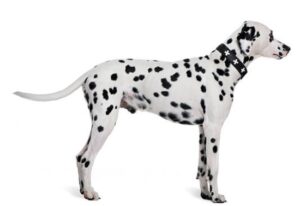
Visualize a line running horizontally across your dog’s back and see if his topline is either level, sagging or roaching.
- Any issues may be caused by problems with the front or hind assemblies. Rarely will a topline problem be the result of a curvature of the spine.
- If you notice a dip behind dog’s shoulders then his topline is soft due to being high in the rear.
- When the topline has a dip in the middle, describe it as “sagging” or ‘soft’, the opposite is described as ‘roached’.
Swayback or Soft Topline
Dog swayback, also known as lordosis or a soft topline, is a spinal deformity characterized by an exaggerated inward curve of the spine. This condition results in a noticeable dip or sag in the dog’s back, particularly in the lumbar region. While a slight curve is normal, swayback involves an excessive arch that can lead to discomfort and mobility issues.
Causes
- Genetics: Some breeds are more prone to this condition.
- Poor posture: Long-term poor posture can contribute to the development of swayback.
- Trauma: Injuries can also lead to changes in spinal alignment.
- Neurological issues: Problems with the nervous system may affect muscle control and posture.
Symptoms
- Noticeable dip in the back
- Difficulty in movement
- Signs of discomfort or pain
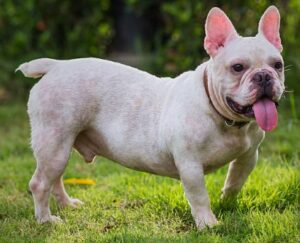
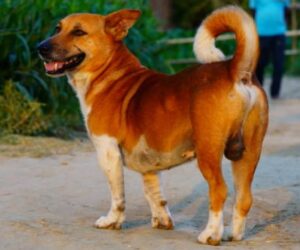
If you notice a dip behind puppy’s shoulders than his topline is soft due to being high in the rear. When the topline has a dip in the middle, describe it as “sagging” or ‘soft’.
- Dips, holes or softness – issue with front assembly impedes efficient movement and could lead to back issues and injuries particularly in dogs that compete in:
- Obedience, Lure Coursing, Agility, Flyball, Frisbee
- Dogs that do Field work, Sledding, Pulling or Herding on rough terrain.
Roached Topline
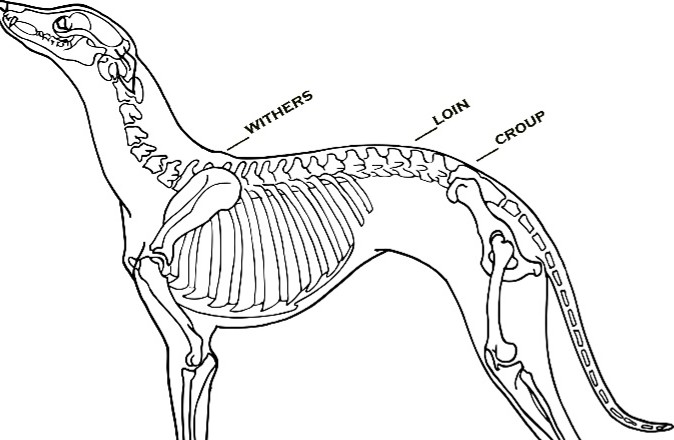
A roached topline in dogs refers to a specific curvature in the back, where there is a noticeable rise between the withers (shoulders) and the croup (rear).
This condition can be a natural trait in some breeds, particularly those bred for specific physical characteristics, such as racing greyhounds, which often have a pronounced arch in their back to enhance their galloping ability.
Characteristics of a Roached Topline
- Appearance: The back appears to rise in a convex shape, which can be visually striking.
- Breeds Affected: While some breeds may naturally exhibit this trait, it can also occur in dogs that are not conforming to breed standards.
- Potential Issues: A roached topline may indicate structural problems or discomfort in some dogs, particularly if it develops later in life.
A roached back is an issue with rear assembly
- Dog’s roach their back to take pressure/weight off the rear.
- This can lead to discomfort and eventual breakdown.
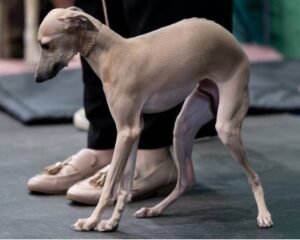
- Dogs like Whippets have a roach from muscling, not by the spine.
- The standard in Bulldogs/French Bulldog, for example, call for a roach or “wheel-back”.
- Other dogs have one or more structural issues that affect the rear assembly and should not run in any performance activities.
- A roached back is resistant to normal flexion and extension, which limits the dog’s ability to jump without discomfort or pain.
Sloped Topline
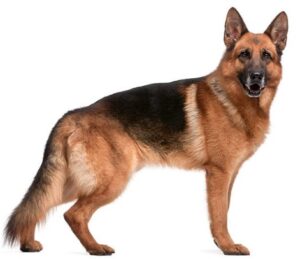
Dogs with a sloped topline have a back that descends from the withers to the tail, resembling a slope.
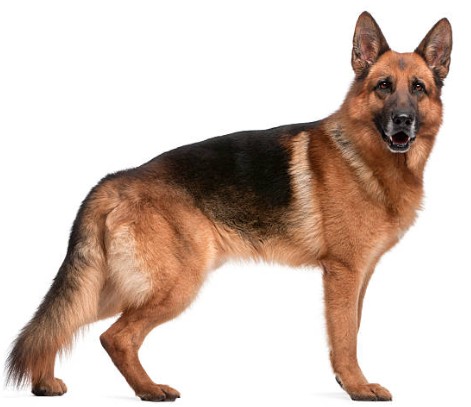
This characteristic can be seen in various breeds, notably the German Shepherd. A sloped topline often indicates more angulation in the rear legs, which can lead to a lowered rear end.
While some breeds naturally exhibit this trait, excessive sloping may deviate from breed standards and could be associated with structural issues or health concerns.
Characteristics of Sloped Topline
- Definition: The topline is the profile of a dog’s back from the neck to the tail.
- Appearance: It appears as a downward slope, similar to a mountain slope.
- Breeds: Common in breeds like German Shepherds, but not all dogs should have this feature.
Indicates an imbalance in the front to rear structure.
- Extreme slopes can lead to back or spine issues or breakdown of the front or rear assembly (depending on which side is causing the slope).
German shepherd (show line): Rear legs are designed to be longer than the front legs, but this design, especially to the extreme, can lead to breakdown and increase risk of hip dysplasia.
High Hips or Rear
High hips refer to a situation where the hip joint appears elevated compared to the rest of the body, which can be a sign of abnormal development or structural issues.
- The hips should not be the highest point on the topline.
Causes:
- Hip Dysplasia: A common inherited condition where the hip joint doesn’t fit properly, leading to looseness and potential arthritis.
- Conformation Issues: Some breeds may naturally have a higher rear due to their body structure.
- Exceptions: Breed standard include the Pyrenean Shepherd, Chinese Shar-Pei, Chesapeake Bay Retriever and Havanese.
The issue is usually in the rear legs. Straightening and stiffening the rear legs to compensate for weakness in the joints of the rear assembly can result in a raised or lifting rear topline.
- Even if the standard calls for it, the extra weight will be displaced to the front assembly.
- Can also be the result of rear legs that are too short, which puts the legs under rather than behind the dog.
Risks:
If the cause is the legs being under instead of behind, this will decrease the rear drive and power to take off efficiently for a jump. This causes increased issues with Coursing dogs and advanced Obedience and Agility.
- Agility or Working dogs: Causes excessive force or impact on the front assemblies due to the imbalance in the rear and thus increasing front assembly stress and risk of injury.
- Obedience dogs with high rears will put more stress on their rear legs when heeling with their heads held high.

Weak Union
Weak Union: Too much space between 2 of the vertebrae in the loin and hip area.
- When you touch the dog in this area they are inclined to sit.
- As dog matures they develop a rope of muscle that looks like a roll of fat.
- During maturity, this area may reinforce both back and rear.
- As the dog ages the muscle weakens and can have discomfort and increases risk of injury.
Loin
The term “loin” in dogs refers to a specific anatomical region. It is located in the lumbar area of the dog’s back, extending from the last rib to the pelvis.
This area is crucial for the dog’s overall structure and movement, providing support and strength during activities such as running and jumping.
Importance of the Loin
- Structural Support: The loin helps maintain balance and stability in the dog’s body.
- Muscle Attachment: It serves as an attachment point for muscles that are essential for locomotion.
Common Misunderstandings
- The term “loin” can sometimes be confused with the flank, but anatomically, they refer to different areas.
Length of loin is determined by comparing the distance from the shoulder to last rib to the distance from the last rib to the pelvis.
- A moderate loin is slightly shorter than the ribcage.
- A long loin will measure almost the same length as the ribcage and a short loin will be distinctly less.
Loin should be no more than 1/3 length on the ribcage.
- There is no support for the spine between the attachment of the last rib and the hip.
- Length of loin provides optimal support without costing the dog flexibility or turning capacity.
Short Back or Short Loin
A short loin in a dog refers to the area of the body located between the ribcage and the pelvis. This section is crucial for a dog’s overall structure and movement.
Loin is shorter than 1/3 the length of the ribcage.
- The spine will be stiffer and less flexible.
- The length of the loin directly impacts a dog’s ability to turn sharply.
Key Characteristics:
- Definition: The short loin is the part of the dog’s back that connects the ribcage to the hindquarters. It plays a significant role in the dog’s balance and agility.
- Importance:A well-defined short loin contributes to a dog’s endurance and strength. If the loin is too short, it can affect the dog’s ability to perform physically.
- Breeding Considerations: Some breeders may mistakenly prioritize a shorter loin for aesthetic reasons, which can lead to structural issues like sway backs and weak musculature
Short back syndrome in dogs, also known as short spine syndrome, is a condition characterized by a significantly shortened spinal column. This condition results in a compact body structure, often giving affected dogs a hunchback appearance and a very short or almost absent neck.
Key Features
- Congenital Condition: It is present from birth and is caused by abnormal vertebral development, where the vertebrae may remain as cartilage instead of developing into bone.
- Physical Appearance: Dogs with this syndrome typically exhibit a noticeably shortened back and may have a hunched posture.
No breed should be shorter backed than square. *This may be called for in the Pomeranian.
- A short-backed dog will lack flexibility during faster gaits, jumping or turning quickly.
- Less stability and difficulty bending
- They can be top heavy and prone to stiffness.
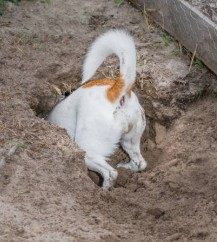
- Earthdog: May prevent these dogs from turning and getting out of a burrow.
Risks:
Earthdogs may be unable to turn around in a burrow to resurface.
Long Back or Long Loin
A long loin in a dog refers to the length of the lumbar region of the spine, which is situated between the ribcage and the pelvis. This area is crucial for the dog’s overall conformation and movement.
Longer than 1/3 the length of the ribcage.
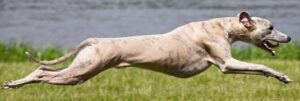
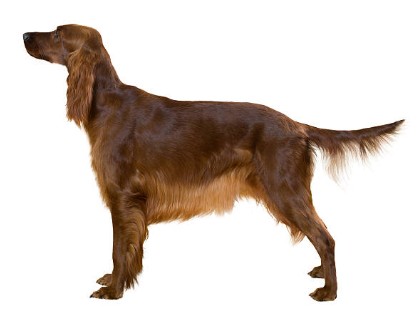
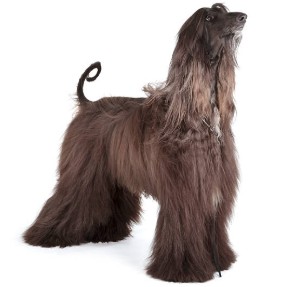
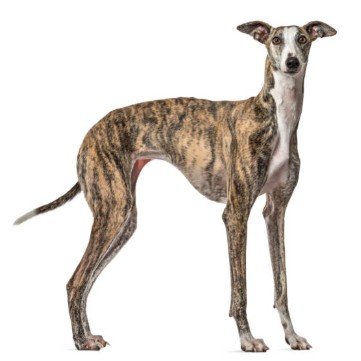
- Exception: Sighthounds. Muscles of the longer loins aid them in double suspension gallop. This also gives them their distinctive topline. Whippet, Borzoi, Greyhound.
Not to be confused with a roached topline
Characteristics of a Long Loin
- Anatomical Structure: The loin consists of the lumbar vertebrae, which are characterized by large bodies and long transverse processes that serve as muscle attachment sites.
- Impact on Appearance: Dogs with a long loin often have a rectangular shape, appearing longer than they are tall. This can affect their agility and flexibility, as excessive length may reduce flexibility
Risks:
A long back will be easily stressed because it is insufficiently supported by weakened muscles.
- One area is the mid-back, around the 7th thoracic vertebrae which marks the dog’s center of gravity. Dogs carry over 60% of their weight forward of this point.
- The second problem area is a weak lumbar (or loin) area.
- Agility and Obedience: More likely to hit bars in jumps since the coiling of short, strong loin muscles helps to tuck the rear.
- If there are any topline issues, a long loin with intensify the problem.
- Any motion that is not forward is wasted.
- Creates a slight up and down motion through the loin area.
Loin
The term “loin” in dogs refers to a specific anatomical region. It is located in the lumbar area of the dog’s back, extending from the last rib to the pelvis.
This area is crucial for the dog’s overall structure and movement, providing support and strength during activities such as running and jumping.
Importance of the Loin
- Structural Support: The loin helps maintain balance and stability in the dog’s body.
- Muscle Attachment: It serves as an attachment point for muscles that are essential for locomotion.
Common Misunderstandings
- The term “loin” can sometimes be confused with the flank, but anatomically, they refer to different areas.
Length of loin is determined by comparing the distance from the shoulder to last rib to the distance from the last rib to the pelvis.
- A moderate loin is slightly shorter than the ribcage.
- A long loin will measure almost the same length as the ribcage and a short loin will be distinctly less.
Loin should be no more than 1/3 length on the ribcage.
- There is no support for the spine between the attachment of the last rib and the hip.
- Length of loin provides optimal support without costing the dog flexibility or turning capacity.
Short Back or Short Loin
A short loin in a dog refers to the area of the body located between the ribcage and the pelvis. This section is crucial for a dog’s overall structure and movement.
Loin is shorter than 1/3 the length of the ribcage.
- The spine will be stiffer and less flexible.
- The length of the loin directly impacts a dog’s ability to turn sharply.
Key Characteristics:
- Definition: The short loin is the part of the dog’s back that connects the ribcage to the hindquarters. It plays a significant role in the dog’s balance and agility.
- Importance:A well-defined short loin contributes to a dog’s endurance and strength. If the loin is too short, it can affect the dog’s ability to perform physically.
- Breeding Considerations: Some breeders may mistakenly prioritize a shorter loin for aesthetic reasons, which can lead to structural issues like sway backs and weak musculature
Short back syndrome in dogs, also known as short spine syndrome, is a condition characterized by a significantly shortened spinal column. This condition results in a compact body structure, often giving affected dogs a hunchback appearance and a very short or almost absent neck.
Key Features
- Congenital Condition: It is present from birth and is caused by abnormal vertebral development, where the vertebrae may remain as cartilage instead of developing into bone.
- Physical Appearance: Dogs with this syndrome typically exhibit a noticeably shortened back and may have a hunched posture.
No breed should be shorter backed than square. *This may be called for in the Pomeranian.
- A short-backed dog will lack flexibility during faster gaits, jumping or turning quickly.
- Less stability and difficulty bending
- They can be top heavy and prone to stiffness.
- Earthdog: May prevent these dogs from turning and getting out of a burrow.
Risks:
Earthdogs may be unable to turn around in a burrow to resurface.
Long Back or Long Loin
A long loin in a dog refers to the length of the lumbar region of the spine, which is situated between the ribcage and the pelvis. This area is crucial for the dog’s overall conformation and movement.
Longer than 1/3 the length of the ribcage.
- Exception: Sighthounds. Muscles of the longer loins aid them in double suspension gallop. This also gives them their distinctive topline. Whippet, Borzoi, Greyhound.
Not to be confused with a roached topline
Characteristics of a Long Loin
- Anatomical Structure: The loin consists of the lumbar vertebrae, which are characterized by large bodies and long transverse processes that serve as muscle attachment sites.
- Impact on Appearance: Dogs with a long loin often have a rectangular shape, appearing longer than they are tall. This can affect their agility and flexibility, as excessive length may reduce flexibility
Risks:
A long back will be easily stressed because it is insufficiently supported by weakened muscles.
- One area is the mid-back, around the 7th thoracic vertebrae which marks the dog’s center of gravity. Dogs carry over 60% of their weight forward of this point.
- The second problem area is a weak lumbar (or loin) area.
- Agility and Obedience: More likely to hit bars in jumps since the coiling of short, strong loin muscles helps to tuck the rear.
- If there are any topline issues, a long loin with intensify the problem.
- Any motion that is not forward is wasted.
- Creates a slight up and down motion through the loin area.
Croup, Tail Set & Coupling
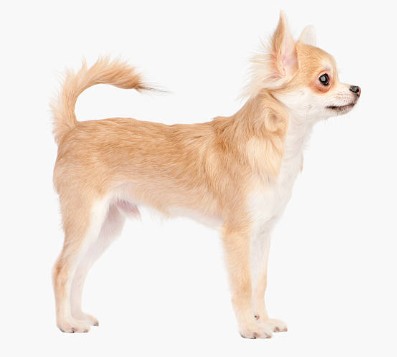
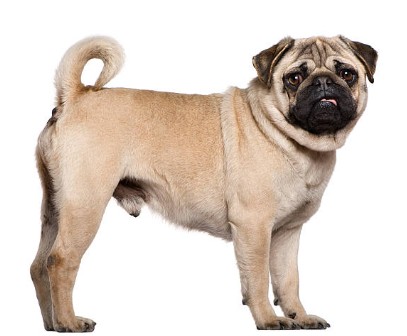
A correct dog croup refers to the anatomical structure of a dog’s hindquarters, specifically the area from the last rib to the base of the tail. This region should be well-defined and muscular, contributing to the dog’s overall balance and movement. A proper croup is slightly sloped and not too steep, allowing for efficient propulsion during activities like running and jumping.
Key Characteristics of a Correct Croup
- Length: Should be proportionate to the dog’s body, not too short or long.
- Angle: A slight slope is ideal; a steep croup can affect movement.
- Musculature:Well-developed muscles indicate strength and stability.
Croup
A poor croup & tail set that is created by weak hind structure. Building healthy hind muscles help support this area of weakness.
- The angle of the dog’s croup will affect how well his hind legs work
- The steeper the croup, the farther forward a dog will bring its hind legs which will restrict the extension out the back and reduce the drive.
- Lack of drive results in weak muscle development.
Flat Croup: The flatter the croup, the less forward motion and greater kick ‘up’ with the back legs (which is wasted motion and creates the same inefficient use of the legs).
Short Croup: Shorter muscle attached to the upper thigh.
- This reduces power and drive with the appearance of a thin upper thigh when viewed from the side.
- Lack of muscle intensifies other existing conditions due to less muscle to compensate.
- Less effective level for musculature, as muscles need to exert more effort in motion.
Coupling: An upright shoulder with a steep croup makes it longer & more flexible.
A shoulder which is well laid-back with a flat or well-rounded croup and now he is shorter or more rigid.
- Length of loin is the aspect of coupling which preserves or wastes the power generated by the hind assembly as it transmits to the front assembly along this region of the body .
Tail set: The tail is an extension of dog’s spine and comes right off the sacrum, which makes the tail an excellent early warning indicator of things going wrong with the dog’s hind assembly.
Too Steep or Rounded Croup (and/or Low tail set)
A steep or rounded croup in dogs can lead to various movement and health issues.
Understanding Croup Types
- Steep Croup: A steep croup can restrict a dog’s ability to reach fully with its hind legs, affecting overall movement and balance. This can lead to a lack of follow-through in motion, which is crucial for performance in activities like running or jumping.
- Rounded Croup: An overly rounded croup can also disrupt balance and may cause strain on the dog’s back legs. This strain can lead to increased pressure on the croup, potentially resulting in spinal issues over time.
Impact on Health
- Both steep and rounded croups can contribute to joint strain and may predispose dogs to lower back problems.
- Proper conformation is essential for optimal movement and to prevent long-term health issues.
Ideal Croup Angle
- For many breeds, the ideal croup angle should not exceed 45 degrees to maintain balance and effective movement.
Steeper or rounder than the breed standard:
- The more dogs carry or position their rear legs under them, the more croup will drop or round.
- Increased pressure on the rear joints means greater downward pressure on the croup which increases the risk for lower back issues and unnatural carriage.
Sighthounds: Exception, as they are suspension gallopers, not trotters. This makes the dog more agile and maneuverable and allows for quicker acceleration. They may also have a straighter shoulder to keep the body in balance.
Risks:
- Sickle Hock: It can create a functional sickle hock. The dog may use the loin and back to compensate, making both more prone to injury.
- Draft dogs: Although this could be helpful to “dig in” with their haunches to help pull a heavy load, it may have poor consequences in the long run.
- Trotting: Prohibits a long backwards swing of the rear leg.
Flat Croup (and/or High tail set)
A flat dog croup can significantly affect a dog’s movement and overall conformation.
Definition and Importance
- The croup is the area on a dog’s back, just before the tail. A flat croup is characterized by a horizontal or level appearance.
- This structure influences how the tail is set and carried; a flat croup typically results in a high tail set.
Effects on Movement
- A flat croup can lead to excessive lift off the ground during movement, which may cause wasted energy and fatigue. This is particularly detrimental in working dogs, as it can hinder their efficiency.
- In dog shows, judges assess the croup’s shape to determine the dog’s overall balance and movement.
When the angle of the pelvis is too slight, a flat croup results. This is associated with a high tail.
- Stiffens the back and minimizes forward power at slower paces.
- Changes the angle of the hip socket, which puts the dog at risk of hip dysplasia.
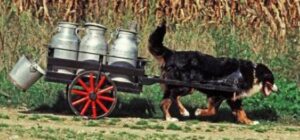
- This can create a high rear kick, which is wasted motion and detrimental to a Carting dog.
A rear kick can cause the dog’s hind legs to make contact with the cart.
Chest & Ribs
Dogs have a total of 26 ribs, organized into 13 pairs. Each rib is attached to the spine and the sternum, forming a protective ribcage around vital organs such as the heart and lungs. This structure is crucial for respiratory function and overall health.
Rib Anatomy
- Pairs of Ribs: Dogs possess 13 pairs of ribs, totaling 26 ribs.
- Attachment: Ribs connect to the thoracic vertebrae at the back and to the sternum at the front, creating a sturdy framework.
- Function: The ribcage protects internal organs and aids in breathing by allowing expansion during inhalation.
Chest Structure
- The chest, or thorax, is bound by the ribs, sternum, and vertebrae.
- Variations in chest shape (deep, narrow, broad) can affect a dog’s health and physical capabilities
- A chest that is too far below the elbow is just as ‘faulty’ as the chest which is too shallow (or too far above the elbow).
The ribcage should be deep enough to accommodate all the vital organs but not so deep or barrel shaped that it interferes with the movement of the elbow The bottom of dog’s ribcage should be slightly above or just even with the elbow.
- All ribcages should have the proper length rib and proper bone to cartilage ratio.
- The more correct the rib, the more lung capacity, stamina and endurance.
- Proper spring, curve of ribs should complement the dog’s purpose.
- Bully breeds have greater spring that Sighthounds.
- Elliptical shape is correct for all breeds at different degrees.
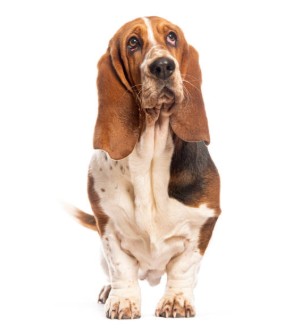
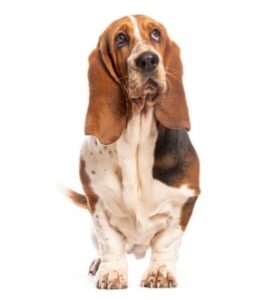
- Exception: Achondroplastic breeds like Dachshund and Basset, the chest will be well below the elbow.
Risks:
Anytime the ribcage shape limits the lung capacity, and thus stamina, it will impede any performance or working dog’s potential.
- Barrel-ribbed or round chest is Incorrect for all breeds.
- Slab-sided is Incorrect for all breeds.
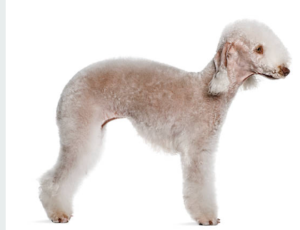
- Exception: Bedlington Terrier.
Herring Gut
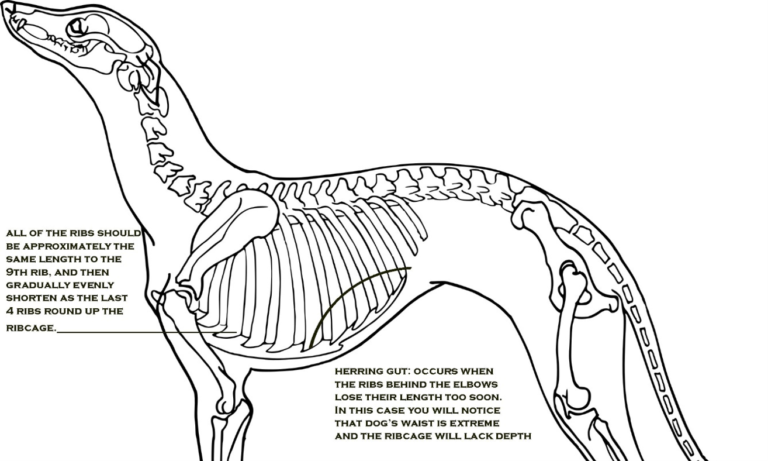
Herring gut refers to a specific physical condition in dogs characterized by flat ribs that lack sufficient spring from the spine.
This condition is often associated with dogs that have a shallow chest structure, making them appear less robust in their ribcage formation. The term is derived from the shape of herring fish, which have a similar flat rib structure.
Key Characteristics
- Flat Ribs: Dogs with herring gut have ribs that do not curve outward adequately.
- Shallow Chest: This condition is typically seen in breeds with a naturally shallow chest, affecting their overall appearance and sometimes their health.
Implications
- Health Considerations: While herring gut itself is not a disease, it can be associated with certain health issues related to respiratory capacity and overall body structure.
Sternum is too short. Normally the sternum should reach the 9th rib and run parallel to the ground. If it is shorter than that, the dog is herring gutted.
- Reduces lung capacity, endurance and stamina, as there is not enough room to permit full expansion of heart and lungs.
- This also provides inadequate protection for internal organs, which causes serious structural issues for performance and working dogs.
- This can impede the abilities of any dog which is worked hard for extended periods of time (jogging, agility, herding, hunting, etc.).
Wide chest or Barrel Ribs
A barrel-chested dog has a wide, rounded ribcage that gives it a robust appearance.
This type of chest is characterized by a chest that appears almost globular when viewed from the front, with a straight top and bottom.
Barrel-chested dogs typically have broader shoulders and a more muscular build compared to other chest types.
Characteristics of Barrel-Chested Dogs
- Shape: The ribcage is wide and deep, creating a visually chest-heavy look.
- Structure: The top and bottom of the chest are reasonably straight and even, contributing to a sturdy appearance.
- Breeds: Common examples include Bulldogs and Basset Hounds, which are bred for strength and stability rather than speed.
Comparison with Other Chest Types
- Deep-Chested Dogs: These dogs have a taller, narrower ribcage, suited for running and endurance, such as Greyhounds.
- Round-Chested Dogs: Most dogs fall into this category, having a chest that is neither deep nor barrel-shaped.
When the chest is too wide, the upper arm is prohibited from swinging freely alongside the chest. This impeded upper arm movement diminishes the dog’s speed and length of stride.
- It can also create toeing in and rolling out of the shoulder, just as too deep of a chest can.
Prosternum and Too Far Forward (Also See Pigeon Breast)
The prosternum is a key anatomical feature in dogs, located at the front of the rib cage. It serves as the most forward projection of the rib cage, contributing to the overall structure and balance of the dog’s chest.
Specifically, the prosternum is the top part of the sternum, which connects the rib cage and plays a crucial role in the dog’s posture and movement.
Key Characteristics
- Location: Positioned at the front of the rib cage, jutting out ahead of the shoulder joint.
- Function: Acts as an anchor point for the rib cage, helping to define the chest structure and contributing to the dog’s forward balance and strength.
- Importance: A well-defined prosternum can indicate good conformation in dog breeds, particularly in show dogs.
This needs to be sufficient enough to allow for proper muscle attachment from the upper arm, which creates stability and strength in the upper arm.
- Without this it will cause a sloppy forward motion and instability on landings from jumps.
- Similar to loose elbows in that it can lead to the same kinds of injuries for performance dogs.
Eventual wear and tear in the upper arm will likely result in arthritis.
A prosternum that is too far forward in a dog can indicate a structural abnormality. The prosternum is the most forward projection of the rib cage, and its position is crucial for proper thoracic structure and function. When it protrudes excessively, it may lead to:
- Altered Chest Shape: This can affect the overall appearance of the dog and may be associated with conditions like pectus excavatum or pectus carinatum, where the chest is either indented or protruding.
- Breathing Difficulties: An abnormal prosternum position can reduce the space available for the heart and lungs, potentially leading to respiratory issues.
- Congenital Issues: Such deformities are often congenital, meaning they develop during the dog’s growth and can be hereditary.
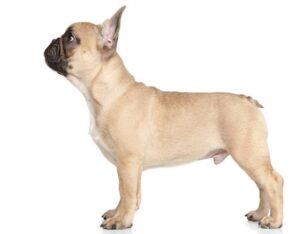
Pigeon Breast
Dog pigeon chest, also known as pectus carinatum, is a congenital condition where the dog’s sternum protrudes outward, creating a noticeable bulge in the chest area. This deformity can affect any breed, although it is more common in certain types.
Characteristics
- Appearance: The chest appears pointed rather than curved due to the abnormal growth of the sternum and ribs.
- Breathing: In some cases, it may impact respiratory efficiency, although many dogs adapt well.
Causes
- Congenital: Often present at birth, it can develop during growth.
- Acquired: Rarely, it may develop due to trauma or other health issues.
There are several reasons, including the breastbone being shorter than the ideal and characterized by a relative absence of prosternum or too much or exaggerated prosternum. Extremes in either direction will cause some weakness.
- When the prosternum protrudes to the extent it creates a shelf, muscle attachment will be limited.
- Muscle attaching from the upper arm to ribcage are improper, which results in the same sloppy front movement that is seen when the front is set too far forward.
- Can affect the neck and head carriage, muscles that run down the front of the neck attach to the ribcage in the same area as the muscles from the upper arm.
- Improper attachment diminishes muscle strength.
Risks:
Any degree of this causes more susceptibility to injuries when landing from jumps.
Slab Sided
A slab-sided dog has a rib cage that is flat and lacks curvature. This condition is characterized by ribs that are narrow and do not have the typical arch or roundness, which can restrict the dog’s lung capacity and overall movement.
Slab-sidedness is often seen as undesirable in many breeds, particularly those that require agility, as it can hinder their ability to maneuver effectively.
Characteristics of Slab-Sidedness
- Rib Structure: Ribs are flat with little to no curvature.
- Chest Depth: The chest is deeper at the sternum but not broad, leading to a narrow appearance.
- Impact on Performance: This conformation can affect a dog’s ability to perform tasks, especially in breeds that need to navigate tight spaces.
Implications
- Health Concerns: A slab-sided structure may indicate potential respiratory issues due to reduced lung capacity.
- Breed Standards: Many breed standards discourage slab-sidedness, emphasizing the importance of a well-rounded rib cage for optimal health and performance.
Occurs when the ribs are flat with almost no spring.
- Incorrect for all breeds
- Exception: Bedlington Terrier
Risks:
Disadvantage in working dogs that require stamina, including Sled dogs, Hunting dogs, Lure Coursing, Agility.

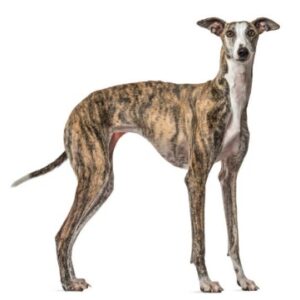
Wasp Waist
The term “dog wasp waist” refers to a specific anatomical feature observed in certain dog breeds. This term is often used to describe a very slender or narrow waist, similar to the shape of a wasp’s body.
In dogs, this can be indicative of a lean physique, which is often seen in breeds that are bred for agility or speed.
Characteristics of Dog Wasp Waist
- Anatomy: The waist is narrower than the chest and hips, creating a streamlined appearance.
- Breeds: Commonly seen in breeds like Greyhounds and Whippets, which are built for running.
- Health Implications: A pronounced wasp waist can be a sign of good fitness, but excessive thinness may indicate health issues or malnutrition.
Importance
- Performance: A lean waist can enhance agility and speed in athletic dogs.
- Aesthetics: Many dog enthusiasts appreciate the sleek appearance of dogs with a wasp waist, as it is often associated with breed standards in show dogs
- Less impact on lung capacity than herring gut, however both are serious faults in all breeds that require stamina and endurance.
- Both issues diminish lung capacity, fluidity, and elasticity of stride.
- This will predispose these dogs to back injuries.
Heart-Shaped Ribs
Dog heart-shaped ribs refer to a specific anatomical feature of certain dog breeds.
This term typically describes the shape of the rib cage, which can resemble a heart in some dogs, particularly those with a more rounded or barrel-shaped chest.
Characteristics of Heart-Shaped Ribs
- Shape Variations: Dogs can have different rib shapes, including oval, round, and heart-shaped. The heart-shaped rib cage is often broader and more rounded, providing ample space for the heart and lungs.
- Breeds: Breeds with a heart-shaped rib cage often include those with a stocky build, such as Bulldogs and Boxers.
The bony part of the rib is too short and cartilage is too long. The lower portion of the chest is too narrow and has too much give.
- Dogs with a heart-shaped rib cage may have different physical capabilities compared to those with narrower rib shapes, affecting their stamina and agility.
- These ribs lack attachment for the upper arm and makes a sloppy front motion, which makes the dog more susceptible injury when jumping.
Shallow Chest
A shallow chest in dogs refers to a chest structure that is not deep enough, which can affect their overall health and performance.
Impact on Health
- Heart and Lung Efficiency: A shallow chest limits the capacity of the heart and lungs, which can reduce endurance and overall stamina.
- Physical Stability: When the chest is positioned above the elbow, it can affect how the upper arm connects to the chest, potentially compromising the stability of the dog’s front assembly.
Breathing Considerations
- Shallow Breathing: Dogs with a shallow chest may also exhibit shallow breathing, which can indicate various health issues, including respiratory infections or heart disease.
- Monitoring: It’s important to monitor a dog’s breathing patterns, as changes can signal underlying health problems.
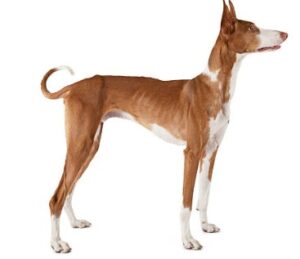
The depth of chest should reach the elbow in most breeds.
- When the chest is above the elbow, it affects the way the upper arm ties into the chest and do diminishes stability of the front assembly.
- Decreases lung capacity, stamina and endurance.
- Exception: Ibizan standard calls for the deepest part of the chest to be inches behind the elbow.
Risks:
Agility dogs are more likely to hit the ribs when the land from jumps and can “jam them”.
Chest too Deep
A deep chest in dogs refers to a specific anatomical feature where the rib cage is elongated and extends lower than the elbows when the dog is standing.
This characteristic is commonly found in larger, working breeds such as the Great Dane, Doberman Pinscher, and Boxer.
Characteristics of Deep-Chested Dogs
- Anatomy: The deep chest allows for increased thoracic volume, which can accommodate larger lungs and a more powerful heart.
- Breeds: Common deep-chested breeds include Greyhounds, Boxers, and German Shepherds.
Health Considerations
- Bloat Risk: Deep-chested dogs are at a higher risk for conditions like gastric dilatation-volvulus (GDV), commonly known as bloat, which can be life-threatening.
- Care Tips: Owners should be aware of feeding practices and exercise routines to mitigate health risks associated with deep-chested dogs.
Chest should reach the elbow. When it reaches too far below the elbow, the upper arm is prevented from moving back and forth across the cartilage on the lower part of the chest.
- It will run into the curve of the rib bone so the dog has to roll the upper arm forward rather than pulling in straight forward.
- This movement has the tendency to turn the front feet inward.
- Exception: Achondroplastic breeds standards call for increased depth.